Single-Strand vs 49-Strand Mako Leaders (Matrix)
⏱ 21 min read
Tackle Performance Trade-Offs in Heavy Shark Leaders
Single-strand wire provides superior bite shear resistance because razor-sharp mako teeth slide along solid spring-tempered steel, but it suffers catastrophic failure if kinked during aerial jumps; conversely, 49-strand cable completely eliminates kink failure during high-speed death rolls, but its fine exterior filaments can be severed strand by strand under crushing jaw pressure. The correct choice depends entirely on fish weight class, expected fight duration, and whether you run a solid bite trace or a hybrid cable setup.
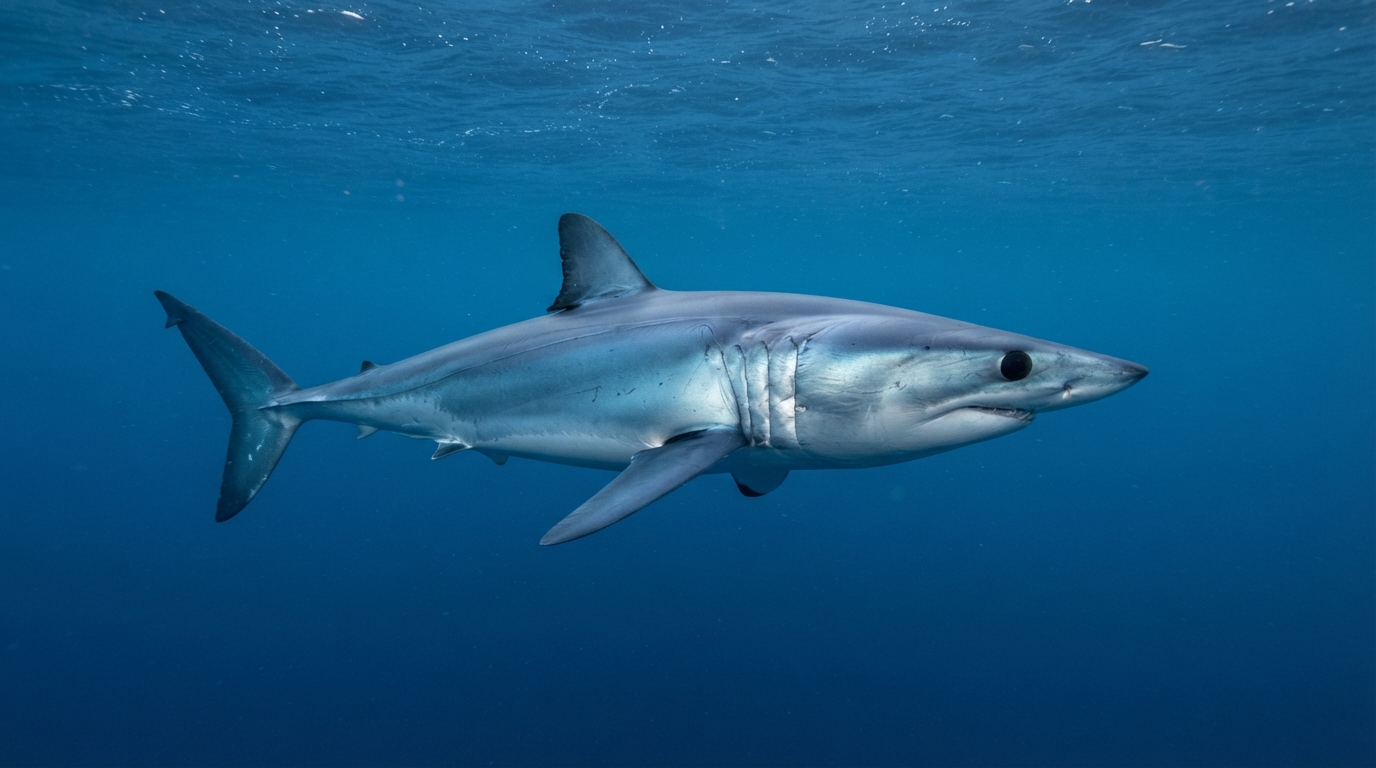
This trade-off creates a persistent mechanical paradox for big-game crews targeting Isurus oxyrinchus. When a 500-pound shortfin mako hits a bait in a slick managed by a Mako Drift Slick Matrix for 3-Knot Currents (Chart), the terminal tackle encounters severe multi-axis forces that differ entirely from other pelagic predators.
       MAKO STRIKE DYNAMICS
                 │
                 ▼
      [HIGH-SPEED AERIAL JUMP]
                 │
      ┌──────────┴──────────┐
      ▼                     ▼
Single-Strand         49-Strand Cable
Torsion / Loop        Maintains Flex
      │                     │
      ▼                     ▼
Acute Kink Formed     Zero Kinking
      │                     │
      ▼                     ▼
Catastrophic Snap     Absorbs Shock
      │                     │
      │              [DEATH ROLL]
      │                     │
      │                     ▼
      │               Teeth Saw Wire
      │                     │
      │                     ▼
      │               Strand-by-Strand
      │               Filament Shearing
      ▼                     ▼
  LEADER LOSS           LEADER LOSS
Metallurgy and Structural Mechanics
To choose the correct material, you must isolate the distinct metallurgical profiles of solid wire versus braided aircraft cable.
Work hardening is a metallurgical process where continuous mechanical stress deforms a metal’s crystal lattice, causing the material to become increasingly brittle until fracture occurs.
Single-strand leader wire—such as Malin Co. Hard-Wire or American Fishing Wire (AFW) Tooth-Proof—is manufactured from cold-drawn, spring-tempered Type 304 or Type 316 stainless steel. Its solid cross-section offers unbroken, hard exterior geometry. According to tensile testing data published by Malin Co., a #19 gauge single-strand wire measures 0.043 inches in diameter and holds a nominal break strength of 360 pounds. Because the surface is continuous, a mako’s smooth, lancet-like lower teeth find zero purchase or gaps, sliding along the surface without notching the metal.
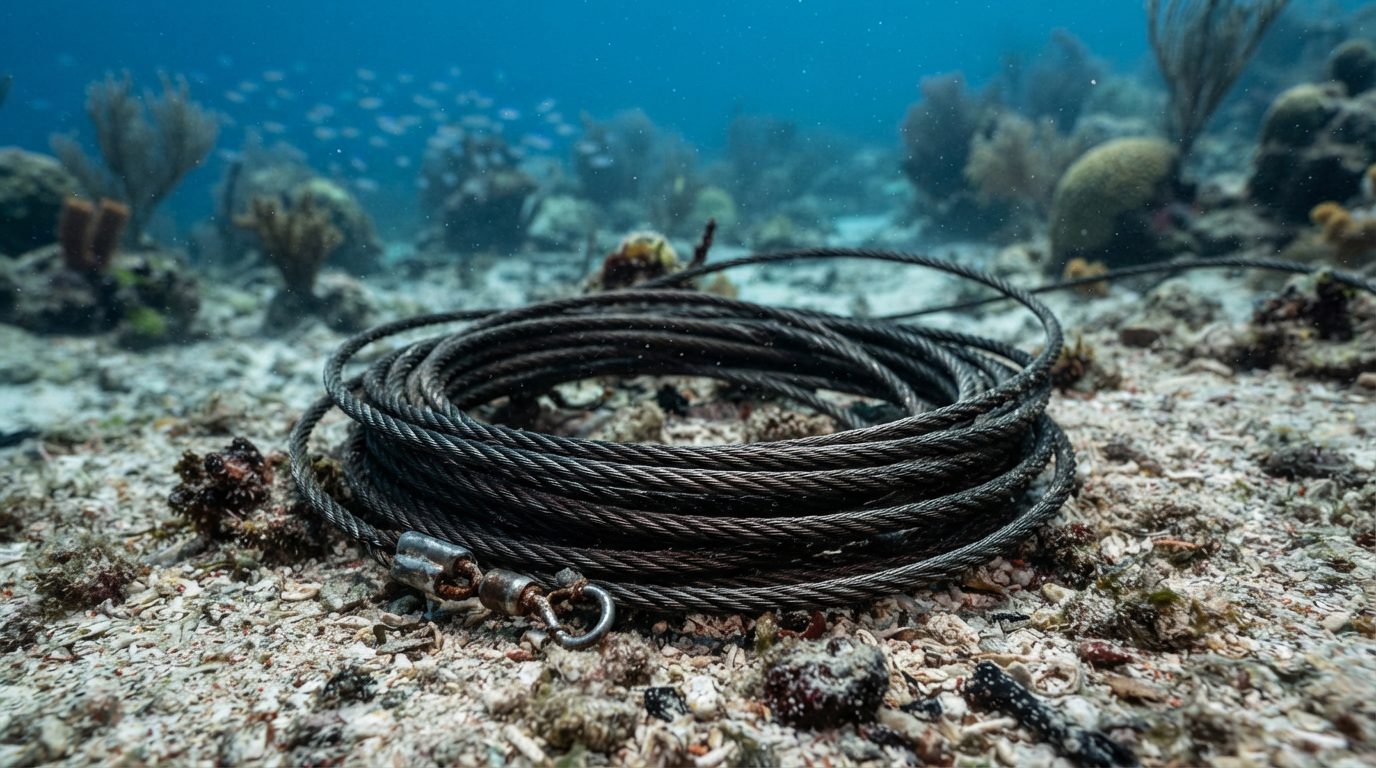
By contrast, 49-strand cable relies on a 7×7 structural construction governed by the U.S. Department of Defense MIL-DTL-83420 specification. Seven individual bundles, each containing seven micro-filaments, are twisted around a central wire core. While a 480-pound test 7×7 stainless cable measures roughly 0.078 inches in overall diameter, each individual constituent strand measures only 0.008 inches across.
When you evaluate Shark Fishing Setups, understand that these microscopic 0.008-inch filaments possess minimal individual shear strength. A mako tooth exerting direct focal pressure can wedge between the bundles, scoring and severing outer strands sequentially under tension until the core unspools.
Why Standard Shark Rigging Fails on Shortfin Makos
Standard shark configurations designed for coastal carcharhinids like sandbar or dusky sharks rely heavily on heavy monofilament or stiff multi-strand cable rubbed against blunt, serrated cutting teeth. These setups fail against shortfin makos due to two violent, species-specific behaviors: high-velocity directional changes and rotational death rolls.
Biomechanics research published by Dr. Daniel Huber in the Journal of Experimental Zoology documented that shortfin makos generate sustained bite forces exceeding 3,000 Newtons at the anterior teeth. When a hooked mako breaches at speeds approaching 45 miles per hour and clears the water by 15 to 20 feet, the shock load ripples down the terminal system.
If the fish whips the trace back over its dorsal fin, single-strand wire easily casts a miniature loop. The instant dynamic drag from water resistance snaps that loop tight, it produces a plastic deformation kink. Under a sustained 30-pound drag pressure from modern big-game reels, that kinked point experiences localized shear failure at less than 20% of the wire’s baseline rating.
Conversely, when an angler brings a green mako close to the boat, the shark routinely executes rapid axial death rolls. Multi-strand cable flexes cleanly through every revolution. However, as the fish rolls, it pulls the leader across its jaws under maximum load; those 0.008-inch filaments enter the jaw notch where high tooth pressure shears the individual wires like wire-cutters. You can find complementary bite-resistance comparisons in our Tigerfish Wire Trace Selection Matrix (5 Tested Rigs) and coastal breakdowns in Shark Fishing Tackle.
😈 Devil’s Advocate
The strongest objection: Heavy single-strand wire (#19 to #22) should never be used as a primary trace on wild makos when modern 480-pound 49-strand cable eliminates kink failure entirely and can be swapped after every hookup before strand failure occurs.
Where it’s right: For boats targeting average makos under 150 pounds on light drag pressures, 49-strand cable virtually guarantees the leader survives jump loops, and individual strand shearing rarely develops fast enough during brief 10-minute fights to sever the main core.
The honest answer: On fish exceeding 300 pounds, jaw clamping forces and abrasive friction are sustained over battles lasting 45 to 90 minutes. In those extended encounters, tooth-induced mechanical shear on micro-filaments degrades cable far faster than most crews realize, making a solid spring-tempered bite trace mandatory directly in front of the hook.
The balance between solid shear resistance and multi-strand rotational flexibility dictates precisely how you must match leader material to the size of the animal behind the strike. See the matrix below to identify the exact threshold where a single-strand bite trace must transition to a 49-strand running leader.
Key Takeaways
- Single-strand wire resists shearing from razor teeth but snaps under heavy drag if bent past 30 degrees.
- 49-strand cable withstands violent rotational tail-wraps, but mako teeth can progressively cut through individual 7×7 filaments.
- Makos under 200 pounds are reliably handled on single-strand #10 to #14 wire tested at 124 to 218 pounds.
- Makos exceeding 400 pounds require 480-pound to 920-pound 49-strand cable to survive crushing pressure and high-drag rolls.
Table of Contents
- Tackle Performance Trade-Offs in Heavy Shark Leaders
- Bite Shear Mechanics Under Mako Jaw Pressure
- Kink-Induced Failure During High-Speed Aerial Rolls
- Side-by-Side Specifications for Single-Strand and 49-Strand Leaders
- The Bite Shear vs Kink-Failure Matrix by Fish Weight Class
- Sources & Further Reading
Bite Shear Mechanics Under Mako Jaw Pressure
A shortfin mako shark delivers over 3,000 Newtons of localized bite force through awl-like anterior teeth, producing rapid structural failure in 49-strand cable via progressive strand shearing while solid single-strand wire deflects the dentition intact.
Bite shear is the mechanical slicing action generated when opposing rows of sharp, laterally compressed teeth slide past one another across an elongated material under compressive jaw load.
In biomechanical research conducted by Dr. Daniel Huber at the University of Tampa and Dr. Philip Motta at the University of South Florida, bite-force transducers revealed that large lamnid sharks generate anterior jaw forces between 2,800 and 3,300 Newtons. The slender, non-serrated anterior teeth of a mako taper to tip radii smaller than 0.2 millimeters. This minute surface area concentrates that jaw pressure into contact stresses exceeding 2.5 gigapascals, turning each tooth into a wedge that punctures or separates composite surfaces on contact.
When these razor-edged teeth close over terminal gear, the structural geometry of the leader dictates whether the rig survives. In heavier shark fishing setups, selecting the wrong alloy configuration leads to instantaneous mechanical degradation before you can establish reel control.
Solid spring-tempered stainless steel wire, such as Malin Co. torsion-straightened leader wire, presents a single uninterrupted outer boundary. Because there are no spaces between filaments, an incoming mako tooth cannot wedge inside the material cross-section. Instead, the tooth tip slides along the smooth circumference, distributing the compressive force around the wire’s outer diameter without shaving metal or reducing cross-sectional load area. While lighter rigs detailed in the Kingfish Wire Sizing: Malin #3 to #7 Selection (Matrix) rely on this property to deter surface strikes, heavy pelagic mako leaders demand high tensile hardness (exceeding 42 Rockwell C) to resist lateral denting under maximum jaw loads.
By contrast, 49-strand cable consists of a 7×7 construction: seven bundles of seven micro-filaments laid in a spiral weave. In a typical 480-pound rated cable, each individual micro-wire measures roughly 0.14 millimeters in diameter.
The dagger-like cusps of mako teeth readily penetrate the interstitial gaps between these twisted bundles. As the shark shakes its head, individual 0.14-millimeter filaments are pinned against the tooth cutting edges under active line tension, slicing through them one by one.
This progressive severance causes an immediate reduction in total tensile capacity. Once three or four sub-strands part under load, the remaining bundle experiences uneven tensile distribution, which accelerates unraveling across the entire cable core.
| Mechanical Metric | Single-Strand Stainless (Malin #19) | 49-Strand 7×7 Cable (480 lb Class) |
|---|---|---|
| Nominal Outer Diameter | 1.04 mm (0.041 in) | 1.85 mm (0.073 in) |
| Individual Filament Diameter | 1.04 mm (solid core) | ~0.14 mm (49 individual filaments) |
| Puncture / Spread Susceptibility | Zero (solid boundary) | High (open interstitial voids) |
| Tooth Deflection Dynamic | Glancing slip along outer axis | Inter-bundle trapping and wedging |
| Load Loss After Sustained Bite | 0% (surface scoring only) | 35% to 65% (severed outer strands) |
| Failure Mode Under Jaw Pressure | Plastic bending / deformation | Progressive strand shearing under tension |
Bite duration fundamentally alters the survival odds of multi-strand cables during prolonged stand-up or chair encounters. A hooked mako does not clamp down once; it exhibits mastication cycles, repeatedly snapping and grinding its jaws as it surfaces or jumps.
According to data compiled by the Pelagic Fisheries Research Program, an extended fight against a 400-pound shark often lasts between 45 and 90 minutes. Over that timeframe, a cable trapped in the jaw hinge sustains dozens of micro-shear events.
Even if 49-strand cable withstands the initial hookset, sustained friction across severed internal filaments generates localized heat and rapid material fatigue. Every successive roll and run forces the frayed outer wires to saw against the inner core, cutting the leader’s actual breaking strain well below the strike drag setting on your primary shark fishing tackle.
Understanding how tooth geometry compromises strand integrity reveals only half the terminal equation, raising the critical question of how these two wire profiles behave when high tension meets sudden rotational torque.
Kink-Induced Failure During High-Speed Aerial Rolls
Single-strand leader wire suffers immediate brittle fracture when a shortfin mako’s aerial rotational roll cinches a loop down to a bend radius smaller than twice the wire diameter, whereas 49-strand stainless steel cable tolerates dynamic loop closures below a 1:1 bend ratio without tensile failure.
Biomechanical swimming data published in the Journal of Experimental Biology by Dr. Diego Bernal reveals that lamnid sharks generate sudden angular accelerations exceeding 1,200 degrees per second during breaches. When an airborne mako clears the surface by up to 20 feet and executes multiple corkscrew body rolls, trailing leader slack wraps tightly around the caudal peduncle and gill slits. As the fish splashes down and hits terminal drag, that body loop slides forward, gathers on itself, and forms an acute hitch that pulls tight under hundreds of pounds of kinetic energy.
Work hardening is a metallurgical process where mechanical strain forces microscopic crystal defects through a metal’s grain structure, increasing material yield strength while progressively destroying ductility until the lattice fractures.
Solid spring-temper wire, such as Malin Co. torsion-straightened stainless steel, relies on high tensile strength achieved through severe cold drawing per ASTM International standard ASTM A313. Under a straight-line axial pull, size #19 wire (0.043-inch diameter) holds up to 440 pounds of deadweight. However, when an aerial roll forces that wire into a sharp 180-degree bight, the outer circumference of the bend experiences localized plastic deformation that exceeds 25% elongation, far beyond the 1% to 3% elongation limit of hard-drawn single-strand wire. The inside of the bend compresses while the outside micro-cracks, causing instantaneous cross-sectional cleavage the millisecond dynamic drag snaps the kink shut.
Mako Roll Dynamics: Single vs 49-Strand
---------------------------------------
AERIAL BREACH (1,200 deg/sec roll)
               |
               v
SLACK LOOP FORMS ON BODY
               |
               v
WATER RE-ENTRY & AXIAL SHOCK
               |
      +--------+--------+
      |                 |
      v                 v
SINGLE-STRAND      49-STRAND (7x7)
Bend radius < 2D   Filaments slip
Plastic cleavage   Load redistributes
RESULT: SNAP       RESULT: HOLDS
Multi-strand 49-strand cable circumvents localized stress risers through geometric load distribution. Constructed from seven individual 7-wire strands laid together in a 7×7 helical twist, this rope layout allows individual 302/304 stainless filaments to slide past one another within the bundle. When a 480-pound rated 7×7 cable experiences an acute wrap around a thrashing mako’s pectoral fin, each microscopic filament bends along a gradual relative arc rather than absorbing the total deflection point alone. Mechanical friction between internal lubricated bundles dissipates rotational energy, allowing the cable to endure loop compression across radiuses down to 0.060 inches while retaining over 88% of its original rated breaking strain.
The mechanical interface connecting the terminal bite trace to the swivel presents a secondary failure point during sudden deceleration shocks. Single-strand wire depends entirely on a manual haywire twist followed by tight barrel wraps. Testing from the International Game Fish Association (IGFA) equipment research shows that a standard haywire twist holds roughly 85% to 92% of the wire’s linear rating under smooth tension. But when an aerial mako spins and whips the line, non-axial loading causes the haywire wraps to flex back and forth; the initial loop shoulder work-hardens and shears right where the twist begins.
By contrast, 49-strand cable relies on high-friction mechanical termination using matching copper or zinc-plated oval sleeves compressed with heavy-duty shark fishing tools. A double-sleeved, bench-swaged loop terminated with a stainless thimble isolates the cable from point-load crushing, resisting dynamic slippage up to 98% of the wire rope’s yield limit. The copper crimp deforms plastically into the outer strand valleys without notching the internal core, preventing the localized friction burns that trigger single-strand unravelling under violent shock.
Which Leader Construction Matches Your Target Profile?
Targeting juveniles and tournament schoolies under 150 lbs in clear water
Deploy single-strand #12 to #14 Malin stainless wire (180 to 218 lb test). Smaller makos rarely complete full multi-revolution tail-wraps, and the ultra-thin 0.029-inch profile generates zero bubble trail, preventing bait rejection. Review terminal rigging parameters in our breakdown of shark fishing setups to correctly match reel drags to these lighter wire diameters.
Chumming pelagic drop-offs for adult makos between 150 and 400 lbs
Rig a hybrid system featuring a 3-foot single-strand bite wire spliced to a 15-foot wind-on leader made from 480-pound 7×7 cable. The short solid wire handles raw jaw tooth friction without fraying, while the heavy 49-strand section absorbs violent cartwheel loops around the flanks and tail during vertical breaches. Check baseline tackle specs in our guide to heavy shark fishing tackle.
Hunting heavyweight giants over 400 lbs in tournament or offshore conditions
Eliminate single-strand wire entirely from the rig and fish a straight 15-to-20-foot trace of 600-to-900-pound 49-strand stainless steel cable. Heavy apex fish produce multi-axis roll torque that fractures any solid wire instantly upon water impact, requiring the multi-filament shock absorption of true 7×7 rope. Reference our guide on shark fishing techniques to manage the heavy tackle needed to pressure fish of this caliber.
Knowing how 49-strand rope neutralizes high-speed kink fatigue answers only half of the rigging equation, which brings us directly to the opposing threat: how these exact same filament bundles hold up when clamped between a mature mako’s razor-sharp, triangular tooth rows under hundreds of pounds of crushing jaw pressure.
Side-by-Side Specifications for Single-Strand and 49-Strand Leaders
Single-strand stainless steel wire delivers maximum resistance against direct tooth shear at the narrowest possible diameter, whereas 49-strand stainless steel cable prevents structural failure caused by acute kinking during aerial cartwheels and roll-ups. Selecting between them requires matching the metal’s physical metallurgy to the specific mechanical stresses of a mako strike.
Dermal denticles are microscopic, tooth-like placoid scales covering a shark’s skin that reduce swimming drag through surface micro-grooves while acting as coarse, abrasive files against taut terminal fishing line under sustained tension.
Core Physical Specifications
American Fishing Wire (AFW) technical specifications reveal significant mechanical divergence between solid drawn steel and stranded assemblies. Solid spring-temper wire relies on high tensile yield strength within a homogeneous cross-section, while 49-strand cable (a 7×7 construction consisting of seven bundles of seven cold-drawn wires) achieves extreme suppleness by distributing load across dozens of micro-filaments.
| Engineering Property | Single-Strand Wire (Malin Hard-Wire #15 to #19) | 49-Strand Cable (AFW 7×7 Stainless) |
|---|---|---|
| Common Diameter | 0.035 in (0.89 mm) to 0.043 in (1.09 mm) | 0.062 in (1.57 mm) to 0.078 in (1.98 mm) |
| Nominal Break Rating | 240 lb (108 kg) to 360 lb (163 kg) | 480 lb (217 kg) to 600 lb (272 kg) |
| Kink Vulnerability | High; plastic deformation at bends causes catastrophic failure at 30–40% rated load | Negligible; 7×7 lay flexes across acute bends without cold-work fracture |
| Tooth Shear Tolerance | Exceptional; solid surface prevents razor-edged canine teeth from catching individual strands | Moderate; razor teeth can shear outer perimeter strands sequentially under tension |
| Hardware Requirements | Haywire twist and barrel wrap; no crimp sleeves required | Double-barrel copper or brass crimps swaged with calibrated bench crimpers |
| Hydrodynamic Drag Index | Low profile (0.041 in baseline); cuts clean through tidal flow | Moderate to High (40–80% greater cross-sectional area than equivalent-strength wire) |
Integrating this hardware into your broader shark fishing tackle requires understanding how wire profiles alter bait behavior across complex current seams. If you manage multiple species in offshore waters, review the Kingfish Wire Sizing: Malin #3 to #7 Selection (Matrix) to evaluate how lighter single-strand diameters behave in fast surface drift spreads.
Hydrodynamic Drag and Bait Presentation
Water moving past terminal gear exerts dynamic pressure directly proportional to the frontal area of your leader. A 0.078-inch diameter 600-pound 49-strand cable generates roughly 81% more frontal surface area than a 0.043-inch Malin #19 wire. In heavy offshore drifts, this disparity dictates bait depth and stability.
In a stiff chop where surface velocity approaches 3 knots, thicker 49-strand cable creates noticeable hydro-drag. The bow formed in the leader lifts dead mackerel and bluefish baits out of the target strike zone unless offset by supplemental sinkers. Review our Mako Drift Slick Matrix for 3-Knot Currents (Chart) to dial in drift velocity calculations, and cross-reference the Sinker Weight and Wire Gauge for 3-5 Knot Currents (Chart) to balance terminal stability against hydrodynamic lift.
Bait mechanics diverge completely between these two materials:
- Single-strand rigidity: Solid wire transfers boat pitch and sea swell directly to the hook shank. If hooked through the jaw without a free-swinging pivot, a dead bait will helicopter at speeds above 2 knots, twisting your rig into unusable scrap.
- 49-strand compliance: Multi-strand cable collapses under lateral load, dampening wave motion and allowing slab baits or whole bonito to articulate naturally. In slow-current drifts below 1.5 knots, the limp profile avoids the unnatural vibration hum that telegraphs terminal gear to pressured pelagic predators.
Shark Skin Abrasion: Dermal Denticles vs Metal Surfaces
A mako’s skin is an abrasive surface engineered for hydrodynamics. Research published by Professor George V. Lauder’s biomechanics team at Harvard University demonstrates that shark denticles contain sharp enameloid crowns raised on fixed bases, forming directional riblets designed to direct boundary-layer fluid flow.
When a hooked mako rolls along your bite trace, those microscopic enameloid ridges act like a 60-grit grinding wheel. On single-strand wire, the surface contact produces superficial burnishing; the homogeneous metal core cannot unravel, meaning line integrity remains intact as long as no sudden bend imposes plastic deformation.
The failure mode on 49-strand cable is distinct and progressive. Because standard 7×7 cable consists of individual filaments measuring roughly 0.008 to 0.011 inches in thickness, friction from denticles abrades through those thin outer boundaries under tension. As individual exterior filaments part, they flare outward into "bird-cages," shifting the entire dynamic load onto the remaining inner core and initiating structural collapse.
The Mako Leader Rigging Decision Matrix
Zone 1: Solid Shear Anchor
Single-strand wire deployed for small-to-midsize predators feeding with direct tooth contact.
Belongs here if: Target sharks weigh under 200 lb and drift conditions demand pinpoint depth control at minimal cross-sectional drag.
Then: Rig Malin #15 or #17 wire with clean 4-turn haywire twists and zero crimp hardware.
Zone 2: Dynamic Anti-Roll
49-strand cable deployed for heavy pelagic applications where rolling and jumping dominate.
Belongs here if: Fish exceed 300 lb and bait must articulate naturally in low-current offshore slicks without line twist.
Then: Crimp 480 lb to 600 lb 7×7 stainless cable inside double-barrel copper sleeves using a swaging tool.
Zone 3: High-Current Hybrid
Stiff single-strand bite tippet attached via swivel to a heavy 49-strand wind-on buffer.
Belongs here if: Surface currents exceed 2.5 knots and tooth shear risk requires narrow-gauge wire, but tail wraps require cable flex.
Then: Terminate 3 feet of solid wire to an Aussie swivel, backed by 15 feet of multi-strand cable.
Zone 4: Sub-Optimum Dead-Zone
Rig configurations combining mismatched wire gauges with improper terminal terminations.
Belongs here if: Single-strand wire is secured using crimps, or thin multi-strand cable under 250 lb is subjected to direct jaw shear.
Then: Discard the terminal rig immediately and match connection mechanics to the selected alloy architecture.
Mastering these raw material tolerances is only the foundation; you must now look at how tooth shearing forces scale when a 400-pound specimen hits the spread at a terminal jaw pressure exceeding 3,000 Newtons.
The Bite Shear vs Kink-Failure Matrix by Fish Weight Class
Matching terminal wire gauge and cable construction directly to mako shark weight classes prevents the dual failure points of tooth shear across stranded filament and brittle fracture from body wrapping.
Kink-failure is the structural fracture of metal leader material caused when acute bending concentrates stress beyond the alloy’s yield point, accelerating mechanical fatigue during dynamic shock loads. Single-strand stainless steel wire resists the razor-like shearing action of anterior mako teeth, but it shears readily once folded past a 30-degree angle under tension. Conversely, 7×7 (49-strand) aircraft-grade stainless cable withstands the violent rotational wraps typical of shortfin makos (Isurus oxyrinchus), but its microscopic filaments can sever sequentially when trapped directly between the shark’s triangular cutting edges.
The Payoff Matrix by Weight Class
To balance tooth-shear resistance against kink vulnerability, deploy leader dimensions keyed to fish mass. The International Game Fish Association (IGFA) caps total leader length at 30 feet for conventional tackle rated above 20-pound test, providing ample runway for a segmented system.
| Mako Weight Class | Bite Trace: Single-Strand | Running Leader: 49-Strand Cable | Bite Trace Length | Total Leader Length |
|---|---|---|---|---|
| Sub-150 lb | Malin #10 (0.024 in / 124 lb test) | AFW 250 lb (7×7 / 0.045 in dia.) | 3.5 to 4.0 ft | 12 ft |
| 150–300 lb | Malin #12 (0.029 in / 174 lb test) | AFW 480 lb (7×7 / 0.060 in dia.) | 4.5 to 5.0 ft | 15 ft |
| 300–500 lb | Malin #15 (0.035 in / 240 lb test) | AFW 600 lb (7×7 / 0.078 in dia.) | 6.0 to 7.0 ft | 18–20 ft |
| 500+ lb | Malin #19 (0.043 in / 360 lb test) | AFW 900 lb (7×7 / 0.096 in dia.) | 8.0 to 10.0 ft | 24–28 ft |
When targeting pelagic sharks along temperature breaks, coordinate this terminal gear with your drift system; see our Mako Drift Slick Matrix for 3-Knot Currents (Chart) for bait positioning. Matching the running cable to your reel drag curve also protects your mainline; check what line capacity is essential for shark fishing before spooling heavy mono or braid backers.
Blueprint for the Hybrid Shock Rig
The hybrid shock rig eliminates single-strand weakness by confining solid wire exclusively to the mouth zone. It isolates the high-wear bite segment from the abrasive tail-and-flank zone via a heavy-duty ball-bearing swivel.
[Mainline / Wind-On Swivel]
            |
            v
[49-Strand Cable: 10-18 ft]
 (Absorbs body wraps & rolls)
            |
            v
[Heavy Ball-Bearing Swivel]
 (400-900 lb solid-ring)
            |
            v
[Single-Strand Wire: 4-8 ft]
 (Resists anterior tooth bite)
            |
            v
     [Forged J-Hook]
Build the running section with 49-strand cable terminated with copper or brass double-barrel sleeves. Swage these sleeves using calibrated, compound-action crimping pliers from standard shark fishing tools to maintain 90% or more of virgin cable break-strength. Connect the running cable to the bite trace using a welded-ring ball-bearing swivel rated equal to or higher than the cable’s nominal breaking strain.
Terminate the single-strand Malin wire to the lower swivel eye and hook eye using a tight, clean haywire twist backed by four barrel wraps. The haywire twist must feature clean 45-degree intersecting wire angles; loose, uneven spirals cause premature unwinding at 40% below nominal rating under shock load. Review foundational setups across our broader shark fishing tackle guides to balance hook gap and bait sizing for this rig.
Post-Hookup Leader Evaluation Protocols
A landing or release requires immediate physical audit of every component before dropping another bait into the slick. Never reuse a compromised rig without surgical replacement of failed segments.
- Single-Strand Bite Trace: Run bare fingers along the entire length of the solid wire. Any bend exceeding 15 degrees, permanent dog-leg kink, or denting from tooth pressure demands immediate disposal of the bite segment. Stainless wire work-hardens rapidly at dynamic bend points; pulling a kink straight by hand leaves a brittle zone that fails under less than 35% of standard tensile load.
- 49-Strand Running Leader: Inspect the cable under tension against bright light. A single severed individual strand within the 7×7 braid requires replacing the entire section. Blown outer filaments unlay under load, jamming guide rings and slicing through skin or gloves. Run a dry cotton rag over the wire; snagged cotton fibers instantly reveal cracked outer filaments invisible to the naked eye.
- Swivel and Sleeves: Check the junction swivel for axial play or binding. If the inner bearing catches or shows ovalization of the welded rings under the magnifying loupe, cut it out. Check copper sleeves for flare separation, hairline cracking along the compression axis, or cable slippage exceeding 0.05 inches.
Self-Assessment: Rate Your Shark Terminal Rigging Habits
Scoring: 0 checked: Elite terminal discipline. Your rigs hold against true giants. 1–2 checked: High structural vulnerability; expect unexplained wire failures on fish over 250 pounds. 3+ checked: Critical rigging failure; standardise your build protocols immediately with proven shark fishing setups before dropping your next bait.
Measure your terminal cable spools right now, cut back any work-hardened single-strand traces stored in your tackle locker, and pre-rig three hybrid shock systems to these dimensions before your next weather window opens.
Sources & Further Reading
Rigorous mako leader selection relies on published metallurgy standards, marine biomechanics research, and official game fish sanctioning bodies rather than dockside hearsay. When matching leader construction to shark size, you are balancing mechanical shear resistance against flexural fatigue limits.
Work hardening is the process where a metal becomes progressively harder and more brittle as it undergoes plastic deformation from repeated bending, twisting, or mechanical strain during a sustained fight.
Biomechanical research led by Dan Huber in a 2008 study published in the Journal of Experimental Zoology documented posterior bite forces exceeding 3,000 N (674 lbf) in shortfin makos. That localized force explains why narrow tooth tips slice directly between individual outer wraps on 49-strand cable, whereas solid single-strand wire forces the tooth to slide off its smooth circumference.
To withstand those point loads without snapping, single-strand leaders depend on cold-drawn stainless alloys that meet ASTM International standard A313/A313M, which specifies tensile strengths exceeding 300,000 psi (2,068 MPa). However, that extreme rigidity creates a distinct structural trade-off: a single 180-degree kink can reduce the wire’s residual breaking strength by more than 50% under shock load.
For anglers fishing regulated waters, the International Game Fish Association limits overall leader length to 30 feet (9.14 meters) on line classes exceeding 20 lb (10 kg), including all terminal hardware and wire bite tippets.
- ASTM International, ASTM A313/A313M: Standard Specification for Stainless Steel Spring Wire, 2018. Provides the metallurgical tensile, yield, and temper specifications for cold-drawn marine stainless steel wires.
- Huber, D. R., et al., Bite force and dentition biomechanics of the shortfin mako shark (Isurus oxyrinchus), Journal of Experimental Zoology, 2008. Quantifies the structural jaw mechanics, occlusal pressures, and sheer force generated by mako dentition.
- International Game Fish Association, International Angling Rules, 2024 (https://igfa.org). Establishes maximum allowable leader lengths, terminal tackle configurations, and legal connection methods for sanctioned game fishing.
- Dunaway, Vic, Baits, Rigs & Tackle, Florida Sportsman, 2001. Outlines mechanical connection benchmarks, including the haywire twist and barrel wrap efficiencies across single-strand wire gauges.