Poling Skiff Deck Setup: Stop Tarpon Line Snags (Checklist)
⏱ 17 min read
Zero-Obstacle Deck Setup for Heavy Tarpon Hooksets
Eliminating deck snags for 100lb+ tarpon requires a completely flush casting platform, staging coils largest-to-smallest in a damp line mat or stripping basket, and taping or shielding all perimeter hardware. A hooked triple-digit silver king generates violent line speeds that find every obstruction on your poling skiff. Setting up a zero-obstacle deck means stripping line cleanly, clearing every latch, and dampening deck vibrations before the fish tracks your fly.
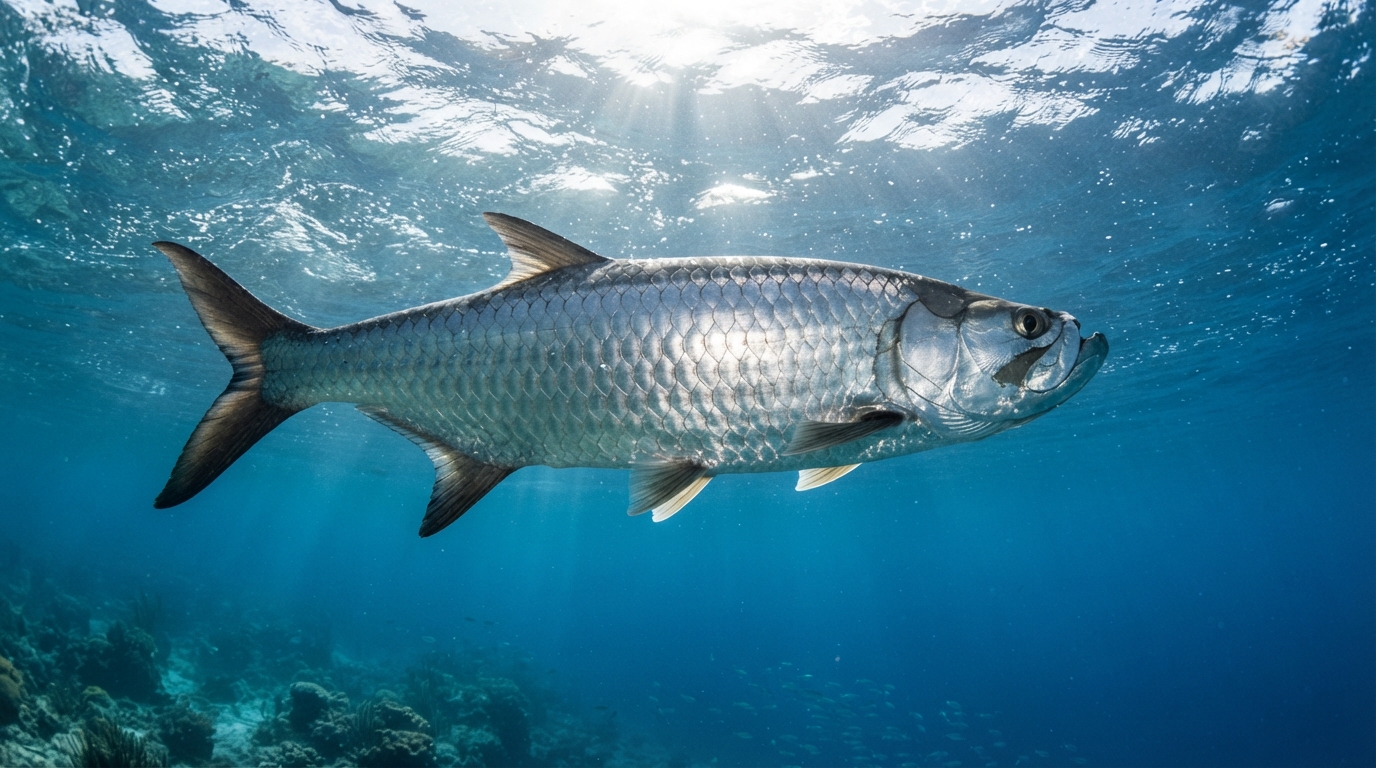
A tarpon hookset creates an immediate physics problem. Once the hook embeds into bony jaw cartilage, the fish converts raw mass into panic. Marine dynamics testing cited by the Bonefish & Tarpon Trust indicates a 100-pound tarpon accelerates past 30 mph in under two seconds.
At that speed, loose fly line on the deck transitions from static coils into a violent, whipping blur. That transition is where angler errors compound. A running line clearing the deck at 44 feet per second will grab hatch hinges, push-pole holders, trolling motor brackets, and bare toes.
A standard knot or small deck catch might merely pull drag when you set on redfish. For tarpon, it is fatal to your tackle. Redfish rarely demand line speeds that create shock-load spikes, but a heavy tarpon puts immense kinetic energy directly into the connection before your reel’s drag system can engage.
A tippet is a short section of monofilament or fluorocarbon tied between the leader and the fly that protects the main line and sets a breaking limit for record tracking. In destinations like Boca Grande Tarpon Fishing or during Tarpon Fishing In Key West, anglers typically fish class tippets between 16lb and 20lb, protected by a 50lb to 80lb bite tippet.
When a standard 50lb fluorocarbon shock leader hits an obstruction at 30 mph, the instantaneous shock load spikes well past its tensile rating. The line snaps instantly.
Understanding this explosive force changes how you rig. While standard Tarpon Fishing Rigs prioritize hook penetration and bait presentation, deck discipline dictates whether that terminal tackle survives the strike. Building clean Tarpon Fly Sinking Rates: Lead Distance Math (Chart) calculations into your approach means nothing if a single latch pin snags your shooting line.
Preparation on the bow deck must be systematic. Marine deck rigging relies on physical mitigation: removing protruding hardware, securing stray line loops, and managing deck moisture.
- Tape over pop-up push-pole holders, hatch handles, and deck cleats with wide silicone rigging tape.
- Soak your textured foam stripping mat with saltwater to prevent fly line coils from sticking or blowing in crosswinds.
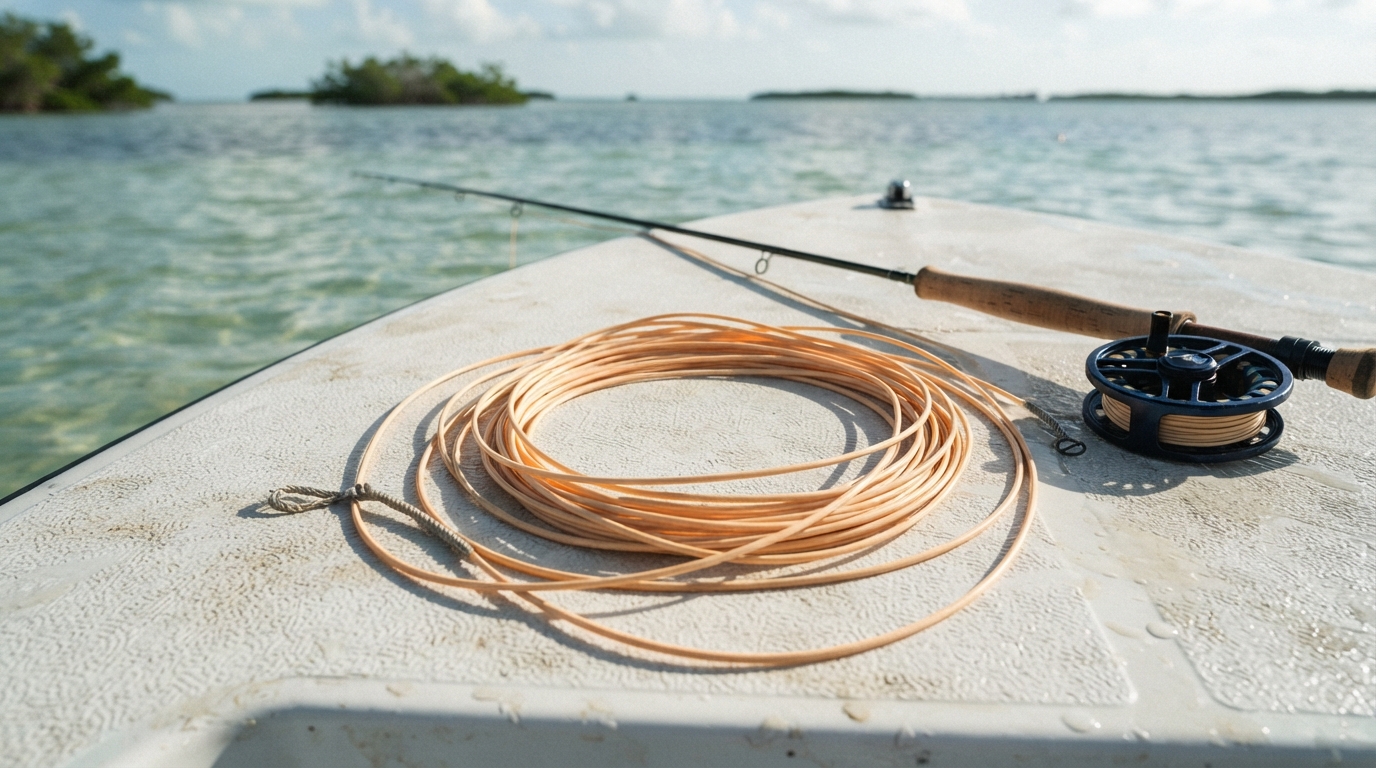
- Strip 40 to 60 feet of running line onto the deck using large coils first, progressively layering smaller coils on top.
- Remove your shoes or switch to smooth neoprene socks to prevent barefoot line snags or tread catches.
- Route the trolling motor cord and foot pedal completely off the forward casting platform.
Once your bow platform is stripped of snags, the next operational hurdle is managing line control during sudden boat pivots.
Key Takeaways
- Strip running line onto a dampened deck mat to stop wind-blown tangles before casting.
- Tape down all flush-mount cleats, hatch latches, and trolling motor brackets with marine tape.
- Stage running line in wide 3-foot loops with the shooting head resting on top.
- Fish barefoot or wear flat-bottom socks to prevent line loops snagging under shoe lugs.
Table of Contents
- Zero-Obstacle Deck Setup for Heavy Tarpon Hooksets
- Eliminating the Five Deadliest Deck Snag Hazards
- Coiling Mechanics and Stripping Basket Placement Strategy
- Clearing Line and Clearing the Deck During Hookset Execution
- The Pre-Flat Poling Skiff Deck Management Checklist
- Sources & Further Reading
Eliminating the Five Deadliest Deck Snag Hazards
Eliminating snag hazards from a skiff deck requires converting every exposed edge, gap, and catch point into a smooth, ramped surface before your fly line leaves the deck. A hooked 100-pound tarpon clears 30 feet of loose shooting line off the floor in under two seconds. Any hardware edge that catches that running loop snaps a 20-pound class tippet instantly.
A shooting line is the thin running portion of a fly line that trails behind the heavy front taper and shoots through the guides during a long cast.
Bow hardware presents the initial structural barrier. Accon Marine pop-up cleats sit flush when pushed down, but the recessed perimeter leaves a 2-millimeter gap that grabs limp fly lines. Wrap two overlapping bands of 3M 471 vinyl tape across the perimeter seam of closed cleats to build an artificial bevel. Treat trolling motor quick-release mounting pucks the same way: tape a heavy-duty silicone dog bowl inverted over the bracket if the motor is stowed off the bow. Remove round navigation light receptacles from the forward deck entirely, or cap them with glued 3-millimeter closed-cell foam pads. Standard deck prep for technical skiffs in Tarpon Fishing Islamorada requires zero vertical hardware within a 48-inch radius of the angler’s feet.
Deck lids and hinges create hidden pinch zones during aggressive line clears. Factory Gemlux friction hinges feature knuckle profiles that sit 0.375 inches above deck gelcoat, right where loose loops settle. Lay a continuous strip of 4-inch wide marine friction tape over hinge lines, pressing the center firmly into the hinge valley to bridge the gap. For recessed hatch pull-rings, cut custom inserts from 5-millimeter neoprene sheet. Push these circular inserts directly into the pull-ring recesses so line coils slide across a level plane instead of dropping into finger cups. Mastering your line path matters just as much as studying Tarpon Fly Sinking Rates: Lead Distance Math (Chart) or dialling in your Tarpon Fishing Rigs for ocean-side runs.
Cockpit drainage and platform hardware require mechanical shielding. Open scupper holes and deck drains swallow coils whenever the skiff shifts trim under footwork. Press rubber plumbing test plugs into the deck drain openings during active poling runs, or cover cockpit scupper grates with weighted silicone shower sheets trimmed to fit. Anchor the turnbuckles securing your forward casting platform by wrapping the threaded rods and barrel nuts in split pipe insulation sealed with electrical tape. Secure any bow-mounted trolling motor wiring harnesses against the inside gunwale using nylon insulated cushion clamps spaced every 10 inches to eliminate drooping loops. In competitive circuits across Boca Grande Tarpon Fishing, guides verify that no loose cables exist forward of the center console.
Footwear causes more lost fish than deck hardware. Standard deck shoes feature deep, siped wet-grip grooves that mechanically trap high-speed fly line loops under your toes as line lifts. Bare feet solve the snag issue but lead to bruised toes against platform legs when fish surge. Wear smooth-soled neoprene flats socks or thin silicone-bottomed boat socks instead. The flat, uninterrupted outer surface lets running coils pass over and off your instep without catching on tread lugs, laces, or tongue gussets. The American Sportfishing Association’s deck safety guidelines confirm that non-textured flexible deck footwear preserves angler mobility while eliminating micro-snags on high-strain hooksets.
Work the 5 Whys on your deck snag failures
Step 1: Identify the direct failure
State the exact event that broke the leader or halted line flow during the cast or hookup.
Example: The 16-pound class tippet parted instantly when the tarpon turned away from the boat.
Step 2: Trace the physical snag location
Find the exact object on the deck or clothing that arrested the running line.
Example: A loop of running line hitched around the port-side pop-up cleat housing.
Step 3: Examine the hardware condition
Determine why that specific object had an exposed edge capable of holding line.
Example: The pop-up cleat was retracted fully down but lacked a beveled tape seal across its edge.
Step 4: Check the preparation protocol
Identify why the snag hazard was left exposed before the angler stepped onto the casting deck.
Example: The crew skipped morning deck tape prep to reach the flat before first light.
Step 5: Address the root procedural breakdown
Determine what missing checklist or vessel standard allowed the boat to fish unshielded.
Example: The vessel had no standardized pre-launch deck-clearing checklist posted in the dry storage locker.
DECK AUDIT WORKSHEET
[Failed Point]: _______________________
[Hardware Identified]: ________________
[Surface Flaw]: _______________________
[Missed Step]: ________________________
[Corrective Rule]: ____________________
Once you tape off deck hardware and clear your footwear, managing where you strip running line becomes the final mechanical priority.
Coiling Mechanics and Stripping Basket Placement Strategy
To prevent line jams during a 100-pound tarpon strike, drop retrieved coils onto the skiff deck in descending loop diameters, laying the widest loops at the bottom and stacking progressively tighter coils directly on top.
When a giant tarpon eats, line leaves the deck at speeds exceeding 30 miles per hour. If a broad bottom coil catches an upper coil, it pulls a half-hitch into the stripping guide, snapping a 50-pound fluorocarbon shock tippet instantly. Stripping large 24-inch foundation loops first ensures the line feeds cleanly from the top down without snaring underlying line mass.
Coil memory is the physical tendency of a synthetic fly line core to retain tight spiral loops after coming off a reel spool, causing wraps around deck cleats and line tangles during fast delivery.
[Top: 6-10" Short Strips]  -> Feeds 1st
         |
[Mid: 12-16" Feed Loops]   -> Feeds 2nd
         |
[Base: 20-24" Wide Loops]  -> Feeds Last
Eliminate coil memory before the morning tide window begins. In Andy Mill’s book A Passion for Tarpon, veteran guides strip 40 feet of heavy running line from the reel and pull it straight between two hands in 3-foot segments. Maintain steady hand tension on each segment for 15 seconds. For tropical 11-weight and 12-weight floating lines, this hand-stretch resets the braided nylon core, dropping line twist by 80 percent before the first flat is poled.
Crosswinds disrupt deck line instantly. When 15-knot chop rolls across the bow during Tarpon Fishing Islamorada, dry gelcoat will not hold running line in place. Lay down a dampened, closed-cell EVA deck mat, or a silicone-spiked mat such as those documented by Scientific Anglers field testers. The silicone cones capture line loops physically, while the surface tension of a wetted deck mat creates hydraulic friction, pinning loose fly line down until the forward cast lifts it free.
Position the stripping bucket or deck basket 12 to 18 inches off the instep of your lead foot on your downwind side. If the guide poles the skiff west into an incoming tide with wind off the port side, place the bucket to your starboard flank. This keeps trailing coils clear of your boots as current shifts the skiff’s centerline. Fine-tuning your platform layout to match specific tarpon fishing rigs prevents loose shooting head mass from billowing over the gunwale.
| Myth | Fact |
|---|---|
| Storing line loosely in a bucket eliminates all tangles automatically. | Fast retrieves drop variable slack into buckets, producing snarls if coils cross inside a narrow container. |
| Line conditioners soften saltwater fly lines to reduce deck loops. | Chemical conditioners strip the factory lubricants from tropical PVC coatings, causing lines to stick to blank guides. |
| You should stretch lines cold straight off the reel spool at sunrise. | Stretched cold PVC can crack; warm the line in cockpit sunlight for 5 minutes before applying firm tensile pull. |
Proper deck staging secures the cast, but managing line speed during the clearing phase determines whether your hook point actually penetrates bone.
Clearing Line and Clearing the Deck During Hookset Execution
Clearing loose fly line during a triple-digit tarpon hookset requires an immediate transition from the strip strike to an open guide-hand ring before the fish hits 25 miles per hour. A strip strike is a hook-setting technique where the angler pulls the fly line backward with the line hand rather than lifting the rod tip, driving the hook point into the fish’s hard jaw. When a 100-pound fish bolts across a shallow flat, 40 to 60 feet of loose shooting line leaves the deck in under three seconds. Any hitch around your body or reel will snap a 20-pound class tippet instantly.
Forming the guide-hand "O-ring" channels this lifting line cleanly away from danger. The moment you drive the hook home, touch the index finger and thumb of your line-stripping hand together to make a smooth loop roughly 2 inches in diameter. Hold this ring 12 to 18 inches forward of your chest, aligning it directly between the deck coils and the stripping guide of your heavy saltwater fly rod.
This creates an artificial, low-friction funnel that guides violent line oscillations away from reel handles, shirt buttons, and waist packs. In Andy Mill’s instructional text A Passion for Tarpon, Mill documents how uncontrolled line whips wrap around reel counterbalances during the initial 4-second burst, causing immediate break-offs. Keeping that hand loop open and steady eliminates the slack slaps that catch on external gear.
⚠️ Anti-Pattern: the Clamp-Down Trap
What it looks like: Squeezing the fly line against the rod grip with your fingers immediately after the strike to feel the fish pull.
Why it’s tempting: Anglers instinctively want direct tactile control and fear losing line tension before the reel’s drag engages.
What it costs: A running tarpon instantly friction-burns your fingers to the bone or rips the rod butt from your ribs, parting the leader before the reel can turn.
Do instead: Release your line-hand grip instantly into an open circular funnel, letting line pass untouched until the drag system absorbs the load.
Angler stance rules require keeping your feet strictly outside the primary drop zone when setting the hook. The drop zone is a roughly 3-foot circular patch of deck directly beneath your line hand where stripped coils land during a retrieve. Stand with your feet set at shoulder width, planted 6 to 8 inches outside this target perimeter. Standardise your stance so your lead foot stays pinned to the deck edge; never shuffle your feet while tracking a cruising fish.
Deck discipline matters on every flat, whether you book a trip for tarpon fishing Islamorada or target migratory giants during prime Boca Grande tarpon fishing. If a single coil drops across the top of your deck shoe, lifting your heel traps the fly line between rubber and fiberglass, breaking the tippet. Keep your feet anchored flat until all deck coils clear through the rod guides.
Communication between the bow angler and the guide must follow a strict, monosyllabic protocol to pivot the hull safely. The guide must swing the skiff away from the running line to avoid running over shooting coils or wrapping them around the push pole.
[Angler strikes: yells "ON!"]
             |
             v
[Guide plants push pole foot]
             |
             v
[Guide spins transom opposite to run]
             |
             v
[Deck line clears: angler yells "ON REEL"]
When you stick the fish, call out "ON!" loudly. The guide immediately plants the push pole to pivot the bow, angling the boat 45 degrees away from the fish’s escape vector according to technical skiff-handling protocols published by the Florida Guides Association. Maintain silence on the bow until the final foot of running line passes through your hand funnel and engages the spool. The moment line tension meets the drag, call out "ON REEL" so your guide knows they can safely reposition the skiff under outboard power.
Mastering this three-second mechanical handoff prevents standard break-offs, but line behaviour shifts dramatically once the remaining running line clears the deck and drags down into the backing.
The Pre-Flat Poling Skiff Deck Management Checklist
A standardized pre-flat deck checklist eliminates line snags before a 100-pound tarpon enters casting range. A single loop caught on a hatch latch, a cleat, or a platform frame during the hookset snaps 80-pound fluorocarbon shock tippet instantly. Professional flats guides run a mechanical sequence at three distinct operational checkpoints to guarantee clean line clearance.
Marina Ramp Staging
Preparation starts at the boat ramp before launching the skiff. Every protruding piece of deck hardware must be sealed or padded before line ever touches the deck.
A platform turnbuckle is a threaded metal coupling device used to anchor the elevated poling or casting structure securely to the skiff deck. It features exposed threads, tension bars, and locknuts that routinely catch loose fly line during high-speed shoots. Wrap all platform turnbuckles and deck eyelets in 0.5-inch closed-cell pipe insulation, then secure the padding with heavy-duty vinyl tape from 3M.
Stow every secondary item below deck. Tackle bags, water bottles, push pole holders, and spare tarpon fishing rigs create friction points that collect coils. Recessed pull-up cleats must be pushed flush into the gunnels. If your skiff has fixed bow cleats, tape a smooth plastic cup over them to create a dome that sheds running line.
Pro-Tip: Run a microfibre towel across the entire front casting deck before loading rods. If the cloth snags on any hatch seam, screw head, or non-skid edge, your 50-pound fly line running core will snag on it too. Smooth the catch point with emery cloth or tape it down immediately.
Final Approach Transition
Run this operational transition 500 yards off the target flat as you shut down the main engine. Complete the full deck setup in under 60 seconds so the boat moves silently onto the flat without delay.
Trim the outboard fully out of the water and engage the tilt lock. Secure the poling platform and deploy your push pole quietly from the gunnel clips. Wet down the casting platform or your closed-cell EVA foam deck pad with a bucket of seawater. Dry deck surfaces generate static friction that causes coiled line to twist and drag during the cast.
Pull 50 to 60 feet of running line off your reel and stretch it out in 6-foot increments between your hands. Saltwater fly line coatings retain coil memory from the reel spool, especially during early morning launches in tarpon fishing Islamorada or runs across Biscayne Bay for tarpon fishing Miami. Physical hand-stretching eliminates these pigtails and ensures line drops flat on the wetted deck.
Active Bow Station Checklist
Step onto the bow with your heavy saltwater fly rod only after the deck is clear, wet, and stable. Positioning errors account for the majority of fouled shots on cruising fish.
Stand with your lead foot roughly 12 inches behind your line coils, keeping your stance shoulder-width apart. Drop the first 15 feet of running line in broad, 18-inch coils directly between your feet. Layer the remaining 35 feet of line in progressively tighter coils directly on top of the base. As Florida Keys guide Steve Huff established in shallow-water tournament strategy, layering line top-to-bottom prevents the outbound line from pulling under deeper loops during the shoot.
Hold the fly by the hook bend against the cork handle or lock it into a dedicated thumb ring. Never stick the fly hook into a rod guide frame, as pulling it free under pressure bends guide feet and damages wire frames. Keep 9 feet of leader and 2 feet of fly line extended beyond the rod tip so the system is loaded and ready for an immediate single-false-cast delivery.
       Active Bow Line Setup
                 |
                 v
     [Rod Tip: 2ft Line Out]
                 |
                 v
   [Hook Secured in Thumb Ring]
                 |
                 v
     [Small Outbound Coils]
                 |
                 v
     [Large Base Line Coils]
                 |
                 v
     [Angler Feet 12in Behind]
Pro-Tip: Keep your deck footwear simple or fish barefoot. Deep lugged boat shoes or sandals with open strap buckles catch running line loops at the exact second a hooked fish surges. Flat-soled deck boots or bare feet keep line moving cleanly off the non-skid surface.
Post-Shot Reset Routine
When a tarpon refuses the fly, eats and drops it, or spooks, reset the casting deck within 15 seconds. High-pressure flats rarely give you several minutes between cruising pods.
Strip line back onto the deck with your eyes locked on the water, but retrieve with high, deliberate hand motions. Do not allow retrieved line to pool behind your heels or bunch against the console bulkhead. When retrieving an unweighted or intermediate line—such as those calculated in our tarpon fly sinking rates lead distance math chart—gather line in broad, sweeping loops rather than micro-strips.
Execute this four-step sequence the instant the fly leaves the water:
- Lift the rod tip to bring the leader back to hand height.
- Clear any stray loop wrapped around the fighting butt or reel handle.
- Check that the outbound 50-foot shooting head rests clean on top of the running line stack.
- Grip the fly bend in your thumb and return your eyes to the search sector.
According to catch records from the International Game Fish Association, adult Atlantic tarpon reach speeds exceeding 35 miles per hour in their initial run. A fouled deck guarantees tackle failure at that velocity. Take five minutes before your next tide change to tape your skiff hardware, lay down your deck mat, and practice the 15-second coil reset.
Sources & Further Reading
Poling skiff deck management protocols rely on mechanical habits validated by decades of competitive saltwater flats angling and fisheries research.
A poling skiff is a specialized shallow-draft boat engineered with an unobstructed platform and minimal deck hardware, allowing an operator to silently propel the craft across flats using a composite push pole.
When an angler hooks a 100-pound tarpon, the fish can accelerate to 35 miles per hour in less than 2 seconds, turning loose deck coils into an immediate hazard. Marine researcher Dr. Aaron Adams and the team at the Bonefish & Tarpon Trust document that minimizing fight time directly lowers post-release predation and lactic acidosis, making immediate, snag-free fly line clearing vital for fish survival. Eliminating deck snags ensures line exits through the stripping guides without catastrophic halts that break 60-pound shock leaders or shatter rod blanks.
- Andy Mill, A Passion for Tarpon, 2010 — Details aggressive down-and-dirty hookset mechanics, deck preparation, and line-clearing discipline under extreme tournament conditions.
- Chico Fernandez, Fly Fishing for Tarpon, 2008 — Provides authoritative breakdowns of saltwater fly line behavior, casting platform organization, and fish-clearing techniques.
- Bonefish & Tarpon Trust, Tarpon Angling and Handling Best Practices, 2021 — Presents scientific catch-and-release research on fight durations and physiological exhaustion in megafauna gamefish: Bonefish & Tarpon Trust.
- International Game Fish Association, IGFA International Angling Rules, 2023 — Specifies regulatory standards for leader construction, shock tippets, and legal tackle handling during the hookup: International Game Fish Association.
- Lefty Kreh, Fly Fishing in Salt Water, 1974 — Establishes foundational deck awareness rules and line-shooting practices for saltwater skiff angling.