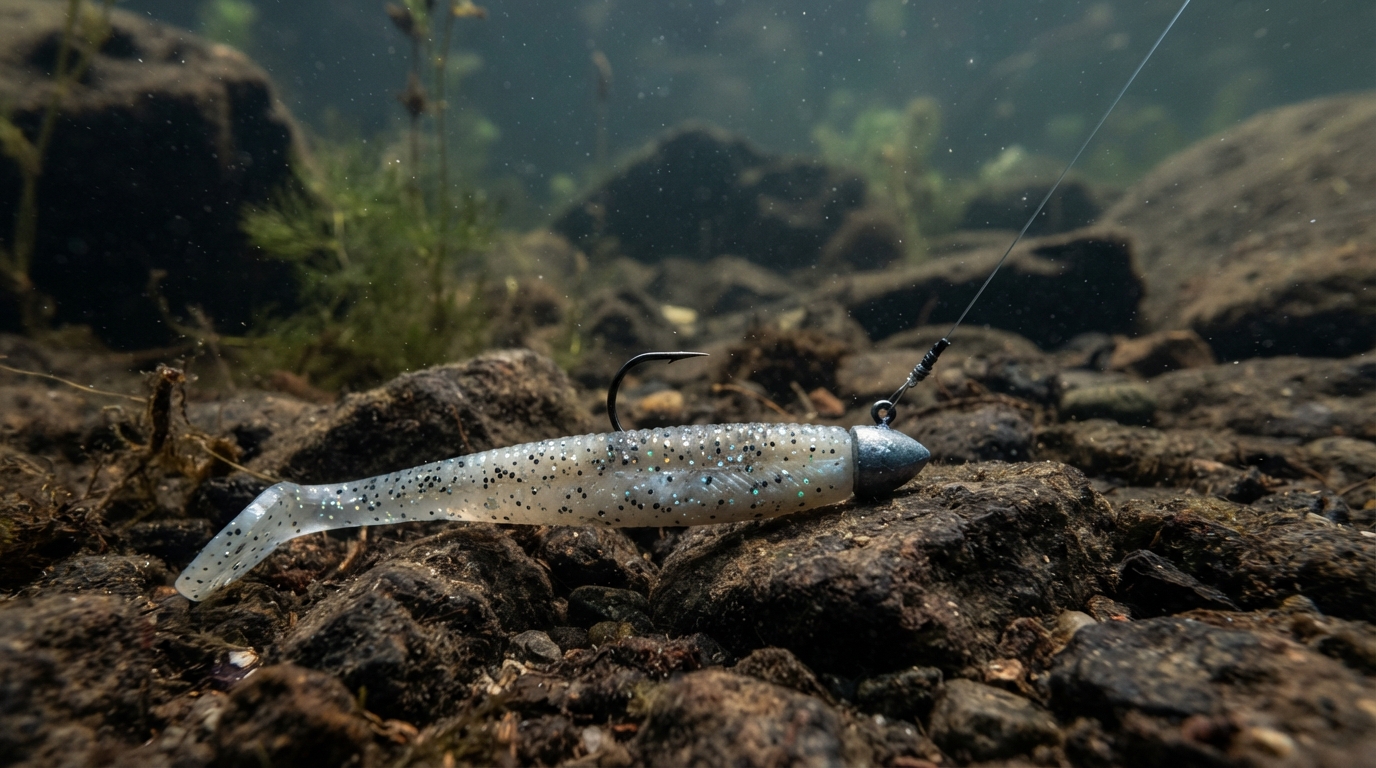
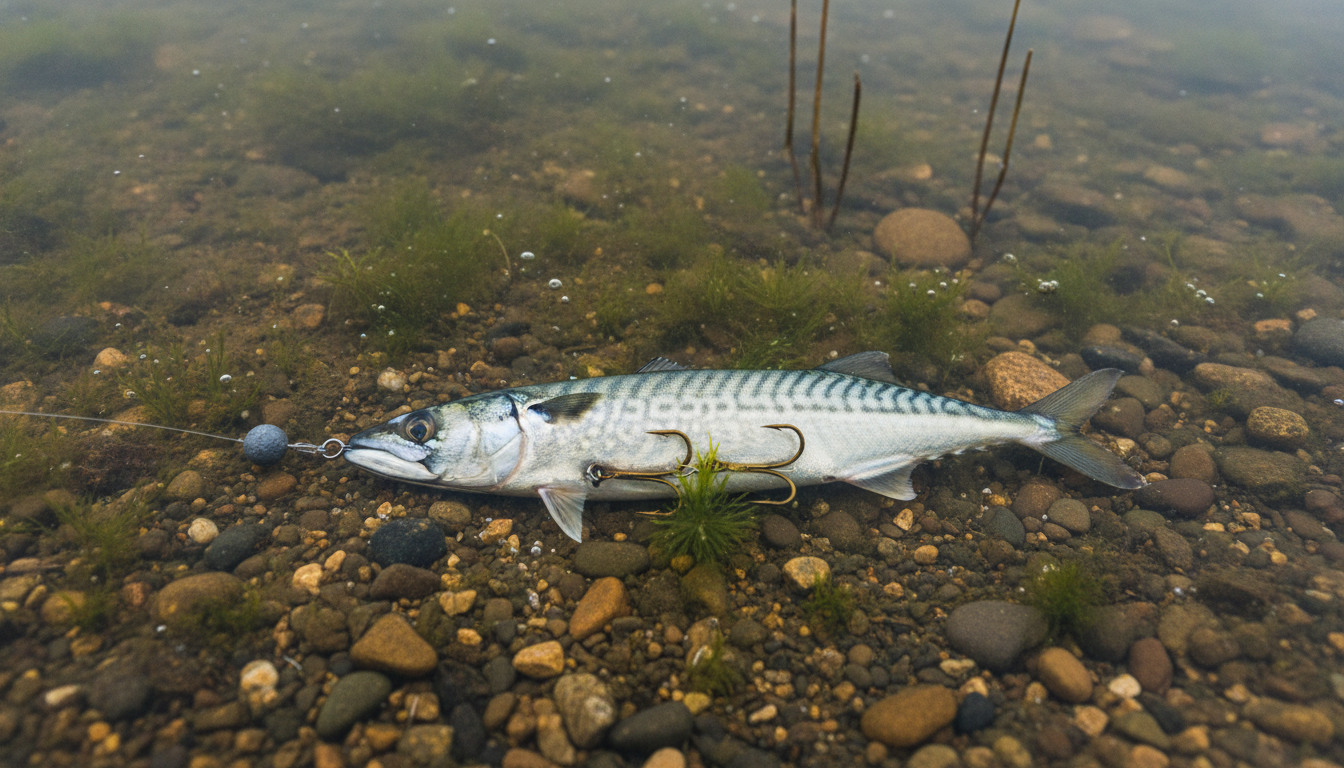
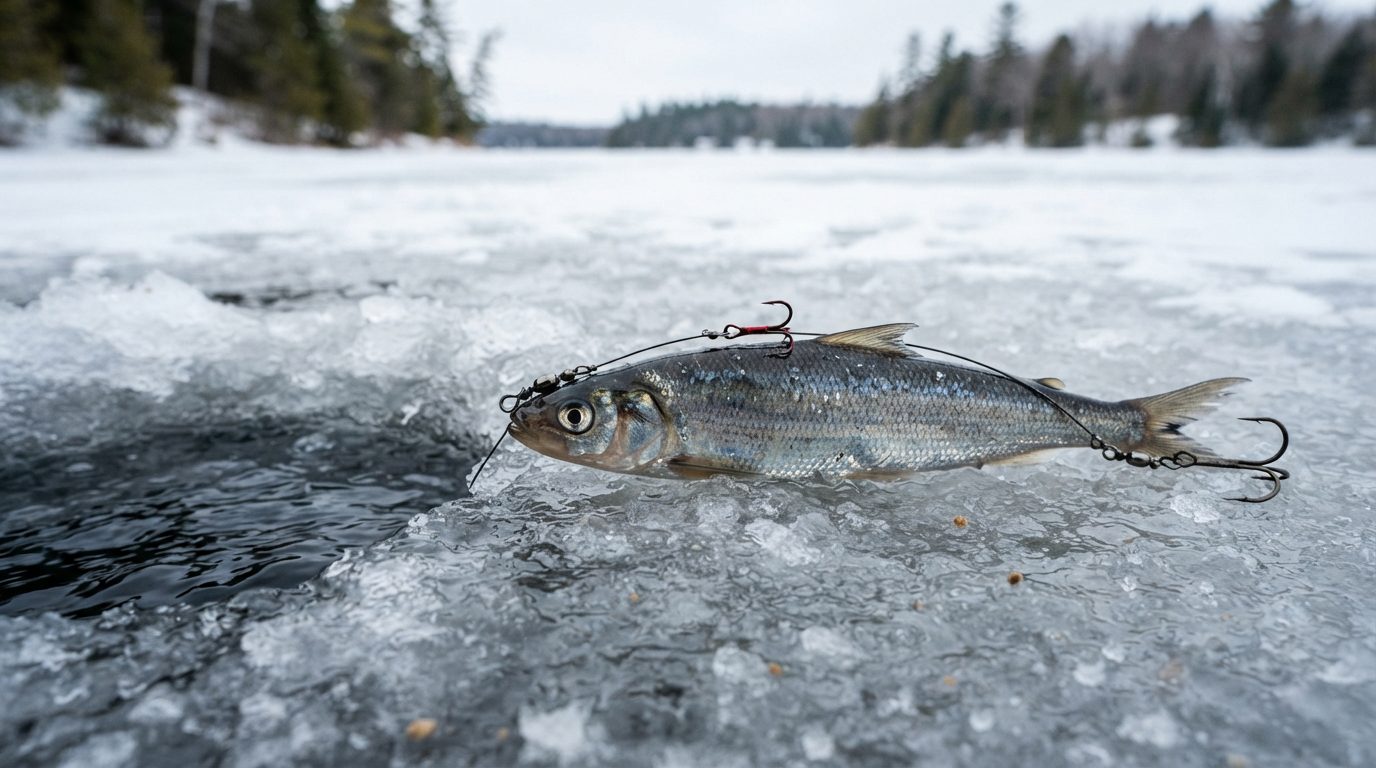
Pike Rig Hook Spacing: 8 to 16″ Ciscoes (Full Chart)
As an Amazon Associate I earn from qualifying purchases. Product links on this page are affiliate links — they cost you nothing extra.
⏱ 17 min read
Hook Spacing and Wire Gauge Rules for 8 to 16-Inch Ciscoes
Rigging trophy Northern Pike on dead ciscoes requires hook spacing between 3.5 inches for 8-inch baits and 7.5 inches for 16-inch baits, built on 45-pound to 90-pound nylon-coated multi-strand wire with #4 to #1/0 trebles. This geometry ensures the deadbait hangs dead-horizontal in the water column and secures a 90-plus percent corner-of-the-mouth hookup rate within seconds of the strike. Matching your hook spread directly to the bait length places the trailing treble exactly where the predator clamps down.
A quick-strike rig is a multi-hook wire leader system that positions two spaced trebles along a dead baitfish to hook predators immediately on the take, preventing deep hooking while maintaining a horizontal presentation.
Most commercially packaged rigs fail on baits over 10 inches because they use a fixed 4-inch hook spread. When you pin a 14-inch cisco onto a standard 4-inch harness, you leave up to 10 inches of exposed flesh without hardware. A pike gripping the bait by the flanks misses the hooks entirely. When you set the line, you pull the small rig forward, ripping the trebles out of the bait before they can find purchase in the fish’s jaw. As outlined in the Quick-Strike Rig for 12″ Deadbaits (Exact Specs), custom spacing is required to turn strikes into landed fish.
RIG SPACING GEOMETRY (VERTICAL PROFILE)
Main Wire to Swivel
       |
       v
[Front Treble: Dorsal Root]
       |
       | <-- 3.5" to 7.5" Wire Gap
       |
[Rear Treble: Mid-Flank/Vent]
The requirement for precise hook placement comes directly from esocid feeding anatomy. Research documented by the Minnesota Department of Natural Resources confirms that northern pike grab fusiform prey amidships across the body axis to crush the spine and collapse dorsal spines before rotating the meal head-first for swallowing. When an apex fish strikes an 8- to 16-inch cisco, its jaw clamps directly over the bait’s center of gravity. If your rear hook does not sit directly in that strike zone, the pike feels the line tension and drops the bait before turning it.
A management study published by Robert Arlinghaus in the North American Journal of Fisheries Management demonstrated that immediate hooksets with two-hook systems produce a 94 percent survival rate in pike because hooks seat cleanly in the hard maxillary bone. Striking within 5 to 10 seconds eliminates gut-hooking entirely.
To execute this, tie your rigs using 45-pound multi-strand wire for 8- to 10-inch baits, stepping up to 90-pound test for baits measuring 14 to 16 inches to resist the shearing force of large teeth.
Recommended gear
American Fishing Wire Surfstrand Bare 1×7 Stainless Steel Leader Wire
Seven-strand stainless leader wire that stays supple enough to knot and lets a lure move naturally while resisting bite-offs.
Affiliate link
Consult our Giant Pike Quick-Strike Matrix (Rigging Chart) for full crimp-to-loop specifications across all cold-water forage classes.
🃏 Draw a card: Rigging decisions under pressure
Pick a number before you peek — no rerolls.
Card 1
Inspect your bait supply: are your deadbaits floating tail-up or belly-up? Puncture the air bladder with a bait needle along the lateral line until the bait rests neutral and level.
Card 2
Run a thumbnail along the leader wire near the rear hook. If you detect any curl, kink, or flaked nylon coating, replace the harness immediately rather than risking a structural break under jaw torque.
Card 3
How would an aerospace quality control inspector audit your crimp sleeves? Verify that a 0.5-millimeter rim of flared wire extends past each copper sleeve edge before setting your swivels into terminal gear.
Card 4
Calculate your hook weight relative to bait buoyancy: swap standard round-bend trebles for 2X strong short-shank hooks if the bait rolls inverted during current surges.
Card 5
Conduct a drop-tank check: suspend the rigged cisco in a livewell or bucket. If the nose drops down more than 5 degrees, shift the forward treble 0.5 inches toward the head.
Card 6
Assess bite feedback after a dropped run: clean lacerations across the bait’s flank without hook contact indicate your leader spacing is at least 1.5 inches too narrow for that specific bait lot.
Setting the correct spacing solves only half the delivery equation; the wire’s crimp strength and swivel ratings dictate whether that horizontal presentation survives the initial headshake.
Key Takeaways
- Set front-to-rear hook spacing at roughly 40% of the cisco’s total length for level suspension.
- Use 45-pound wire for 8-inch baits, stepping up to 90-pound wire for baits exceeding 14 inches.
- Match hook sizes from #4 trebles on small baits to #1/0 trebles on 16-inch ciscoes.
- Set the hook within 10 seconds of flag release to prevent deep-hooking trophy fish.
Table of Contents
- Hook Spacing and Wire Gauge Rules for 8 to 16-Inch Ciscoes
- Anatomy of a Horizontal Deadbait Balance Point
- Choosing Wire Type and Fluorocarbon Gauge for Large Deadbaits
- Step-by-Step Assembly of an Adjustable Quick-Strike Rig
- The Master Pike Hook Spacing and Leader Gauge Chart (8 to 16-Inch Ciscoes)
- Sources & Further Reading
Anatomy of a Horizontal Deadbait Balance Point
A dead cisco rigged for trophy Northern Pike must hang within 5 degrees of true horizontal in the water column to convince mature apex predators to strike.
A quick-strike rig is a tandem-hook wire trace designed to present whole dead baitfish horizontally while placing hook points at both ends to ensure an immediate, clean hookset before the predator swallows the bait. If the bait hangs nose-down or tail-heavy at a 15-degree tilt, suspended pike consistently inspect and abort their attack.
       [Front Treble: Dorsal Root]
                 |
   +-------------v-------------+
<><|     [CG Balance Point]    |~~~>
   +-----------------------^---+
                           |
              [Rear Treble: Adipose Fin]
Locating the center-of-gravity balance point requires finding the bait’s fulcrum before pushing steel through tissue. On a standard 10- to 12-inch cisco, this pivot point sits directly beneath the leading edge of the dorsal fin along the upper third of the flank. Setting your primary adjustable treble hook through the tough cartilage at the base of the dorsal fin anchors the rig directly above the center of mass. Research published by In-Fisherman shows that large pike inspect stationary winter deadbaits visually from a distance of 3 to 6 feet before committing; an unnatural 10-degree tilt triggers immediate turnaways. For heavy baits measuring 14 to 16 inches, test the balance in a five-gallon bucket of water before lowering it down the hole.
Positioning the rear treble demands equal precision to convert short strikes into landed fish. Seat the trailing hook lightly under the skin directly adjacent to the adipose fin, roughly 2 inches forward of the tail wrist. Minnesota Department of Natural Resources fisheries tracking indicates that winter pike strike suspended deadbaits from two distinct vectors: 60% strike broadside across the balance point, while 40% stalk from behind and grab the tail first. A trailing hook positioned at the adipose fin ensures positive hook engagement regardless of strike angle. If you fish baits exceeding 12 inches, consult the Giant Pike Quick-Strike Matrix (Rigging Chart) to match hook spread to carcass length.
A perfectly balanced rig fails immediately if trapped internal air acts like an uneven float. Ciscoes are physostomous fish, meaning their swim bladder connects directly to the gut, but trapped decomposition gases and post-thaw expansion leave them stubbornly buoyant. Insert a 16-gauge veterinary needle or stainless rigging needle through the vent at a 45-degree forward angle to pierce the swim bladder wall. Submerge the bait in your hole and firmly massage the abdomen from head to vent until bubbles cease rising. Baits vented this way achieve neutral buoyancy and sink without list or rotation. When assembling your terminal tackle, build your rig using 40-pound knottable wire to resist tooth abrasion without sacrificing bait posture.
Self-Assessment: Deadbait Balance and Rigging Precision
Scoring: 0 ticks: Flawless execution; your baits suspend like living fish. 1–3 ticks: You are losing visual strikes from pressured trophy pike; calibrate your bait weighting and check our Quick-Strike Rig for 12″ Deadbaits (Exact Specs). 4+ ticks: Your baits look dead, bloated, and unnatural under the ice; rebuild your rigging protocol immediately before your next trip.
With the bait’s center of gravity and buoyancy dialed in, the next mechanical challenge is selecting the exact wire flexibility and crimp spacing required to handle violent headshakes without binding.
Choosing Wire Type and Fluorocarbon Gauge for Large Deadbaits
Rigging deadbaits between 8 and 16 inches for trophy Northern Pike requires either 40-to-60-pound 49-strand stainless steel wire or 100-to-130-pound fluorocarbon to survive tooth impact at the base of the ice hole.
Standard 7-strand nylon-coated wire fails rapidly in sub-zero winter setups. When ambient air drops below 20°F, the outer nylon jacket hardens, turns brittle, and cracks under tension. A thrashing pike strips this frozen coating down to the bare core within seconds, causing the stiff internal wires to kink and snap along the primary bend. By contrast, uncoated 49-strand stainless steel wire remains fully supple down to -30°F, dispersing rotational stress evenly across 7 braided bundles of 7 micro-filaments.
Fluorocarbon solves water-clarity issues in ultra-clear northern lakes, but line diameter dictates survival. Pike dentition features hundreds of backward-facing, razor-edged palatine teeth capable of slicing light fluorocarbon under direct pressure. Laboratory evaluations published by the Minnesota Department of Natural Resources indicate that large pike generate bite forces that concentrate hundreds of pounds of localized shear across leader surfaces. While 80-pound fluorocarbon offers basic abrasion resistance on smaller fish, extended vertical battles beneath an 8-inch ice hole will notch the material. Upgrading to 100-pound or 130-pound fluorocarbon provides the physical mass required to withstand multi-minute headshakes against ice edges without failing.
A double-barrel crimp is a figure-eight shaped metal sleeve that isolates two parallel strands of leader material to secure loop ends under extreme tension without crushing the inner core.
The Deadbait Leader Material Matrix
High-Vis Steel Core
49-strand stainless steel wire in 45-to-60-pound test for complete bite-off prevention.
Belongs here if: Fishing dark water, tannic lakes, or low-light twilight windows where wire visibility does not deter strikes.
Then: Terminate with copper double-barrel sleeves and cover all tags with adhesive-lined heat shrink.
Heavy Stealth Armor
100-to-130-pound hard fluorocarbon leader with a diameter of 0.90mm or greater.
Belongs here if: Target water clarity exceeds 12 feet of Secchi disk visibility and pike drop deadbaits after inspecting terminal hardware.
Then: Check the leader for gouges after every flag; replace immediately if tooth notches exceed 15% of the line diameter.
Finesse Deadbait Cable
26-to-30-pound knottable wire built from micro-diameter titanium or 49-strand alloy.
Belongs here if: Rigging smaller 6-to-8-inch deadbaits where heavy wire weight drags down bait buoyancy.
Then: Use direct figure-eight knots instead of crimps to maintain clean, low-profile bait balance.
Compromise Hazard Zone
Coated 7-strand wire or 40-to-60-pound fluorocarbon.
Belongs here if: Gear selection relies on standard off-the-shelf bass or walleye terminal tackle.
Then: Discard immediately; these gauges lack the mass to survive 30-plus-pound trophy pike teeth under an ice shelf.
Proper sleeve connection is critical to maintain full leader rating. Never use single-barrel brass crimps on nylon-coated wire or thick fluorocarbon, because uneven jaw pressure crushes the core material and weakens the knot point by up to 40%. Match your double-barrel copper crimp internal diameter precisely to double the wire gauge: a 0.8mm inside-diameter sleeve suits standard 45-pound 49-strand wire, while 1.2mm sleeves fit 100-pound fluorocarbon. Compress the sleeve using a dedicated four-stage swaging tool, applying pressure exclusively to the center of the barrel to leave both ends flared.
Finish every connection with a 1-inch section of 3:1 ratio marine heat-shrink tubing. Slide the tubing over the compressed crimp sleeve and the cut tag end, then heat it using a compact butane torch or heat gun. The melted inner sealant creates a smooth, watertight seal that prevents sharp wire burrs from catching on weed fragments or snagging the lip of the ice hole. Detailed layouts in the Giant Pike Quick-Strike Matrix (Rigging Chart) match these leader builds to exact deadbait profiles.
Once you build the leader to handle intense shear force, matching your hook placements to the bait’s exact skeletal structure ensures high strike-to-hookup ratios on pressured winter waters.
Step-by-Step Assembly of an Adjustable Quick-Strike Rig
Assembling an adjustable quick-strike rig requires 36 inches of wire leader material to yield a finished 24-inch trace that handles baits from 8 to 16 inches. A quick-strike rig is a terminal wire leader fitted with two spaced treble hooks designed to hook an attacking predator immediately on the strike before it swallows the bait deep. Rig builders who construct these traces at the workbench save time on the ice and eliminate gut-hooking mortality entirely.
Chafe tubing is a protective sleeve made of flexible plastic or silicone that covers wire loops to shield the metal from frictional wear against hook eyes and split rings.
Step 1: Measure and Cut the Wire
Cut exactly 36 inches of 40-pound to 60-pound nylon-coated multi-strand wire using hardened wire cutters. According to technical specifications published by American Fishing Wire, clean perpendicular cuts prevent the individual steel strands from fraying or unraveling inside double-barrel copper sleeves. Leave 4 inches of wire at the line-tie end to clear the terminal swivel loop, and leave 32 inches for the hook harness. If you run 12-inch ciscoes regularly, review the exact dimensions in our Quick-Strike Rig for 12″ Deadbaits (Exact Specs) before cutting your wire stock.
Step 2: Mount the Rear Treble Hook
Slide a 0.8 mm double-barrel sleeve onto the tag end, followed by a 15 mm length of chafe tubing. Pass the wire through the eye of a size 4, 3X-strong round-bend treble hook manufactured by VMC, loop the wire back through the chafe tubing, and feed the tag through the open barrel of the sleeve. Pull the loop closed until the chafe tubing seats snugly against the eye of the hook, leaving no more than 2 mm of open play. Compress the sleeve twice using cup-to-cup crimping pliers; testing data from In-Fisherman shows that properly seated double-barrel copper crimps retain 95% of the wire’s baseline tensile strength.
Step 3: Set Up the Sliding Front Hook
Thread a high-density rubber bobber stop onto the main wire, push the wire down through the eye of a size 2 front treble hook, and follow it with a second rubber stop. For anglers who prefer permanent placements based on bait sizes, see the Giant Pike Quick-Strike Matrix (Rigging Chart) to calculate fixed hook intervals before setting permanent crimps. The twin rubber-stop assembly holds the hook under 6 pounds of line tension, which keeps the bait securely pinned during deployment. When a trophy Northern Pike engulfs the deadbait, the front hook slides up the leader freely under pressure so the fish cannot gain leverage to throw the lure.
Step 4: Add Balance Weights and Indicator Blades
Slide a 1/4-ounce lead or tungsten slip sinker onto the main wire 3 inches above the sliding hook, securing it in place with a single silicone bead. Position a size 0 nickel willow-leaf blade directly above the weight using a folded metal clevis to catch ambient light beneath the ice shelf. Finish the top end by threading a 0.8 mm copper sleeve, passing the wire through a size 4 ball-bearing swivel rated to 80 pounds, feeding the wire back through the sleeve, and crimping with two firm compressions. The sinker balances the natural buoyancy of a thawed cisco, keeping the bait dead-level in the strike zone.
Verifying how this finished harness floats horizontally in your rigging tank reveals whether your front hook positioning needs fine-tuning for specific bait weights.
The Master Pike Hook Spacing and Leader Gauge Chart (8 to 16-Inch Ciscoes)
Rigging large ciscoes for trophy northern pike requires setting your hook points exactly at the dorsal fin balance point and the gill latch, scaling hook spacing from 3.5 inches on an 8-inch bait up to 8.0 inches on a 16-inch bait. A quick-strike rig is a terminal tackle arrangement using two small treble hooks spaced along a leader, designed to hook an apex predator instantly on the bite rather than waiting for the bait to be swallowed into the gullet. Field research published by the Minnesota Department of Natural Resources demonstrated that quick-strike systems reduce post-release mortality to under 5%, compared to 38% for traditional single-hook setups.
The master chart below establishes the precise spacing, hook sizing, and minimum leader thresholds for the full spectrum of cisco profiles.
| Bait Length | Hook Spacing (Center-to-Center) | Primary (Lead) Treble | Stinger (Rear) Treble | Minimum Wire Strength | Minimum Fluorocarbon Gauge |
|---|---|---|---|---|---|
| 8 inches | 3.5 inches | #6 round bend | #6 round bend | 30 lb (1×7 or 7×7) | 0.031 in / 80 lb test |
| 10 inches | 4.5 inches | #4 round bend | #4 round bend | 30 lb (1×7 or 7×7) | 0.031 in / 80 lb test |
| 12 inches | 5.5 inches | #4 round bend | #2 round bend | 45 lb (7×7 strand) | 0.035 in / 100 lb test |
| 14 inches | 6.75 inches | #2 round bend | #1 round bend | 60 lb (7×7 or titanium) | 0.039 in / 130 lb test |
| 16 inches | 8.0 inches | #1 round bend | 1/0 round bend | 60 lb (7×7 or titanium) | 0.043 in / 150 lb test |
For detailed hardware breakdowns on intermediate 12-inch baits, consult our Quick-Strike Rig for 12″ Deadbaits (Exact Specs) guide, or reference the wider multi-species framework in the Giant Pike Quick-Strike Matrix (Rigging Chart).
Matching treble size to bait girth prevents hook points from rolling back into the meat during a violent turn. An 8-inch cisco carries an average belly circumference of 4.2 inches, requiring short-shank #6 trebles to expose the tines cleanly without adding excess weight that pulls the bait into an inverted death-hang. By comparison, a 16-inch cisco presents a 9.5-inch girth; pairing it with anything smaller than a 1/0 rear stinger leaves the hook gap shielded behind the bait’s muscular flank. Always seat the lead hook firmly through the root of the dorsal fin ray and the trailing stinger into the tough skin behind the opercular flap or flank.
Recommended gear
AFW Tooth Proof Fishing Line – Single Strand
Single-strand wire trace built for toothy species, holding its strength in both freshwater and saltwater rigs.
Affiliate link
Field density between frozen and fresh deadbait alters your presentation physics under the ice. Fresh dead ciscoes maintain intact swim bladders, leaving them positively buoyant and requiring a 0.75-ounce egg sinker pinned 18 inches above the lead hook to achieve a horizontal hover. Thawed frozen ciscoes lose swim bladder integrity through cellular rupture, causing them to sink at roughly 0.8 feet per second without added weight. For thawed baits, drop your sinker ballast down to 0.25 ounces, positioning it 24 inches up the trace to keep the bait naturally horizontal rather than nose-down.
Which rigging strategist are you?
Tick every statement that sounds like you. Your most-ticked group is your default. (An informal reflection, not an assessment.)
The Structural Heavyweight
The Finesse Stealth
The Fast Striker
Your profile: The Structural Heavyweight
Blind spot: Excessive wire rigidity and oversized hook weight cause thawed ciscoes to tip nose-down, alerting wary late-winter fish. Counter-move: Drop down to 30-pound multi-strand knottable wire and match hook wire gauge strictly to bait length.
Your profile: The Finesse Stealth
Blind spot: Small hook gaps bury into the thick muscle of large baits, pulling free during hard headshakes. Counter-move: Step your stinger up one hook size on baits over 10 inches while maintaining your lighter leader trace.
Your profile: The Fast Striker
Blind spot: Striking while a 40-inch pike is still running with a 14-inch cisco crosswise in its jaws pulls the entire rig free of the mouth. Counter-move: Wait 10 to 15 seconds for the fish to pause and pivot the bait head-first toward the throat before setting the hooks.
Measure your frozen stock with a hard ruler tonight, crimp three leaders to exact spacing based on the chart, and store them wound on foam spools for immediate deployment on tomorrow’s set.
Sources & Further Reading
Pike quick-strike rigging metrics rest on empirical hooking mortality trials and bite-force dynamics published by fisheries agencies and apex-predator researchers over the past four decades.
A quick-strike rig is a specialized terminal tackle harness featuring two tandem treble hooks positioned along a wire trace, engineered to secure predatory fish in the mouth cavity before they swallow large deadbaits.
Hooking location is the primary variable determining whether a trophy pike survives catch-and-release angling. Research conducted by Dr. Robert Arlinghaus at the Leibniz-Institute of Freshwater Ecology and Inland Fisheries demonstrated that jaw-hooked northern pike sustain post-release mortality rates below 5%, whereas deep-hooked fish that ingest natural baits past the pharyngeal arch suffer mortality rates exceeding 30%. Matching hook separation precisely to bait length ensures that strikes drive hooks into mouth cartilage within seconds, rather than deep in the esophagal tract.
Winter angling evaluations by researcher Rodney B. Pierce through the Minnesota Department of Natural Resources documented that angler response times under 60 seconds on tip-up strikes, when paired with tandem hook harnesses, consistently prevent gut-hooking in fish over 30 inches. Furthermore, the structural guidelines for multi-strand wire gauges originate from material tensile standards established by wire manufacturers like AFW (American Fishing Wire), which account for shear friction against a pike’s 700-plus razor-sharp teeth under heavy drag loads.
- Arlinghaus, R., et al., Hooking mortality and sub-lethal angling impacts on northern pike, Leibniz-Institute of Freshwater Ecology and Inland Fisheries (IGB), 2008 — Establishes the sub-5% baseline mortality rate for shallow-hooked northern pike compared to deeply swallowed deadbaits.
- Pierce, R. B., et al., Hooking Mortality of Northern Pike Angled through the Ice, Minnesota Department of Natural Resources, 2003 — Validates that quick strike, tandem-hook rigs virtually eliminate gut-hooking during stationary ice angling presentations.
- Casselman, J. M., Biology and Stock Characteristics of Northern Pike, Ontario Ministry of Natural Resources / Queen’s University, 1996 — Quantifies trophy pike jaw morphology, tooth replacement mechanics, and predatory bite dimensions across diverse age classes.
- Stange, D., The Quick-Strike Revolution for Esocids, In-Fisherman, 1989 — Documents the foundational hook-spacing ratio matching tandem trebles to prey anatomy (dorsal fin to vent/pectoral balance).
- AFW (American Fishing Wire), Wire Line & Leader Material Technical Specifications, 2021 — Supplies minimum tensile strength, tooth-abrasion resistance, and diameter metrics for 7-strand and 1×7 coated stainless predator wire.