Congo River Expedition Packing (14-Day Bush Camp Sheet)
As an Amazon Associate I earn from qualifying purchases. Product links on this page are affiliate links — they cost you nothing extra.
The 14-Day Congo Angling Expedition Gear Blueprint
A successful 14-day remote Congo River expedition requires a strict 20kg (44 lb) gear limit divided across five critical systems: heavy predator tackle (80-100lb braid with 100lb wire leaders), tropical medical and malaria defense, off-grid power, self-draining bush camp bedding, and dual-redundancy satellite communications. Total self-reliance is mandatory because zero resupply infrastructure exists once you leave staging hubs like Kinshasa or Kisangani. Extreme heat exceeding 35°C, sustained 90% relative humidity, and sudden tropical downpours will corrode standard hardware and rot non-synthetic fabrics within 72 hours.
A pirogue is a narrow, flat-bottomed wooden dugout boat propelled by paddles or a small outboard motor, serving as primary transport through the Congo River basin.
The Logistics Chain: Kinshasa to the Riverbank
Expedition freight moves through a tight transport bottleneck. Domestic charter flights, often operated via Cessna Caravans by operators like Mission Aviation Fellowship, enforce strict weight ceilings of 20kg per passenger for soft duffel bags. Rigid suitcases do not fit into these small cargo pods. Anglers must pack everything into a submersible dry duffel to survive transport.
At the airstrip, you transfer that single bag into a pirogue for transit runs that last between 6 and 14 hours. Bilge water constantly pools in the bottom of these dugouts. If your duffel lacks an IPX7 or IPX8 submersible rating, river water will soak your spare clothing and electrical chargers before you reach camp.
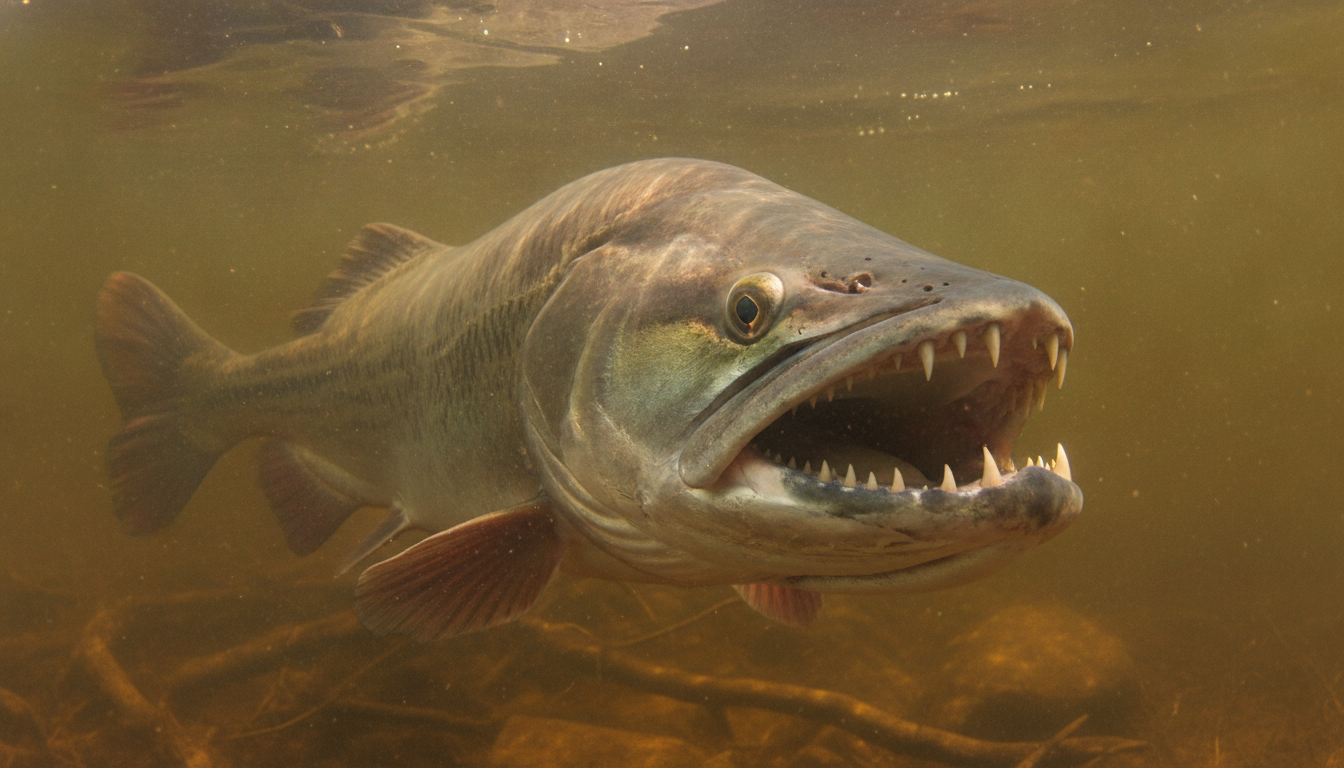
The baseline principles outlined in the What gear do you need for extreme angling? guide apply here, but the Congo adds extreme biological and mechanical stress. The river holds Hydrocynus goliath (the goliath tigerfish), an apex predator packing 3.5cm shearing teeth that crush standard wire. While target weights mirror the gear detailed in our Arapaima Expedition Packing Checklist (Printable Manifest), arapaima require abrasion resistance against submerged timber, whereas tigerfish demand bite protection comparable to heavy Shark Fishing Gear.
According to guidelines published by the World Health Organization, the Democratic Republic of the Congo is a high-risk transmission zone for Plasmodium falciparum malaria. Medical survival requires full-spectrum prophylaxis, hospital-grade pressure bandages, and insect-proof sleeping arrangements.
Logistics Flow
│
▼
Kinshasa / Kisangani Staging
│ (20kg limit check)
▼
Charter Flight / Bush Airstrip
│ (Soft duffels only)
▼
Pirogue River Transit
│ (IPX7 waterproof gear)
▼
Off-Grid Bush Camp
Practical Scenario: Managing Bush Plane and Pirogue Weight Allocation
Say you arrive at a regional airstrip in Kisangani with three expedition partners. The charter pilot announces an unbudgeted fuel burn requirement that reduces passenger gear allowances from 20kg down to 18kg per angler.
First, suspend all four main duffels from a mechanical hanging scale. Identify the non-critical baseline items: backup clothing sets, extra lure boxes, and bulk lead sinkers.
Second, separate the payload. Keep your terminal wire, primary reels, satellite communicators, and medical kits inside the main duffel. Remove heavy backup metal lures and distribute them into the pockets of your wearable wading vest. Airport weight limits assess cargo baggage, not worn apparel.
Third, verify the seal on every primary gear duffel before loading into the pirogue. Inspect the zipper tracks for sand and apply silicone lubricant to the dry-suit zips.
When one angler in the group skips this check to save time, river spray enters the main chamber during the eight-hour boat transfer. The unsealed bag allows moisture into the backup battery packs, ruining the charging hub for the entire 14-day rotation. The team must then ration their remaining satellite communication windows.
The Five Core Systems
Dividing your 20kg manifest across dedicated modules prevents systemic failure in the jungle:
- Heavy Predator Tackle: Travel-rod blanks rated for 40-80lb line, 5000 to 6000-size saltwater spinning reels with solid brass gears, 80-100lb four-carrier braided mainlines, and 100lb single-strand stainless steel bite leaders.
- Tropical Medical & Malaria Defense: CDC-recommended chemoprophylaxis regimens (such as Malarone or Doxycycline), a minimum of 30% DEET repellent, trauma shears, tourniquets, water purification tablets, and broad-spectrum oral antibiotics.
- Off-Grid Power Generation: High-output power banks rated under 100Wh to clear international flight security, paired with 28W folding solar panels and moisture-sealed charging leads.
- Self-Draining Bush Camp Bedding: An ultra-fine mesh jungle hammock system with an integrated rainfly, synthetic quick-dry base layers, and permethrin-treated insect shielding.
- Dual-Redundancy Satellite Communications: An active Iridium-network satellite messenger paired with a separate backup emergency beacon to maintain contact with regional evacuation logistics.
Balancing these five modules within your weight budget determines whether you land trophy fish or face an early evacuation. The detailed item-by-item spreadsheet below breaks down the exact gram-level weights for every piece of tackle, medical supply, and camp tool on the manifest.
Key Takeaways
- Limit total personal gear to 20kg (44 lbs) across two IPX8 waterproof duffels for internal bush charters.
- Rig 80-100lb braided mainline to 100lb single-strand or 7×7 titanium wire leaders for Goliath tigerfish.
- Carry dual satellite communicators with pre-routed SOS medical evacuation coverage for remote river systems.
- Treat all expedition apparel with permethrin and carry complete 14-day malaria prophylaxis protocols.
Table of Contents
- The 14-Day Congo Angling Expedition Gear Blueprint
- Goliath Tigerfish Tackle and Terminal Rigging Arsenal
- Remote Bush Camp Infrastructure and Power Generation
- Jungle Medical Safety, Evacuation, and Personal Protective Gear
- Baggage Strategy and Charter Flight Weight Allocation
- The 14-Day Congo Bush Camp Packing Spreadsheet & Category Checklist
- Sources & Further Reading
Goliath Tigerfish Tackle and Terminal Rigging Arsenal
Targeting Hydrocynus goliath in the Congo River basin requires tackle built for extreme torque and sharp, shearing teeth. Standard freshwater gear shears immediately on impact. The International Game Fish Association (IGFA) records Goliath Tigerfish exceeding 45 kilograms (100 pounds), with jaws exerting enough bite pressure to crush standard treble hooks and split rings.
Rod Specifications: Structural Integrity Over Portability
Pack three-piece heavy travel rods rated for 50-100lb line instead of four-piece or five-piece backpacking blanks. Extra ferrules create structural weak points that fracture when a fish strikes at high speed in heavy current. Expedition outfitters at African Waters document that three-piece blanks preserve the lifting power of a single-piece blank while still fitting into a standard 36-inch airline transit tube.
Carry both casting and heavy spinning setups to handle lures from 50 to 150 grams. A fast-action 7-foot to 7-foot-6-inch blank provides the leverage needed to drive heavy hooks through bony jaws. For an overview of packing strategies on similar big-game trips, consult the Arapaima Expedition Packing Checklist (Printable Manifest).
Recommended gear
Portable Saltwater Offshore Heavy 3-Piece Travel Graphite Baitcasting Fishing Pole
A three-piece graphite casting rod that breaks down for travel while keeping the backbone needed for heavy saltwater work.
Affiliate link
Reel Durability and Drag Capacity
The Congo River carries high concentrations of abrasive suspended silt. Your reels require IPX8-rated water-resistant seals or sealed labyrinth drag systems, such as those found on Shimano Stella SW or Daiwa Saltiga platforms, to prevent grit from seizing internal gears. In casting setups, high-capacity low-profile reels like the Shimano Tranx 500 or Abu Garcia Revo Toro Beast offer the necessary gear strength.
Drag pressure must measure at least 15 kilograms (33 pounds) at lock-down. Tigerfish hit hard and run straight toward deep rocky shelves or submerged timber. Standard 7-to-10-kilogram drag assemblies burn out under these prolonged high-friction runs. Spool every reel with a minimum of 250 meters of 80lb solid or hollow-core braid.
A shock leader is a short section of heavy monofilament or fluorocarbon line tied between the main fishing line and the hook to absorb the sudden mechanical stress of a violent strike.
Terminal Rigging Architecture
The tooth structure of a Goliath Tigerfish consists of eight interlocking, dagger-like teeth up to 3 centimeters long. They will slice unprotected fluorocarbon or nylon monofilament instantly. Construct your terminal system to handle extreme abrasion alongside high impact. If you have rigged shark fishing gear, this terminal setup will look familiar.
Connect your 80lb braid main line to a 100-to-150lb fluorocarbon leader using an FG knot or a PR Bobbin knot. Attach 12 to 18 inches of 100lb tooth-proof single-strand wire (such as AFW Tooth Proof) or 90-to-100lb multi-strand titanium wire using a figure-eight knot or solid crimp sleeve. Terminate with a 150lb-rated solid ring or welded ball-bearing swivel. Avoid snap swivels, which bend open during erratic head-shakes.
| Terminal Component | Standard Specification | Minimum Breaking Strain | Key Function |
|---|---|---|---|
| Main Line | 8-carrier braided PE line | 80 lb (36.3 kg) | High abrasion resistance against submerged basalt rocks |
| Shock Leader | Hard-temper fluorocarbon | 100–150 lb (45.4–68 kg) | Absorbs violent initial strike shock and current drag |
| Bite Wire | Single-strand stainless or 7×7 titanium | 100 lb (45.4 kg) | Prevents shearing from 3 cm interlocking teeth |
| Split Rings | Forged stainless steel | 150–200 lb (68–90.7 kg) | Eliminates hardware deformation under high drag |
| Hooks | 4X-strong inline singles | 6/0 to 8/0 | Penetrates dense, bony jaw plates without bending |
Lure Configuration and Hook Replacement
Stock deep-diving crankbaits (such as the Rapala Super Shad Rap and Salmo Skinner), heavy casting spoons (60 to 90 grams), and dense sinking swimbaits. Remove all factory-installed treble hooks and stock split rings immediately. Trebles often pry loose against the fish’s hard palate or bend open during boat-side boatside maneuvers.
Replace them with heavy-duty forged split rings (minimum 150lb rating) and 4X-strong inline single hooks in sizes 6/0 to 8/0, such as Owner Monster Siwash or BKK Lone Diablo. Inline singles ensure maximum point penetration through the tigerfish’s armored mouth and reduce leverage during violent jumps. Review what gear do you need for extreme angling? to verify hook-sharpening files and heavy-duty split-ring pliers meet remote-expedition benchmarks.
Once your primary rigs are assembled and packed into hard tubes, the next priority is tracking the exact spare quantities and weights inside the expedition bush camp spreadsheet below.
Remote Bush Camp Infrastructure and Power Generation
Basecamp survival along the Congo River depends on strict environmental controls. Sustained heat, relentless rainfall, and dense insect populations will degrade your equipment and physical recovery if your camp infrastructure fails.
Sleeping Systems: Jungle Hammocks vs. Bivy Cots
Suspended sleeping platforms provide the most reliable protection against ground moisture and driver ants (Dorylus). An ultra-breathable jungle hammock equipped with integrated no-see-um mesh keeps you elevated above saturated soil and prevents bites from micro-insects. Look for structural ridge lines that maintain a consistent 30-degree hang angle regardless of tree spacing.
Freestanding mesh bivy cots serve as the secondary alternative when establishing temporary camps on exposed sandbars where anchor trees are absent. A low-profile mesh cot keeps your sleeping surface 15 cm off damp ground while maximizing convective airflow underneath. Pair either setup with an oversized silicone-treated nylon tarp pitched low to deflect sudden equatorial downpours.
Off-Grid Energy Management
A 14-day remote bush camp requires an independent, continuous charging cycle. Field electronics—including satellite transceivers, headlamps, and camera gear—demand a predictable power budget.
Turbidity is a measure of river water clarity indicating the concentration of suspended particles, such as silt and decaying organic matter, that clog standard mechanical filters.
For power capture, pack a 40W foldable monocrystalline solar panel paired with two IP67-rated 25,000mAh power banks.
An IP67 rating is an international standard certifying that an electrical enclosure is completely dust-tight and capable of withstanding water immersion up to 1 meter for 30 minutes.
According to technical specifications published by Goal Zero, monocrystalline panels operate at roughly 22% conversion efficiency, but jungle cloud cover frequently cuts nominal output by half. Sizing up to a 40W panel ensures you generate 18W to 20W during overcast windows. Route incoming solar energy directly into your power banks during peak daylight hours between 10:00 and 14:00. Use those reservoirs to recharge your field equipment overnight.
Recommended gear
Garmin inReach® Mini 2, Satellite Communicator
A pocket-sized satellite communicator for two-way messaging and SOS from places with no mobile coverage at all.
Affiliate link
Keep a dedicated satellite communicator such as a Garmin inReach Mini on a continuous trickle-charge rotation to maintain emergency communication lines.
[40W Solar Panel]
       |
       v  (Daylight: 10:00-14:00)
[IP67 25,000mAh Bank]
       |
       v  (Overnight Distribution)
[Devices / Radios / Lights]
Water Security: Mechanical Filtration and Chemical Treatment
Congo River water carries severe sediment loads and microbial threats. Raw river water will choke a standard pump filter within two cycles if you do not implement a multi-stage clarification process.
[Raw River Water]
       |
       v
[Pre-settle (30-60 min)]
       |
       v
[0.1-Micron Gravity Filter]
       |
       v
[Chlorine Dioxide Treatment]
       |
       v
[Potable Water Storage]
Run incoming water through a fabric pre-filter or let it settle in a collapsible bucket for 45 minutes to drop the heaviest silt. Decant the clarified top layer into a 0.1-micron absolute hollow fiber membrane gravity system, such as those engineered by Sawyer Products. Gravity systems eliminate mechanical pump failures while processing up to 10 liters per hour.
Follow mechanical filtration with chemical purification. The U.S. Centers for Disease Control and Prevention advises that while mechanical microfilters remove protozoa and bacteria, chemical agents are required to eliminate waterborne viruses. Dose all filtered water with chlorine dioxide tablets (such as Aquamira or Katadyn Micropur). Allow a full 4-hour contact time before consumption to neutralize persistent pathogens like Cryptosporidium oocysts.
Practical Scenario: Managing Water and Power Under Sustained Rain
Consider a remote camp setup where heavy rain falls continuously for three days, stopping direct solar harvesting and pushing river turbidity to extreme levels.
- Energy rationing: Switch off all non-essential camera batteries and secondary lights immediately. Reserve the primary 25,000mAh battery pack solely for the satellite communicator and primary headlamps. Operate the satellite device on tracking-only intervals rather than continuous bluetooth broadcast.
- Rainwater collection: Bypass the turbid main river channel entirely. Rig the main hammock tarp with a clean paracord corner lead to direct clean rainwater run-off straight into wide-mouth collection bladders.
- Chemical treatment: Because rainwater bypasses river silt, skip the mechanical sediment filter. Treat the collected rainwater directly with chlorine dioxide tablets in sealed containers to avoid clogging the 0.1-micron membrane with organic roof debris.
- Power opportunistic charging: The moment rainfall breaks into bright overcast, deploy the 40W solar panel flat across the camp table. Avoid angling toward an invisible sun; horizontal deployment captures diffuse ambient light across the entire cloud deck.
Following this protocol conserves mechanical filter lifespan, keeps emergency communications operational, and secures potable water without relying on muddy bank access.
Daily Maintenance in 90%+ Humidity
Sustained humidity above 90% accelerates galvanic corrosion on fishing hardware and degrades sensitive electronics. Pack your primary reels in airtight, submersible storage using techniques identical to an Arapaima Expedition Packing Checklist (Printable Manifest).
Keep individual electronics inside heavy-duty 500D PVC dry bags packed with 50g rechargeable silica gel desiccant packs. Bake desiccants over a camp stove when their indicator beads change color to restore their absorption capacity.
Apply a dedicated anti-corrosion barrier spray, such as CorrosionX or Boeshield T-9, to reel spools, line rollers, and terminal split rings every evening. Salt-spray and jungle moisture create corrosive galvanic reactions identical to heavy saltwater setups; treat your river reels with the same discipline required for heavy-duty shark fishing gear.
Once camp infrastructure, daily sanitation, and power routines are secured, your attention must shift directly to the terminal rigging required to survive the jaw pressure of the river’s apex predators.
Jungle Medical Safety, Evacuation, and Personal Protective Gear
The goliath tigerfish (Hydrocynus goliath) possesses interlocking teeth measuring up to 3.5 cm in length, capable of shearing heavy-gauge mono leaders and human tissue with equal ease. A handling mishap on an aluminum skiff in the middle of the Congo Basin will cause deep lacerations and puncture wounds contaminated with river silt.
Chemoprophylaxis is the clinical practice of taking a specific preventive medication to stop an infection or disease before exposure occurs, rather than treating active symptoms after a pathogen enters the body.
Your river medical kit must treat high-energy trauma and aggressive bacterial loads immediately. According to clinical protocols published by the Wilderness Medical Society, aquatic puncture wounds require immediate, high-volume wound irrigation using sterile saline, followed by povidone-iodine (10% solution) disinfection to counter pathogens like Aeromonas hydrophila. Pack at least three rolls of hemostatic gauze, two Combat Application Tourniquets (CAT Gen 7), and sterile closure strips. When planning out your medical footprint, treat these sharp-toothed apex predators with the same structural precautions outlined in our guide to shark fishing gear.
The Congo River basin represents an extreme transmission zone for Plasmodium falciparum malaria and virulent enteric pathogens. The Centers for Disease Control and Prevention Travelers’ Health guidelines recommend daily Atovaquone-proguanil (Malarone, 250 mg/100 mg) or Doxycycline (100 mg daily) starting prior to arrival in-country. You must also pack prescription broad-spectrum antibiotics, specifically Ciprofloxacin (500 mg) for severe bacterial dysentery and Amoxicillin-clavulanate (875/125 mg) for soft-tissue wound infections. Pair these with oral rehydration salts (WHO formulation) and water purification tablets containing sodium dichloroisocyanurate to manage sudden gastrointestinal failures in camp.
Extraction from remote tributaries like the Lualaba River can take 48 to 72 hours under ideal weather conditions. Field teams must carry two independent, two-way satellite communicators on separate power banks to coordinate bush-strip evacuations.
Activate a comprehensive field rescue membership through an operations provider like Global Rescue before departure, ensuring your policy covers unassisted rotary-wing extraction from deep jungle coordinates. Much like the remote logistics covered in our Arapaima Expedition Packing Checklist (Printable Manifest), redundancy in your emergency comms chain is non-negotiable.
| Equipment Category | Primary Specification | Target Threat / Field Application | Pack Quantity (Per Angler) |
|---|---|---|---|
| Trauma & Wound Care | QuikClot Gauze & CAT Gen 7 | Goliath tigerfish bites, deep hull punctures | 2 tourniquets, 3 gauze packs |
| Oral Chemoprophylaxis | Malarone (250/100 mg) | P. falciparum malaria transmission | 14-day supply + 7-day buffer |
| Emergency Comms | Iridium-network satellite messenger | Bush-strip medevac coordination | 1 primary + 1 backup per boat |
| Insect Barrier | 0.5% Permethrin-treated textiles | Tsetse flies (Glossina), Anopheles mosquitoes | 3 long-sleeve field shirts |
| Waterborne Defense | Ciprofloxacin (500 mg tablets) | Severe enteric pathogen infection | 1 full 3-day treatment course |
Environmental protection keeps you operational across 12-hour shifts in equatorial heat and high humidity. Wear quick-drying long-sleeve shirts rated UPF 50+ and pre-treat all expedition outer garments with a 0.5% permethrin spray solution. For exposed skin, apply repellents containing 20% Picaridin or 30% DEET to deter daytime-biting tsetse flies, the primary vector for African trypanosomiasis.
Understanding baseline safety gear is step one when determining what gear do you need for extreme angling?, but jungle logistics demand a tight, weight-verified breakdown.
Check the complete field-tested manifest below to see exact weights, dry-bag volume distributions, and daily camp consumable ratios.
Baggage Strategy and Charter Flight Weight Allocation
Bush charter operators running Cessna 208 Caravans into jungle airstrips enforce a strict 20.0 kg total weight limit per angler. Rigid suitcases break airframe cargo geometry and are rejected at the tarmac gate. Your entire 14-day field existence relies on a disciplined two-bag system.
An IPX8 rating means the equipment enclosure withstands continuous submersion in water deeper than 1 meter under specified conditions without letting moisture leak inside.
Your primary hold luggage must be a 90-litre IPX8 submersible duffel bag.
This holds dry camp clothes, bulk terminal tackle, and baseline medical reserves. Your secondary piece is a 30-litre roll-top or welded-zipper waterproof daypack that stays at your feet in the wooden pirogue. The daypack carries your daily hydration, camera bodies, prescription meds, and immediate-use leader spools.
       TOTAL ALLOWANCE: 20.0 KG
                  |
    +-------------+-------------+
    |                           |
HOLD DUFFEL (90L)       DAYPACK (30L)
Max 15.0 kg             Max 5.0 kg
Primary Camp & Spares   Boat Gear & Transit
SITA’s Baggage IT Insights report established that international transfer connections cause 42% of all delayed baggage incidents globally. An Air France or Brussels Airlines flight into Kinshasa’s N’djili Airport poses high transit-loss risks. If your main duffel misses the river charter connection, a poorly planned carry-on manifest ends your expedition before your first cast.
You must carry reels, prescription medications, high-value electronics, and essential travel documents in your 30-litre daypack during international transit. Pack braided lines on the spools, but leave terminal hooks and wire leaders in your checked duffel to satisfy airport security screening rules. If your duffel is delayed, camp spare rods can pair with your carry-on reels. Understanding what gear do you need for extreme angling ensures you isolate mission-critical items from redundant bulk before departure.
Expedition weight margins are absolute. Use this hard allocation budget across your two bags:
- Tackle (7.0 kg limit): 4 multi-piece travel rods, 3 high-capacity reels, 40 terminal wire leaders, 30 deep-diving hardbaits, and heavy terminal hardware.
- Camp and Electronics (6.0 kg limit): Satellite communicator, power bank (26,800 mAh), headlamp, solar panel, power cables, and field repair kit.
- Apparel and Medical (5.0 kg limit): 3 quick-dry fishing shirts, 2 wading pants, 4 merino socks, trauma kit, antimalarials, and camp shoes.
- Luggage Shell (2.0 kg limit): Combined empty weight of the 90L duffel (approx. 1.3 kg) and 30L daypack (approx. 0.7 kg).
Quick Quiz: Test Your Expedition Logistics Knowledge
1. Why are rigid hard-shell suitcases banned by regional bush charter operators?
A) They exceed airline cosmetic standards.
B) They cannot conform to tight cargo pod geometry in small aircraft.
C) They generate excess static electricity in humid conditions.
Reveal answer
B. Small charter fuselages require soft-sided duffels that compress into irregular cargo pods. Compare this strategy against our Arapaima Expedition Packing Checklist (Printable Manifest) for identical remote-aviation limits.
2. Which piece of terminal tackle must never be placed inside your carry-on transit bag?
A) Bare braided line spools.
B) Unrigged spinning reels.
C) Heavy treble hooks and tooth-proof wire leaders.
Reveal answer
C. Aviation security confiscates sharp hooks and wire leaders at passenger screening checkpoints; these must remain in your checked hold luggage. Similar terminal rules apply when transporting Shark Fishing Gear across international terminals.
3. What is the maximum recommended weight for your empty luggage shells combined?
A) 2.0 kg.
B) 4.5 kg.
C) 6.0 kg.
Reveal answer
A. Heavy luggage frames consume vital payload. Cap empty bags at 2.0 kg combined to preserve weight for functional tackle and survival gear.
With your baggage limits locked down to the gram, examine the exact tackle specifications required to handle the hydraulic pressure and tooth profiles of the middle Congo basin.
The 14-Day Congo Bush Camp Packing Spreadsheet & Category Checklist
A 14-day self-sustained expedition down the Congo River basin requires strict adherence to load limits. Charter operators flying Cessna 208 Caravans into regional dirt strips enforce a strict 20 kg (44 lb) total baggage limit per passenger, excluding carry-on camera bodies.
Understanding what gear do you need for extreme angling in equatorial environments means balancing payload constraints against zero-failure requirements.
A bite trace is a heavy-duty length of wire or reinforced leader material connected between your main fishing line and the hook to stop sharp teeth from slicing the line.
EXPEDITION PRE-DEPARTURE SCHEDULE
|
+-- D-60: Medical & Permitting
|   +-- Yellow fever vaccination
|   +-- DRC visa submission
|   +-- Emergency med evacuation cover
|
+-- D-30: Hardware Stress Tests
|   +-- Line spooling & knots
|   +-- Solar kit discharge run
|   +-- Satellite device active sub
|
+-- D-7: Final Manifest Lock
    +-- Dry-bag weigh-in (<20 kg)
    +-- Cash reserve segregation
    +-- Offline maps downloaded
The 14-Day Congo River Master Inventory
Use this baseline matrix to pack your dry bags. Target weights reflect individual limits for standard transport in pirogues (traditional wooden dugouts) and light bush planes.
| Category | Item Description | Qty | Unit Wt (g) | Total Wt (kg) |
|---|---|---|---|---|
| Tackle | 4-piece Travel Heavy Casting Rod (PE 6-8 rated) | 2 | 280 | 0.56 |
| Tackle | 300-size High-Capacity Baitcasting Reel | 2 | 320 | 0.64 |
| Tackle | 80 lb Braided Mainline (300 m spools) | 3 | 110 | 0.33 |
| Tackle | 100 lb Single-Strand Titanium Tooth Wire (30 ft) | 2 | 45 | 0.09 |
| Tackle | 150 lb Ball-Bearing Swivels & #5 Split Rings | 40 | 2 | 0.08 |
| Tackle | Reinforced Deep-Diving Plugs & Swimbaits | 12 | 85 | 1.02 |
| Tackle | 8/0 Heavy-Wire Circle Hooks (Pack of 10) | 3 | 40 | 0.12 |
| Camp/Sleep | Jungle Hammock with Integrated Mosquito Net | 1 | 1,100 | 1.10 |
| Camp/Sleep | Ripstop Hexagon Rain Tarp (3×3 m) | 1 | 620 | 0.62 |
| Camp/Sleep | Inflatable Sleeping Pad (R-value 1.5+) | 1 | 410 | 0.41 |
| Camp/Sleep | 50°F / 10°C Compact Travel Blanket | 1 | 380 | 0.38 |
| Camp/Sleep | 0.1 Micron Hollow Fiber Gravity Water Filter | 1 | 320 | 0.32 |
| Power/Comms | Iridium Satellite Two-Way Communicator | 1 | 100 | 0.10 |
| Power/Comms | 24W Foldable Monocrystalline Solar Panel | 1 | 590 | 0.59 |
| Power/Comms | 20,000 mAh Rugged Power Bank (IP67) | 2 | 440 | 0.88 |
| Power/Comms | USB Rechargeable Headlamp (300+ Lumens) | 2 | 75 | 0.15 |
| Medical | Prescription Malaria Prophylaxis (Malarone, 30 tabs) | 1 | 50 | 0.05 |
| Medical | Tactical Trauma Kit (CAT Tourniquet, QuikClot) | 1 | 480 | 0.48 |
| Medical | Broad-Spectrum Antibiotics (Ciprofloxacin course) | 1 | 30 | 0.03 |
| Medical | Electrolyte Rehydration Salts (Packets) | 28 | 15 | 0.42 |
| Apparel | UPF 50+ Long-Sleeve Ripstop Field Shirts | 3 | 210 | 0.63 |
| Apparel | Quick-Dry Technical Cargo Pants | 2 | 310 | 0.62 |
| Apparel | Heavy-Duty Wading Boots with Ankle Support | 1 | 1,200 | 1.20 |
| Apparel | Merino Wool Trekking Socks | 4 | 70 | 0.28 |
| Apparel | Polarized Polycarbonate Sunglasses (Category 3) | 2 | 35 | 0.07 |
| Apparel | Lightweight Rain Shell (Gore-Tex Paclite) | 1 | 310 | 0.31 |
| Docs/Admin | Laminated Passport, Visa & Vaccination Records | 1 | 120 | 0.12 |
| Docs/Admin | Waterproof Dry Bag Backpack (70L Base Duffel) | 1 | 1,450 | 1.45 |
| TOTAL | 12.04 kg |
The remaining 7.96 kg margin covers shared team items: spare boat fuel bladders, camp cooking hardware, extra terminal tackle, and local market rations. If you have run South American river trips, compare this list against our Arapaima Expedition Packing Checklist (Printable Manifest) to benchmark weight baselines across different river basins.
Pro-Tip: Goliath Tigerfish bite through multi-strand nylon-coated wire effortlessly. Build your traces strictly from single-strand titanium or stainless steel rated above 90 lb, identical to terminal rigs used for toothy saltwater pelagics in heavy-duty shark fishing gear.
Pre-Departure Operational Timeline
Field preparation follows a 60-day structured rollout to eliminate single-point supply failures before transit.
60 Days Out: Medical Clearance and Border Documentation
- Verify that your yellow fever card has the official World Health Organization stamp; immigration control at Kinshasa’s N’djili Airport will deny entry without it.
- Review the CDC Travelers’ Health DRC Guidelines to secure prescriptions for Malarone and emergency stand-by treatment for dysentery.
- Apply for your Democratic Republic of the Congo (DRC) tourist visa with a letter of invitation from your local outfitter.
- Purchase international medical evacuation coverage through providers like Global Rescue; confirm your policy includes helicopter extraction within remote river basins.
30 Days Out: Hardware Stress Testing and Power Validation
- Set up your two-way satellite communicator, verify active subscription plans, and test custom SOS routing to your emergency contacts.
- Strip factory hooks and split rings from all hard lures; install 4X-strength Owner ST-66 trebles or heavy inline singles.
- Run a full charge-discharge cycle using your solar panel and power bank array in variable sunlight to establish true baseline recharge times.
Pro-Tip: Pack all lithium batteries in your carry-on luggage. International Air Transport Association (IATA) dangerous goods regulations forbid loose lithium power banks in checked baggage, and Congolese airport screeners will confiscate them on sight.
7 Days Out: Final Weigh-In and Waterproofing
- Pack all sensitive electronics, medical packs, and clothing into individual IPX7-rated roll-top compression dry sacks before loading them into your main 70L duffel.
- Print three physical photocopies of your passport photo page, DRC visa, entry stamped yellow fever card, and emergency contacts. Seal each set in separate waterproof pouches.
- Secure crisp, uncreased US Dollar bills dated 2013 or newer; banks and regional traders across Central Africa universally reject torn, stamped, or pre-2013 currency.
Audit your gear bag against the matrix above, set your scale on the floor, and lock your dry-bag weight under the 20 kg threshold today.
Sources & Further Reading
Terminal tackle refers to the gear attached to the end of a fishing line, including hooks, swivels, sinkers, and bite-proof wire leaders that directly connect the angler to the target fish.
Planning a 14-day remote bush camp along the Congo River requires empirical data rather than casual guesswork. The river maintains an average discharge of 41,000 cubic meters per second, creating heavy hydraulic forces and relentless humidity that destroy substandard equipment within 72 hours. Medical planning, extreme load calculations, and bite-force contingencies rely on field-tested research from global conservation and travel medicine authorities.
Before loading your duffels, cross-reference your kit with documentation from the International Game Fish Association on tooth-abrasion dynamics and the Centers for Disease Control and Prevention guidelines for remote sub-Saharan disease prevention.
- Wilderness Medical Society, Wilderness & Environmental Medicine (2020) — Outlines severe trauma protocols and remote waterborne pathogen treatments for multi-week wilderness travel.
- International Game Fish Association, World Record Game Fishes (2023) — Supplies structural load limits, bite-pressure field records, and wire leader specifications for Hydrocynus goliath.
- Centers for Disease Control and Prevention, CDC Yellow Book: Health Information for International Travel (2024) — Details prophylactic regimens and vector management strategies for remote Central African river basins.
- Redmond O’Hanlon, No Mercy: A Journey to the Heart of the Congo (1996) — Documents hydrological hurdles, regional navigation logistics, and rapid equipment degradation in the Cuvette Centrale.
- American Society for Testing and Materials, ASTM F1346 Standard Specifications for Water Safety (2018) — Establishes waterproof testing standards and enclosure ratings for marine expedition gear.
