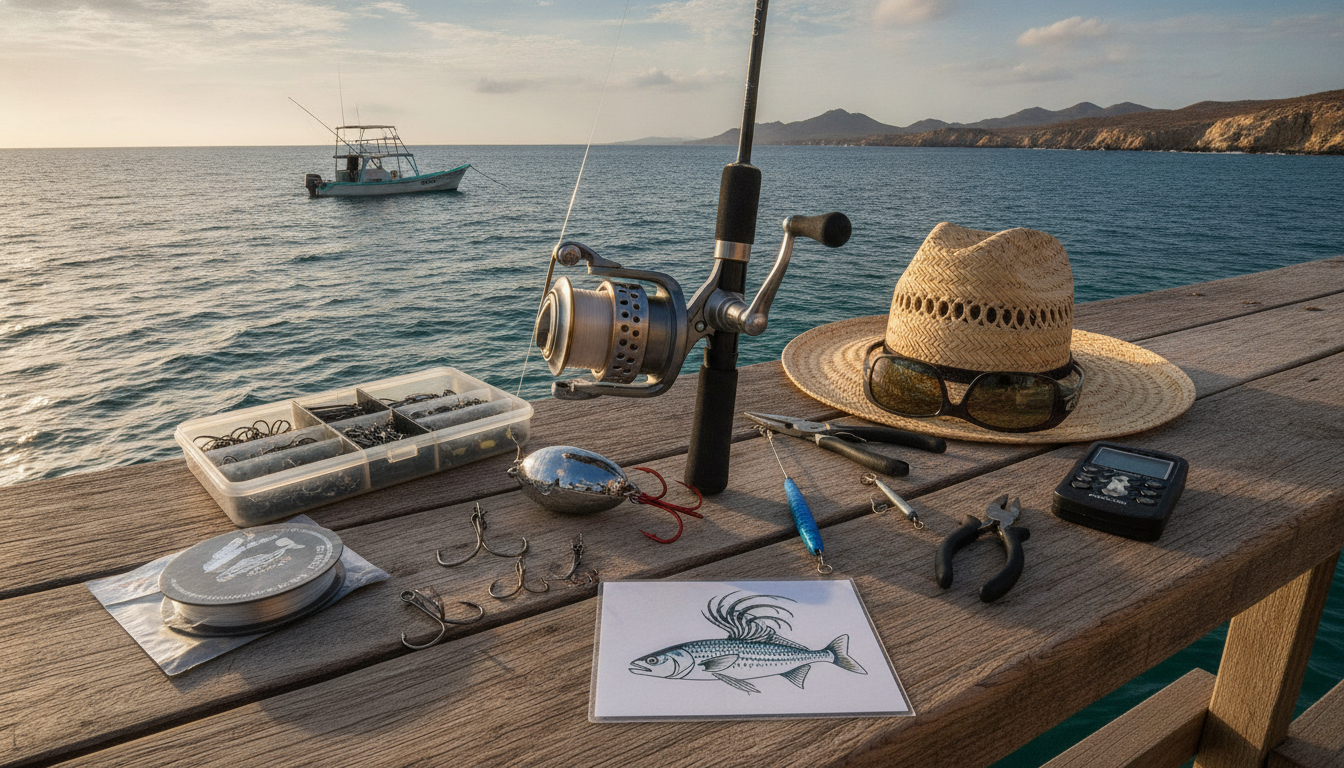
12 Cabo Panga Charter Questions to Ask (Checklist)
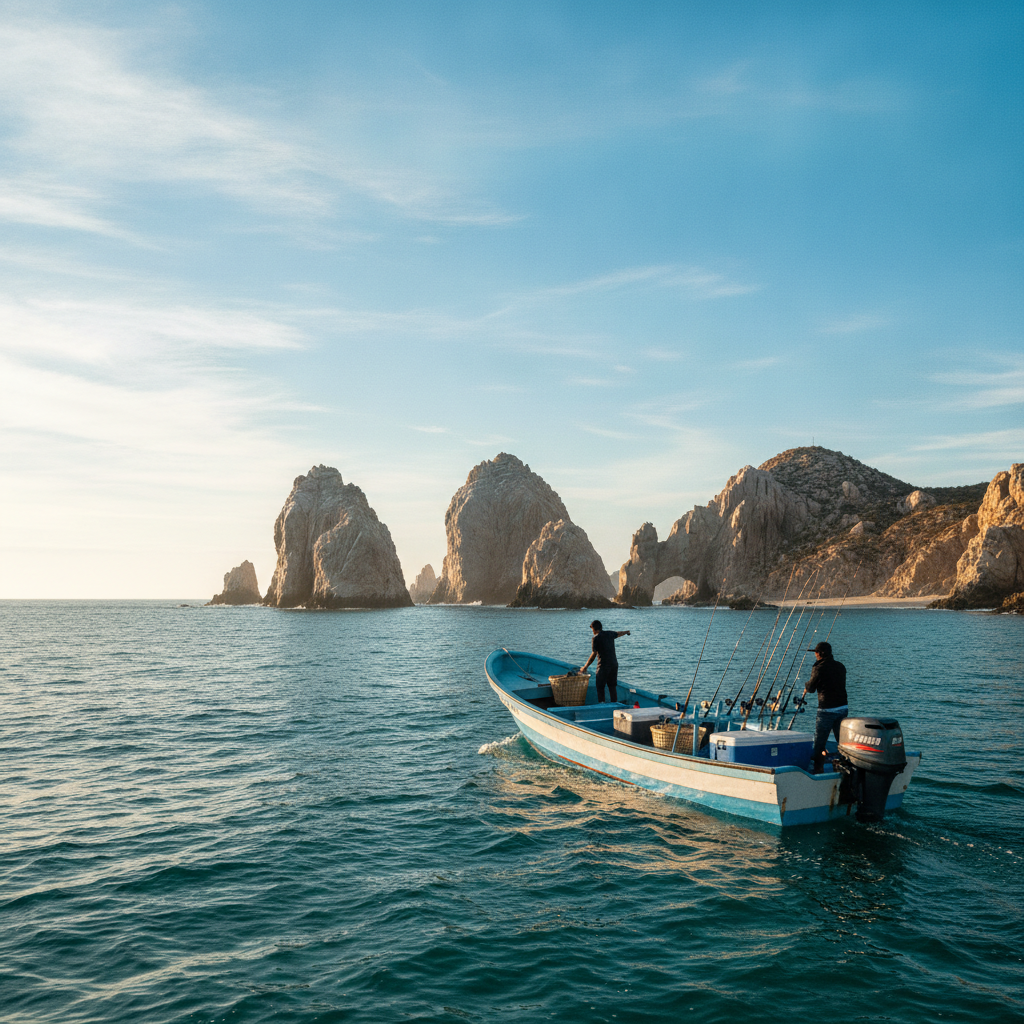
The Dockside Screening Rule: How to Vet a Cabo Panga in 60 Seconds
You must vet any Cabo panga before paying cash by verifying four operational pillars—hull safety compliance, live bait inclusion, tackle grade, and exact boundary limits—across a 12-question field checklist. You can complete this screening directly at the slip in 60 seconds. Doing so prevents unpaid fuel surcharges, substandard line failures, and mid-trip disputes over live bait costs before the boat leaves the marina.
A panga is a lightweight, outboard-powered fiberglass skiff, typically measuring 22 to 28 feet in length with an open deck and a narrow modified V-hull, widely operated across coastal Mexico for artisanal fishing and sport charters.
Marina Cabo San Lucas contains 380 slips and hosts heavy daily pedestrian traffic. According to annual visitor reports from the Baja California Sur Tourism Board (FITURCA), Los Cabos receives over 3.5 million tourists per year. This volume fuels an aggressive sales gauntlet along the boardwalk between 5:30 AM and 6:30 AM. Dock hawkers routinely offer discounts ranging from $180 to $220 for a standard five-hour trip, rushing buyers to close before inspecting the vessel.
These dockside middlemen rarely own vessels. Independent brokers typically take a 25% to 35% cash commission off the top, handing the captain the discounted balance. That revenue cut forces the captain to cut corners immediately. They may restrict engine speeds to troll only close-in waters, deny access to productive offshore hotspots like the Golden Gate Bank, or skimp on purchasing fresh bait from local bait boats (pajareros).
Dealing with an independent owner-operator produces a completely different result. An owner-operator maintains the hull, buys fresh monofilament or braid, and sets clear run limits. For an Extreme Angler pursuing pelagic species, vetted equipment is non-negotiable. Knowing what are the best times of year to catch striped marlin in Cabo San Lucas means nothing if your chartered boat carries dry-rotted lines, rusted drags, or lacks a working livewell to test how effective are live baits compared to artificial lures for striped marlin in Cabo.
The Mexican Maritime Authority (Capitanía de Puerto) requires all commercial passenger pangas to carry active safety certificates (matrícula turística), working VHF radios, and certified life jackets for every passenger. The International Game Fish Association (IGFA) also sets clear standards on functional tackle integrity that serious offshore anglers rely upon. Verifying these standards at the dock separates professional skippers from operators who risk your safety and budget.
Try This Today: Save the four core vetting pillars—Hull Safety, Live Bait, Tackle Grade, Boundary Limits—into a quick note on your phone right now so you can run the 60-second inspection at the marina tomorrow morning without relying on cellular data.
To ensure the vessel meets strict seaworthiness criteria before exchanging any cash, examine the exact 12-question field checklist below.
Key Takeaways
- Verify whether live bait ($20–$30) and fishing licenses are included in quoted charter rates.
- Inspect onboard VHF radios, functional bilge pumps, and Type I life vests before boarding.
- Confirm targeted fishing boundaries; budget pangas often cap fuel range to 5 miles offshore.
- Never pay 100% upfront on the marina dock; hold balance until boarding or trip completion.
Table of Contents
- The Dockside Screening Rule: How to Vet a Cabo Panga in 60 Seconds
- Safety and Seaworthiness: Questions 1 Through 3
- Tackle, Bait, and Fuel Range: Questions 4 Through 7
- Hidden Costs and Marina Fees: Questions 8 Through 10
- Captain Credentials and Bite Strategy: Questions 11 and 12
- The Cabo Marina Dockside Vetting Checklist: Printable Scorecard
- Sources & Further Reading
Safety and Seaworthiness: Questions 1 Through 3
A panga is an open, outboard-powered fishing skiff between 22 and 31 feet in length, constructed from heavy fiberglass and featuring a high bow designed to handle rough surf and choppy coastal waters.
Cabo San Lucas sits at the convergence of the Pacific Ocean and the Sea of Cortez, where currents change quickly. Before committing cash to a local captain, inspect the boat’s primary safety hardware at the dock. You are booking an expedition into open ocean, not a harbor cruise.
Question 1: Does the vessel carry a working fixed VHF marine radio and GPS unit, or solely personal cell phones?
Cellular networks in Baja California Sur drop coverage roughly 5 miles offshore. If your captain relies only on a smartphone, do not board that boat. According to distress incident logs from the Mexican Navy (SEMAR), communication failure remains the top operational hazard for small craft operating in deep water off the cape.
A sea-ready skiff must feature a hardwired 25-watt VHF radio connected to an external antenna, paired with a dedicated marine GPS unit from brands like Garmin or Simrad. Ask the captain to switch on the radio and perform a quick radio check on VHF Channel 16. The United States Coast Guard Navigation Center identifies Channel 16 as the global international distress frequency, monitored 24 hours a day by harbor masters and naval patrols.
Question 2: Are there adult Type I offshore life jackets easily accessible on deck rather than locked beneath storage hatches?
A Type I Personal Flotation Device is an offshore life jacket that delivers a minimum of 22 pounds of buoyancy and turns an unconscious wearer face-up in rough water.
Many budget operators stow cheap, foam Type II vests inside locked forward compartments beneath heavy plastic coolers and fuel drums. In an emergency involving sudden hull breach or engine rollover, you will have less than 45 seconds to locate and don that equipment. Verify that there is one commercial-grade Type I vest per passenger, clearly visible and resting under the gunwale or console where you can grab it instantly. Understanding basic onboard safety is an essential part of what gear you need for extreme angling before leaving the slip.
Question 3: Does the hull feature an operational automatic bilge pump and secondary manual backup bailer?
Pangas take on green water when backing down on billfish or drifting through standing swells at the Golden Gate Bank. The hull needs an active mechanical system to evacuate that volume.
Demand to see the bilge pump switch operate at the helm. A standard 26-foot panga requires an electric pump rated for at least 1,500 gallons per hour, wired directly to a float switch and marine battery. In addition to the electric pump, the vessel must carry a physical hand-operated diaphragm pump or heavy plastic bailing bucket. Electric systems can short out if salt water floods the battery tray, leaving manual bailing as your only defense against swamping.
- VHF Radio Test: Confirm the fixed-mount radio powers on and transmits clearly on Channel 16.
- GPS Plotter Verification: Verify the helm displays an active digital chart showing Cabo Falso and the outer banks.
- Life Jacket Inspection: Count one accessible Type I PFD per person, checking straps and buckles for salt corrosion.
- Bilge Float Check: Request the captain manually cycle the electric bilge pump to confirm water discharge through the hull fitting.
- Manual Bailer Check: Locate the physical backup bailer on deck before the deckhand unties the bow line.
Once you confirm the skiff will float and stay connected in an emergency, turn your attention to the mechanical power plant on the transom.
Tackle, Bait, and Fuel Range: Questions 4 Through 7
Question 4: Is live bait included in the base rate, or is cash required at the dock?
Never assume your charter fee covers bait. In Marina Cabo San Lucas, local bait vendors (pajareros) pull alongside pangas inside the harbour basin at 6:00 AM to sell live caballitos, lisas (mullet), or ballyhoo.
Caballitos are small, hardy green jack mackerel used throughout Baja California as primary live bait for pelagic predators like striped marlin and dorado.
Expect to pay a fixed cash rate of $3 per bait, which totals $36 to $45 for a standard dozen. Budget operators advertise low base rates of $220 per day, then require you to purchase your own bait out of pocket. Premium crews include 10 to 15 live baits in their booking agreement, saving you an early-morning cash negotiation. Knowing how effective are live baits compared to artificial lures for striped marlin in Cabo makes clarifying bait supplies essential before you step onto the deck.
Question 5: What line test, terminal fluorocarbon leader, and reel models are rigged for your target species?
Inspect the boat’s rod rack before you leave the slip. Budget pangas frequently spool worn 40-pound monofilament on unserviced single-speed star drag reels, which fail quickly when a 120-pound striped marlin makes a 30-knot burst.
A fluorocarbon leader is a nearly invisible underwater monofilament line tied between the main line and the hook that resists abrasion from fish teeth and rough bill surfaces.
According to International Game Fish Association (IGFA) equipment guidelines, matching your terminal tackle to your target species protects against sudden line failure during extended fights. Top crews spool modern two-speed lever drag reels, such as the Shimano Talica 20 II or Penn International 30VIW, with 65-pound braided line backed by a 60- to 100-pound fluorocarbon leader. Review what gear do you need for extreme angling so you can evaluate the captain’s boat tackle against high-performance standards.
Question 6: What is the hard nautical mile fuel limit?
Panga fuel costs represent up to 45% of a boat captain’s daily operating overhead. Cheap operators restrict their cruising radius to inshore zones within 3 to 5 nautical miles of Land’s End to conserve petrol.
A standard 22-foot super panga running a 140-horsepower Suzuki four-stroke burns roughly 5 to 7 gallons of fuel per hour at a 22-knot cruising speed. If offshore surface temperatures move pelagic schools out to the Golden Gate Bank—located 18 to 22 nautical miles northwest of Cabo—a fuel-restricted panga will not take you there. Confirm the run limit in writing so you can reach top locations for extreme angling adventures instead of idling in crowded inshore drop-offs.
Question 7: Does the boat carry functional outriggers and an aerated livewell?
Bait health dictates your offshore strike rate. Low-budget pangas keep caballitos in un-aerated 5-gallon plastic buckets, which deplete dissolved oxygen within 35 minutes and leave you dragging lifeless bait.
A competitive charter carries a dedicated 20- to 30-gallon circulating livewell powered by a continuous 12-volt Rule bilge pump. Functional outriggers are equally critical because they widen your trolling spread, keeping multiple live presentations and rigged teasers separated during offshore trolling runs.
| Equipment Feature | Budget Panga Standard | Extreme Angler Fleet Standard | Operational Impact |
|---|---|---|---|
| Live Bait Supply | Client pays cash ($3/bait at dock) | 10–15 baits included in charter rate | Saves $30–$45 cash; prevents dockside delays |
| Reel Configuration | Single-speed star drag (graphite) | Two-speed lever drag (machined aluminum) | Delivers 25+ lbs smooth drag for billfish runs |
| Terminal Leader | Standard 50 lb nylon monofilament | 60–100 lb abrasion-resistant fluorocarbon | Prevents line breaks from bill chafing and teeth |
| Bait Storage | Static 5-gallon un-aerated bucket | 20–30 gallon pressurized circulating livewell | Keeps baits lively across 8-hour trips |
| Offshore Fuel Radius | 3–5 nautical miles (inshore only) | 15–25 nautical miles (offshore banks) | Allows runs to Golden Gate and Jaime Banks |
Once you verify the tackle, livewell, and fuel limits, you must confirm the safety systems, crew licensing, and medical equipment detailed in the next set of questions.
Hidden Costs and Marina Fees: Questions 8 Through 10
Low advertised charter rates often double by the time your boat clears the harbor. Booking a bare-bones panga requires an exact audit of line-item costs before any money exchanges hands. Inexperienced anglers budget for the hull rate alone, only to face an aggressive string of dockside cash demands at 6:00 AM.
Question 8: Are Mexican Federal Fishing Licenses (FONMAR) Included?
Every angler aboard a vessel in Mexican territorial waters must carry an active state-issued sportfishing license. FONMAR, the Fondo para la Protección de los Recursos Marinos, is the Baja California Sur state agency responsible for marine resource protection and sportfishing license administration.
According to the official FONMAR Baja California Sur fee schedule, a daily individual fishing license costs 420 Mexican pesos, or roughly $22 USD per person. Most budget operators do not include this permit in their baseline quote. If you book a four-angler trip, you will immediately owe an unbudgeted $88 USD on the dock before the captain unhitches a single line.
Always ask: "Does this quote include valid FONMAR sportfishing permits for every passenger, or must we purchase paper permits at the kiosk?" If permits are not included, buy them online ahead of time through the state portal to avoid the 20-minute morning queue at the marina office.
Question 9: What Are the Exact Filleting, Bagging, and Marina Access Fees?
Dock infrastructure fees and catch processing rates vary wildly across the Cabo San Lucas marina basin. The Administración Portuaria Integral de Cabo San Lucas charges passenger boarding access fees on certain private slips, which shady brokers quietly pass to the client post-trip.
Processing your catch also incurs separate labor charges. Standard marina rates run between $2.00 USD and $3.00 USD per medium gamefish (such as dorado or yellowfin tuna), and up to $40.00 USD for large pelagic species that require vacuum-sealing and deep freezing. If you plan to haul fillets home, confirm whether the crew handles standard chunking or if they hand you off to a third-party dock vendor who charges premium packaging rates.
When you prepare for serious offshore work with Extreme Angler, knowing your final costs lets you pack the right equipment rather than scrambling for cash at the cleaning tables. You should confirm the exact gear and logistics needed before leaving the dock by reviewing what gear do you need for extreme angling?.
Question 10: How Are Crew Tips Structured, and Does 100% Go to the Crew?
The sportfishing industry standard for crew gratuity in Baja California Sur is 15% to 20% of the total charter cost. However, booking through hotel concierges or street vendors creates a serious breakdown in tip distribution. Middlemen frequently demand an upfront "service charge" on credit card payments, retaining up to 50% of that fee as agency commission while the captain and deckhand receive nothing.
Clarify the cash distribution rule directly with the fleet manager. Ask explicitly: "Is gratuity paid directly in cash to the crew at the cleaning dock, and do you deduct any brokerage split from their tip?"
Pay your crew directly in physical cash (USD or Mexican Pesos) once the boat docks. A deckhand running live bait rigs during peak bite windows—such as testing how effective are live baits compared to artificial lures for striped marlin in Cabo—earns that money through intense physical labor. Bypassing the booking broker ensures your crew receives every dollar.
- Confirm FONMAR license inclusion in writing; budget $22 USD per person per day if purchasing separately.
- Identify the exact marina slip number to verify if dock access surcharges apply.
- Lock down fish cleaning rates ($2-$3 per fish standard) and vacuum-seal freezing fees before departure.
- Carry cash for the 15% to 20% crew tip instead of putting gratuity on a broker credit card charge.
- Request a written total that lists fuel, bait, ice, licenses, and cleaning fees as individual line items.
Review the exact vetting protocol below to see how these hidden fees factor into your total charter contract verification.
Captain Credentials and Bite Strategy: Questions 11 and 12
A panguero is a traditional artisanal boat operator in Mexican waters who captains an open fiberglass skiff, relying on hyper-local sea knowledge rather than heavy electronic navigation systems.
Many dockside sellers along the Cabo San Lucas marina boardwalk are third-party brokers, not skippers. A broker will collect a $350 to $500 day rate from you, pocket a 20% to 30% commission, and hand your slip assignment to an unvetted local crew. The International Game Fish Association notes that direct communication between the primary angler and the boat skipper before departure increases catch efficiency because gear preparation directly matches target species. Ask directly: "Are you the captain of this panga tomorrow morning?" If the seller answers no, demand the captain’s full name, inspect the vessel at its slip, and confirm the roster before handing over cash.
Question 12 protects your charter investment when ocean conditions shift or bites turn cold. Pelagic predators move rapidly between the Pacific Ocean and the Sea of Cortez. If surface trolling at the 95-Fathom Spot produces zero hookups by 09:30, continuing to drag artificials wastes your remaining boat hours. Understanding what are the best times of year to catch striped marlin in Cabo San Lucas sets baseline expectations, but a real captain always holds a plan B.
Ask the captain to outline their exact transition protocol. A solid secondary strategy involves shifting from pelagic trolling to bottom dropping with heavy irons 200 feet deep on high spots for yellowtail, or moving within 1 mile of the shoreline to target roosterfish and snapper. Reviewing how effective are live baits compared to artificial lures for striped marlin in Cabo will confirm what tackle the boat must carry to execute that switch. Serious Extreme Angler trips rely on documented contingencies, not passive cruising.
Copy-Paste Template: Captain Direct Vetting and Contingency Agreement
Date: [DATE]
Vessel Name: [BOAT NAME]
Slip Number: [SLIP NUMBER, CABO MARINA]

1. CAPTAIN CONFIRMATION
- Booking Agent Name: [NAME OF PERSON TAKING PAYMENT]
- Primary Skipper Name: [NAME OF ACTUAL CAPTAIN]
- Captain Direct WhatsApp/Phone: [PHONE NUMBER]
- Subcontracting Clause: [YES/NO - Vessel owner confirms the named skipper above will run the boat. If substituted, client reserves right to cancel for 100% refund before departure.]

2. ROUTE AND CONTINGENCY PLAN
- Primary Target: [TARGET SPECIES, e.g., Striped Marlin / Yellowfin Tuna]
- Primary Location: [PRIMARY SPOT, e.g., Golden Gate Bank / 1150 Spot]
- Pivot Cut-off Time: [09:30 AM / 10:00 AM]
- Secondary Plan: If primary bite is dead by cut-off time, boat will move to [SECONDARY SPOT] to target [SECONDARY SPECIES, e.g., Inshore Roosterfish / Deep Drop Grouper].
- Extra Fuel/Distance Surcharge Included: [YES/NO, $0 ADDITIONAL]

Agreed by Captain/Broker (Signature): _______________________
Client Name: [YOUR NAME]
Use this written confirmation to lock in vessel logistics before reviewing the final payment protocol below.
The Cabo Marina Dockside Vetting Checklist: Printable Scorecard
A panga is an open, outboard-powered fiberglass fishing skiff typically measuring between 22 and 31 feet, engineered for heavy surf launches and coastal operations across Mexican waters.
Walking the Cabo San Lucas marina docks at 5:30 AM puts you in direct contact with independent captains and aggressive third-party promoters. You need an objective evaluation tool to separate seaworthy pangas run by licensed captains from under-equipped boats that risk your safety and budget.
Run every prospective charter through this 12-question scorecard before you discuss dates or pull cash from your wallet.
Dockside Evaluation Matrix
| # | Vetting Question | Verification Standard | Pass Benchmark | Walk-Away Trigger |
|---|---|---|---|---|
| 1 | Does the vessel display a valid Matrícula (commercial registration)? | Inspect hull numbers painted on the bow. | Valid commercial registration ending in P (Pesca Comercial/Turística). |
Expired, missing, or private-pleasure numbers (R or T). |
| 2 | Are marine VHF radio and GPS functioning on the console? | Look at electronics during power-on. | Marine VHF power-on test plus working standalone GPS chartplotter. | Handheld-only radio or zero electronics (relying solely on personal cellphones). |
| 3 | Are USCG/SEMAR-approved Type I life jackets on board for every passenger? | Physical count beneath console or gunwales. | Clean, serviceable commercial life vests equal to total passengers plus two crew. | Torn, missing, moldy gear, or fewer vests than people aboard. |
| 4 | What is the age and service status of the primary outboard engine? | Visual check of cowl, prop, and tell-tale water stream. | Four-stroke motor under 6 years old, clean fuel lines, steady cooling stream. | Two-stroke clunkers, visible fuel/oil sheen in bilge, sputtering idle. |
| 5 | Does the livewell have an active, powered aeration pump? | Request the captain switch on the pump. | Running pump delivering constant seawater flow into the bait tank. | Stagnant tank, manual five-gallon buckets, or broken pump switch. |
| 6 | What trolling spread and terminal tackle are provided? | Inspect rod guides, reel seats, and line condition. | Shimano or Penn two-speed 30–50 lb lever drags with fresh monofilament. | Rusted roller guides, corroded star-drag reels, brittle/sun-bleached line. |
| 7 | Are Mexican fishing licenses included in the quoted rate? | Ask whether FONMAR digital or paper permits are issued. | Individual official permits issued to your name, or clear dockside purchase process. | Captain claims "permits are not needed on my boat" (direct violation of Mexican federal law). |
| 8 | Who keeps the catch, and is fish cleaning/bagging included? | Clarify tuna/dorado retention and packaging fees. | Angler keeps 100% of legal limit catch; cleaning rate defined ($2–$3 per fish). | Crew claims rights to your catch or demands exorbitant dockside processing fees. |
| 9 | What is the exact run distance and engine-hour limit? | Confirm target zones (e.g., Gordo Banks vs. El Faro). | Full target run (up to 20 miles offshore, e.g., Golden Gate or 95 Spot). | Strict 2-to-3 mile harbor limit with zero trolling past Lands End. |
| 10 | Is an auxiliary propulsion or twin-battery system installed? | Inspect battery compartment switch (1, 2, ALL, OFF). |
Dual marine battery bank with selector switch and backup kicker/VHF battery. | Single automotive battery with corroded terminals and no jump pack. |
| 11 | What first-aid and safety signaling equipment is aboard? | Visual check of first aid kit, flares, and fire extinguisher. | Sealed first-aid kit, unexpired flares, and charged marine fire extinguisher. | Zero signaling equipment or empty first-aid containers. |
| 12 | What is the bad-weather cancellation and mechanical breakdown policy? | Verbal agreement backed by written voucher. | 100% refund or free reschedule if Port Captain closes the harbor. | "No refunds under any circumstances" policy on port closures. |
Scoring Your Target Vessel
- 12/12: Immediate booking. High-tier private operator capable of serious extreme angling runs.
- 10–11/12 (with zero Walk-Away Triggers): Acceptable charter. Tackle minor trade-offs (e.g., bring your own fluorocarbon leaders or terminal gear). Review what gear do you need for extreme angling to plug any equipment gaps.
- Any Single Walk-Away Trigger: Terminate the conversation immediately. Walk down the dock to the next slip.
Step-by-Step Payment Protocol
Financial disputes at the Cabo San Lucas Marina usually stem from undocumented cash transactions. According to data published by the Baja California Sur Tourism Board, over 40% of visitor service complaints in the Los Cabos municipality relate to unregulated transport and charter vendor deposits. Protect your funds using this three-stage protocol:
[ STEP 1: INITIAL BOOKING ]
Deposit Cap: 20% to 50% Maximum
Method: Credit Card or Traceable Platform
      |
      v
[ STEP 2: DOCK DEPARTURE ]
Verify Fuel, Live Bait & Ice
Inspect Scorecard Essentials
Do NOT Hand Over Balance Yet
      |
      v
[ STEP 3: TRIP COMPLETION ]
Vessel Tied to Marina Dock
Settle Remaining 50% to 80%
Cash (USD/MXN) or Final Card Charge
- Deposit Ceiling (20% to 50% Maximum): Never pay 100% upfront. Reputable panga fleets like those listed through the Cabo San Lucas Artisan Fleet Association standardise deposits between 20% and 50% to reserve a hull. If a broker demands the entire balance on the sidewalk, decline.
- Payment Methods and Receipts: Pay initial deposits via credit card or documented online booking platforms whenever possible. If paying cash at the dock office, demand a physical paper receipt with the vessel name, captain’s name, matricula number, and date written clearly.
- Live Bait Payment Timing: Live bait (caballito, mackerel, or ballyhoo) is sold by independent bait pangas near the marina entrance for $3 to $5 per piece. Pay for live bait directly from your cash pocket as you idle out, ensuring your livewell is stocked before running to pelagic grounds. Understanding how effective are live baits compared to artificial lures for striped marlin in Cabo will help you determine whether buying 10 baits or running top artificial lures for trolling striped marlins in Cabo San Lucas matches your budget.
- Final Dock Settlement: Settle the remaining 50% to 80% balance only after the boat has returned safely to the marina slip and engines are cut. Standard crew tips range from 15% to 20% of the base charter rate, handed directly to the captain in cash for distribution to the deckhand.
Frequently Asked Questions
Do I need to buy a Mexican fishing license if I fish from a panga?
Yes. Mexican federal regulation under CONAPESCA requires every person aboard a vessel carrying fishing gear to hold a valid sportfishing permit, regardless of whether they actively hold a rod. Children under 12 are exempt. You can purchase daily, weekly, or annual permits directly from the official state portal or from authorised concessionaires inside the main marina building before 6:00 AM.
What happens if the Cabo Port Captain closes the harbor due to high swell?
The Mexican Navy (*Secretaría de Marina* / SEMAR) and the Cabo San Lucas Port Captaincy (*Capitanía de Puerto*) issue mandatory harbor closures when swells exceed safe parameters. Legitimate charter contracts guarantee an immediate 100% cash or card refund or an agreed-upon reschedule date. Always confirm this policy before transferring your deposit.
Is it safe to run 15 to 20 miles offshore in a Cabo panga?
A 26-foot or 28-foot super panga with a modern deep-V bow and four-stroke outboard is built to run offshore targeting pelagic species. However, safety depends strictly on electronics, dual bilge pumps, working VHF communication, and stable weather. For offshore targets, review what are the best times of year to catch striped marlin in Cabo San Lucas to match your target grounds with sea conditions.
Should I tip the panga crew in US Dollars or Mexican Pesos?
Both currencies are accepted across the Cabo San Lucas marina. When tipping in cash, calculate 15% to 20% based on the total charter cost. Ensure your banknotes are free of tears or heavy marks, as Mexican banks enforce strict exchange criteria on damaged foreign currency.
Print this scorecard or save the matrix to your phone right now, head down to the Cabo San Lucas Marina outer basin by 5:30 AM, and vet your captain before handing over a single dollar.
Sources & Further Reading
A panga is an open, outboard-powered fiberglass skiff typically measuring 22 to 31 feet, engineered with a sharp bow and shallow draft to handle heavy surf launches and rugged offshore conditions.
Verifying your charter against official standards protects you from unlicensed operators running substandard safety gear. Mexican maritime authority SEMAR mandates that commercial sportfishing vessels carry operational VHF marine radios and Type I life vests for 100% of passengers on board. Federal conservation law managed by CONAPESCA enforces an individual daily bag limit of 5 fish per angler, where a single marlin or sailfish legally counts as 50% of your total daily allowance.
You can confirm current conservation boundaries directly through FONMAR Baja California Sur, which monitors regional fleet compliance and sportfishing permit enforcement across Los Cabos. For tackle, release techniques, and ethical leader specifications, align your expectations with the established standards published by the International Game Fish Association.
- International Game Fish Association (IGFA), International Angling Rules & World Record Requirements (2024) – provides international standards for ethical sportfishing tackle, hook configurations, and catch-and-release best practices.
- Fondo para la Protección de los Recursos Marinos (FONMAR), Baja California Sur Sportfishing Regulations Manual (2023) – outlines state licensing rules, protected marine reserves, and local charter compliance protocols.
- Comisión Nacional de Acuacultura y Pesca (CONAPESCA), Official Marine Sportfishing Guidelines and Bag Limits (2023) – establishes Mexico’s federal sportfishing species protections, daily quotas, and vessel catch reporting mandates.
- Secretaría de Marina (SEMAR), Norma Oficial Mexicana NOM-034-SCT4-2009 (2009) – sets the federal baseline for mandatory safety equipment, radio communication gear, and life jacket ratings on commercial passenger boats.
- Capitanía de Puerto de Cabo San Lucas, Safety Verification Protocol for Charter Craft (2022) – details local marina inspection requirements, captain licensing qualifications, and commercial hull registrations (matrículas).