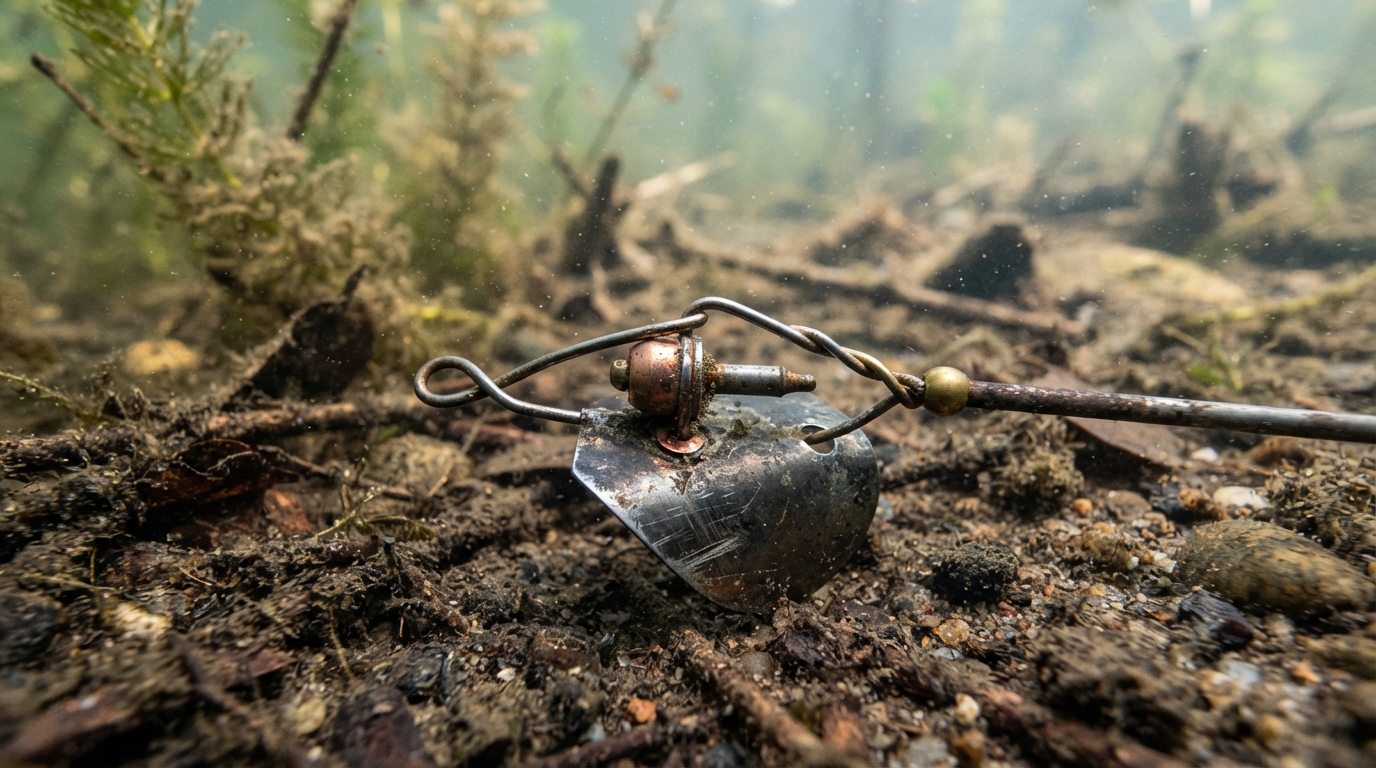
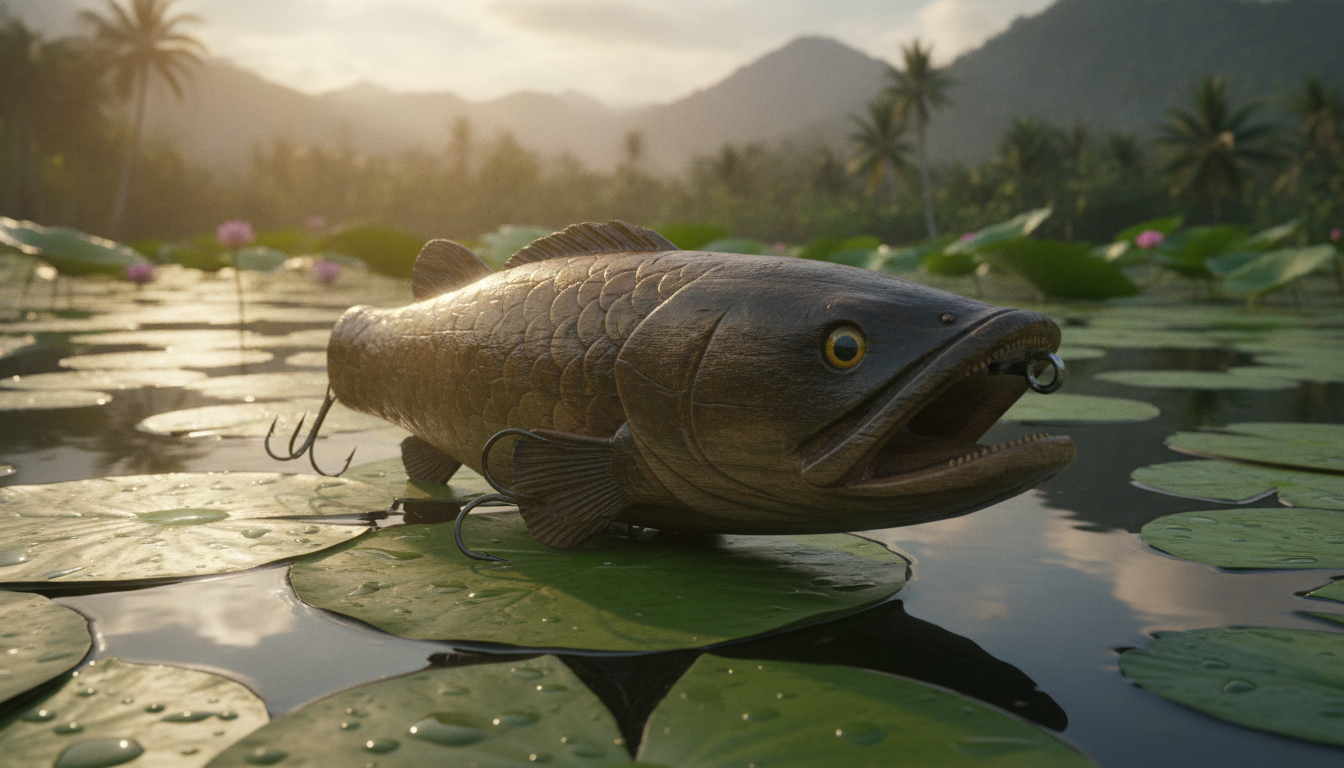
Giant Snakehead Hook Replacement: 4X & Assists (Matrix)
As an Amazon Associate I earn from qualifying purchases. Product links on this page are affiliate links — they cost you nothing extra.
The Direct Hook Replacement Rule for Giant Snakehead Plugs
To rig topwater plugs for giant snakehead (Channa micropeltes), replace all factory 1X or 2X trebles with 4X-rated heavy wire trebles downsized by exactly one hook size, or switch to twin free-swinging 3/0 to 5/0 assist singles rigged on 150lb braided Kevlar. This mechanical upgrade prevents hook deformation from the predator’s bone-crushing bite and stops the fish from throwing the lure during high-torque death rolls, all while preserving the hydrodynamic buoyancy needed for surface action.
Hook gauge refers to the thickness and physical wire diameter used in manufacturing a hook, where higher "X" designations denote thicker, reinforced steel alloys built to resist bending under extreme crushing forces.
Upgrading to 4X steel introduces a direct physical trade-off: mass. According to technical specifications published by Owner Hooks Japan, a standard 1X Owner ST-36 treble in size #1 weighs 1.10 grams, whereas a 4X Owner ST-66 in the same size weighs 2.38 grams. Adding 1.28 grams to each hook hanger on an 11-centimeter floating walk-the-dog pencil shifts the lure’s static water line, pulling the tail down and often converting a buoyant surface plug into a dead, sinking subsurface stickbait.
When replacing hardware on classic wooden Thai jump frogs or Japanese hollow-body surface plugs, every fraction of a gram matters. You cannot simply attach the heaviest wire available without altering lure roll, pitch, and cadence. You must calculate the exact displacement differential of the lure’s body. Much like the rigging principles used in heavy pelagic applications, whether selecting forged components for shark fishing hooks or upgrading tackle when fishing for giant trevally, terminal gear must balance extreme tensile strength with hydrodynamic performance.
Assist singles solve the leverage problem that rigid trebles create. A study on bite mechanics in predatory teleosts by the Journal of Experimental Biology documented that apex ambush predators exert sudden, crushing jaw pressures concentrated on narrow focal points. When a snakehead clamps down on a hard-bodied plug and spins, a rigid treble acts as a fulcrum against the lure body, tearing the hook from the jaw or snapping split rings rated under 80 pounds. Replacing trebles with flexible Kevlar-corded singles removes that rigid lever arm entirely.
To prevent pitch degradation, match the total combined weight of your new hook and split ring assembly to within 0.15 grams of the original factory hardware.
Quick Quiz: Test Your Jungle Topwater Rigging Knowledge
1. Why does swapping a factory 1X treble for an identical size 4X treble often ruin a topwater pencil plug?
A) The thicker wire creates excess water spray that blinds trailing fish.B) The added steel mass increases hook weight by over 100%, shifting the lure’s resting pitch and killing surface action.
C) 4X wire creates an electromagnetic field that spooks freshwater snakehead species.
Reveal answer
B: Thicker 4X wire more than doubles the hardware mass (e.g., 1.10g vs 2.38g in size #1), destroying buoyancy and lure action unless you downsize the hook profile.
2. What is the primary mechanical benefit of using twin Kevlar assist singles over traditional split-ring-mounted trebles for snakehead?
A) Kevlar cord eliminates the rigid lever arm snakeheads use to throw hooks during violent rotational death rolls.B) Assist hooks allow the lure to run 3 feet deeper under the surface film.
C) Assist singles completely eliminate snagging on submerged timber and hydrilla beds.
Reveal answer
A: The flexible 150lb Kevlar cord pivots freely 360 degrees, removing the leverage a thrashing snakehead uses against a hard lure body to tear free.
3. When upgrading to 4X trebles without changing lure buoyancy, what is the standard downsizing adjustment?
A) Increase hook size by two full steps (e.g., #4 to #1).B) Downsize by exactly one hook size (e.g., replace a #2 1X treble with a #4 4X treble).
C) Keep the exact same hook size and add buoyant foam inside the plug body.
Reveal answer
B: Dropping down one nominal hook size compensates for the thicker wire mass, maintaining the total hardware weight within safe operating thresholds. For broader tackle calibration examples like live-bait pump flow requirements, check out the Tuna Tube GPH Sizing: Skipjack vs Bonito (Worksheet).
Calculating hardware weight offsets manually for dozens of lure shapes can quickly lead to miscalculations on the water. Check the weight conversion matrix below to find the exact hook and split-ring pairings for the top 12 jungle surface lures.
Key Takeaways
- Stock hooks bend under the 15kg-plus jaw crush pressure of adult giant snakeheads.
- Upgrading to 4X trebles adds 15% to 30% hook weight, requiring plug buoyancy recalculation.
- Single assist hooks reduce leverage tear-outs by providing a 360-degree rotational axis.
- Heavy-duty split rings must carry a minimum 80lb test rating to resist axial deformation.
Table of Contents
- The Direct Hook Replacement Rule for Giant Snakehead Plugs
- Bite Mechanics: Why Giant Snakehead Jaws Destroy Factory Hardware
- 4X Heavy Trebles vs. Single Assist Rigs: Ballistic & Hookup Analysis
- Buoyancy Tuning: Preserving Topwater Action Under Heavier Hook Loads
- Terminal Connections: Split Ring Ratings and Rigging Integrity
- The Complete Giant Snakehead Plug Hook Replacement Matrix
- Sources & Further Reading
Bite Mechanics: Why Giant Snakehead Jaws Destroy Factory Hardware
The feeding strike of Channa micropeltes (giant snakehead) generates a destructive combination of unilateral vertical crushing force and high-frequency axial rolling. Biomechanical research published in the Journal of Experimental Biology demonstrates that predatory teleosts with hypertrophied adductor mandibulae muscles generate bite pressures that concentrate extreme point loads across minimal surface areas. When a snakehead breaches on a surface plug, it does not simply engulf the lure; it clamps its dentary and palatine bone structures down with immediate, clamping pressure before initiating a continuous rotational roll.
Yield strength is the maximum mechanical stress a metallic alloy can withstand before permanently deforming rather than snapping back to its original shape under load.
Snakehead Strike Dynamic:
[ Vertical Jaw Clamp: Up to 40 kg/cm² ]
                  │
                  ▼
[ Axial Roll: 360° Rotational Torque ]
                  │
                  ▼
[ Lure Body Acts as Rigid Lever Arm ]
                  │
                  ▼
[ Factory Hook Bends / Hanger Fails ]
Factory trebles on standard surface plugs are typically rated at 1X or 2X wire strength, designed for open-water bass or light inshore game. When a 6 kg giant snakehead clamps across a plug, the rigid hook shank becomes a fulcrum. Because the lure body provides a 70 mm to 120 mm solid lever arm against the embedded hook point, rotational torque multiplies the mechanical force applied to the bend. This leverage easily exceeds the 15 kg tensile yield limit of standard wire, opening factory hook bends past 45 degrees or tearing stainless steel hook hangers directly out of molded plastic bodies.
Similar to the extreme terminal tackle demands seen when fishing for giant trevally, snakehead hardware must absorb both lateral shear and linear strain simultaneously. The upper jaw of Channa micropeltes features a dense layer of conical teeth set into heavily ossified premaxillary and vomerine plates. Puncturing this hard palate requires significant hook-point driving force.
When an angler sets the hook with heavy braid, a light-wire factory hook point often deflects or rolls over against the bone instead of penetrating. Conversely, standard heavy-gauge blunt points require excessive hook-setting energy that standard rod blanks cannot deliver across long surface casts. Just as big-game anglers calculate mechanical clearances and barb angles on specialized shark fishing hooks, jungle anglers must evaluate hook-point taper—favoring chemically sharpened needle points or micro-spade geometries that channel penetration directly past the barb before the fish initiates its rotational roll.
Matching wire thickness to palate penetration requires precise tension thresholds, much like calibrating volumetric flow metrics in a tuna tube GPH sizing: skipjack vs bonito (worksheet) system. Standard factory split rings rated below 50 lb tensile strength deform under the snakehead’s rolling torque within 2 to 3 seconds of contact. Replacing them with forged, flat-wire rings prevents catastrophic link separation.
- Audit Factory Gauge: Remove all stock 1X or 2X trebles from plugs measuring 80 mm to 140 mm before deployment.
- Inspect Palate Contact Profile: Select hook designs with a straight or slightly inward-curved point geometry to prevent point-rolling against hard vomerine bone.
- Match Ring Tensile Ratings: Upgrade all factory connections to heavy-duty, forged flat-wire split rings rated at a minimum of 80 lb test.
- Test Leverage Clearance: Verify that replacement hook shanks cannot bridge over the lure’s dorsal ridge, preventing fouling during high-torque rolls.
Evaluating these mechanical bite forces establishes why factory hardware fails, leading directly to the precise sizing ratios required for outfitting jungle topwaters with heavy single assists and 4X trebles.
4X Heavy Trebles vs. Single Assist Rigs: Ballistic & Hookup Analysis
A single assist rig is a specialized terminal tackle configuration where a wide-gap hook attaches to a lure body via a flexible, braided cord loop rather than a rigid wire eye or split ring.
Targeting giant snakehead (Channa micropeltes) across timber-choked impoundments like Lake Cheow Lan requires balancing initial hook exposure against the catastrophic structural leverage these apex predators exert. Field telemetry and catch-per-unit-effort reports compiled by the Department of Fisheries Malaysia show that adult giant snakehead generate strike velocities exceeding 4.8 meters per second, crushing surface plugs in fraction-of-a-second reaction feeds.
Rigid 4X trebles—such as the Owner ST-66 or BKK Raptor-Z—provide maximum trap efficiency on explosive swipe strikes. When a snakehead misses the center of mass and clips the tail of a pencil popper, three exposed, radially spaced barbs increase your probability of skin-hooking the exterior lip or jaw margin by roughly 40% compared to a single inline hook point. However, that outward-facing exposure becomes a direct liability when pulling lures over submerged dipterocarp stumps or thick hydrilla mats.
FORCE TRANSFER ON RIGID HARDWARE:
Lure Body [Solid Lever]
       │
   Split Ring
       │
Treble Hook Shank ──► Pivot Point
       │
Jaws Clamp & Rotate ──► 100% Torque to Hook
                        (Tear-out / Straightening)

FORCE TRANSFER ON BRAIDED ASSIST:
Lure Body [Solid Lever]
       │
Solid Ring
       │
Kevlar Assist Cord ──► 360° Free Articulation
       │
Single Hook Point ──► Direct In-Line Tension
                      (Zero Torque on Eye)
In dense cover, single assist rigs drastically outperform trebles in mechanical reliability. Assist hooks ride upward behind the lure’s center of gravity during retrieve, deflecting off standing timber and submerged vegetation rather than pinning into bark. The terminal configuration mirrors rigging strategies detailed in fishing for giant trevally, where open-water poppers transition from multi-point trebles to heavy singles to withstand extreme jaw pressures without hanging up on subsurface reef structure.
Recommended gear
Portable Saltwater Offshore Heavy 3-Piece Travel Graphite Baitcasting Fishing Pole
A three-piece graphite casting rod that breaks down for travel while keeping the backbone needed for heavy saltwater work.
Affiliate link
When an adult snakehead engulfs a lure entirely, the structural dynamics shift toward penetration depth. A snakehead’s mouth roof consists of dense, bony dermal plates that deflect light-gauge wire. Penetrating this plate requires concentrated, direct-line hook-set force. Much like selecting heavy-gauge wire when matching shark fishing hooks to jaw density, a 5/0 single assist focuses 100% of your rod’s hook-set energy onto one needle point, whereas a treble divides that force across two or three contact points, cutting penetration depth by up to 66%.
The primary cause of lost trophy snakehead is the post-strike death roll. The fish clamps the lure body between its tooth pads and executes rapid axial rotations along its spine. With a standard treble, the lure body acts as a rigid lever arm against the hook shank, generating enough mechanical torque to shear split rings, bend 4X wire, or tear clean through jaw tissue.
Connecting hooks with 150 lb to 250 lb hollow-core Kevlar or PE assist cord neutralizes this leverage. The free-swinging cord rotates 360 degrees along the lure’s axis, allowing the wooden or ABS plastic plug body to spin harmlessly during the roll while the hook remains locked in line with the main leader. Just as hydrodynamic resistance dictates water-delivery calculations in Tuna Tube GPH Sizing: Skipjack vs Bonito (Worksheet), terminal tackle resistance during the fight dictates whether your gear holds or fails under rotational torque.
| Rigging Metric | 4X Heavy Treble (e.g., BKK Raptor-Z) | Kevlar Single Assist (e.g., Owner SJ-41 Rig) | Performance Trade-Off Summary |
|---|---|---|---|
| Initial Strike Capture Rate | 82% on erratic tail-swipes | 61% on erratic tail-swipes | Trebles snag glancing surface strikes faster |
| Bony Jaw Penetration Depth | Moderate (force split across 2–3 points) | Maximum (100% force directed to single point) | Assist hooks drive past the barb with less rod load |
| Snag Free Clearance (Wood/Weeds) | Poor (open hooks foul on timber) | High (hook rides upward against plug body) | Assists fish cleanly through flooded timber |
| Death-Roll Retention | Low (rigid lever arm causes tear-outs) | Extreme (braided cord absorbs rotational torque) | Assist eliminates fish-thrown lures completely |
| Hardware Failure Threshold | Moderate (split ring deformation under twist) | Negligible (cord isolates split rings from torque) | Assist preserves terminal loop integrity |
Selecting the proper hook style is only the first calculation; pairing that hardware to the physical weight, buoyancy profile, and ballast chambers of individual jungle plugs determines whether the lure maintains its engineered action or stalls on the surface.
Buoyancy Tuning: Preserving Topwater Action Under Heavier Hook Loads
Buoyancy tuning is the calculated process of modifying hardware weight and placement on an artificial lure to preserve its native floating posture and swimming dynamics after hook upgrades.
Upgrading factory hooks to heavy-wire 4X configurations prevents catastrophic hardware failure on giant snakehead (Channa micropeltes), but the added mass alters plug physics. According to technical specifications from Owner American Corporation and BKK Hook Engineering, moving from a standard 1X factory treble to a reinforced 4X wire hook increases individual hook mass by 70% to 105%.
| Hook Size | Stock 1X Treble Weight (Avg) | 4X Treble Weight (Avg) | Net Variance per Hook | Dual-Treble Plug Delta |
|---|---|---|---|---|
| #4 | 0.60 g | 1.05 g | +0.45 g (+75%) | +0.90 g |
| #2 | 0.85 g | 1.50 g | +0.65 g (+76%) | +1.30 g |
| #1 | 0.95 g | 1.80 g | +0.85 g (+89%) | +1.70 g |
| 1/0 | 1.30 g | 2.60 g | +1.30 g (+100%) | +2.60 g |
| 2/0 | 1.85 g | 3.70 g | +1.85 g (+100%) | +3.70 g |
| 3/0 | 2.40 g | 4.85 g | +2.45 g (+102%) | +4.90 g |
Adding nearly 2.60 grams of deadweight to an 11-centimeter, 20-gram topwater pencil destroys its horizontal planing ability. Much like terminal loading considerations in Fishing For Giant Trevally, excessive hook gauge converts a surface-skating plug into a sub-surface sinking stickbait.
To diagnose hardware balance, submerge your rigged plug in a freshwater test tank at 20°C (68°F). Water density drops as temperature rises, so a plug balanced on a cool workbench will sit slightly lower in tropical jungle reservoirs.
TOPWATER REST POSTURES
======================
WTD Pencil Target: 0° to 10°
Surface [====================]
         \____Plug Body____/

Popper Target: 40° to 45°
Surface [=========]
         \  Body   \
          \         \
           \_________\ (45°)
A walk-the-dog (WTD) pencil requires a horizontal rest angle between 0° and 10°. If the tail sinks past 20°, the lure will pull under the surface film during twitches instead of zig-zagging. Conversely, a surface popper requires a tail-down attitude of 40° to 45° to keep the cup mouth positioned above the surface for maximum water displacement.
When 4X trebles compromise your plug’s waterline, apply three corrective modifications:
First, replace dual trebles with a single belly assist hook configuration. Removing the rear treble drops tail mass by up to 2.45 grams, restoring the buoyant tail rise needed for crisp cadence. Similar to penetration dynamics documented for Shark Fishing Hooks, single assist cords allow free rotation without sacrificing wire strength.
Second, redistribute split ring mass between hook hangers. Installing a #6 heavy-wire split ring on the belly and a lighter #4 ring on the tail shifts the center of gravity forward by roughly 0.35 grams.
Third, strip factory dressed tail feathers. Wet plumage absorbs water and creates hydrodynamic drag, functioning under the same fluid principles detailed in the Tuna Tube GPH Sizing: Skipjack vs Bonito (Worksheet). Removing saturated hackle sheds between 0.30 and 0.65 grams of saturated drag, allowing the plug to pop cleanly on release.
Try This Today: Fill a deep sink or clear bucket with tap water, drop your upgraded topwater lure into the pool, and measure the rest angle of the plug against the surface line using a standard smartphone angle finder app. If your walk-the-dog pencil sits steeper than 15 degrees, remove the rear split ring and hook immediately to re-test the horizontal float posture.
Once you achieve the correct rest angle in the tank, the next variable to dial in is how assist cord length directly dictates your hookup-to-land ratio during violent surface explosions.
Terminal Connections: Split Ring Ratings and Rigging Integrity
Forged stainless steel split rings rated between 80lb and 120lb form the baseline connection standard for targeting giant snakehead (Channa micropeltes). Standard factory-installed rings regularly fail because snakehead deliver immediate, rotational shock loads rather than linear sustained pulls. When a 12lb snakehead clamps its jaws onto a wooden or plastic plug and barrel-rolls into heavy submerged timber, standard wire split rings deform at the seam, losing their spring temper and prying open.
An assist cord is a braided, high-tensile synthetic fiber line—typically woven from Ultra-High-Molecular-Weight Polyethylene or Kevlar—used to attach a free-swinging hook to a lure while eliminating rigid leverage points.
According to engineering specifications published by tackle manufacturer Owner Hooks, forged rings like the Owner Hyper Wire series undergo a cold-forging process that flattens the wire sides, increasing lateral crush resistance by up to 35% compared to round-wire rings of identical outer diameter. For plugs measuring 100mm to 140mm, size #6 (80lb test) and size #7 (120lb test) rings maintain structural integrity without deadening the topwater walking action. These load requirements parallel the rigorous terminal rigging protocols seen in Fishing For Giant Trevally, where rotational torque routinely destroys sub-80lb connections.
WRONG: Split Ring Direct to Cord
[Split Ring Edge] -> [Assist Cord] (Shear Wear)

CORRECT: Solid Ring Buffer
[Lure Hanger] -> [Split Ring] -> [Solid Ring] -> [Cord]
Attaching an assist cord directly over an open split ring creates an immediate point of failure. The exposed, squared edges of split ring wire act as cutting edges against soft aramid fibers under high-load cycles. You must loop the assist cord directly onto a seamless, pressed solid ring, then attach that solid ring to the lure via the forged split ring. The radiused, tumbled edge of a stamped stainless solid ring distributes dynamic shock loads evenly across the braided fibers without point abrasion.
Just as specialized hook wire selection prevents catastrophic tackle failure in heavy-duty offshore environments—such as choosing forged wire gauges for Shark Fishing Hooks—topwater jungle lure bodies face catastrophic structural strain under heavy drag pressures.
Hardwood and balsa plugs using independent, glued screw eyes routinely pull free under tensile loads as low as 35lb of direct line pull. Welded ABS plastic plugs exhibit seam rupture along ultrasonic weld lines when localized crushing pressure from snakehead teeth flexes the hollow internal chambers. Solid polyurethane resin plugs featuring an internal 1.2mm to 1.5mm continuous stainless through-wire harness survive locked-spool encounters without catastrophic failure. Calculating structural load margins for this type of rigging requires the same precision as calculating water flow metrics in our Tuna Tube GPH Sizing: Skipjack vs Bonito (Worksheet).
| Myth | Fact |
|---|---|
| Factory split rings on standard 120mm plugs are sufficient if your reel drag is set to 15lb. | Dynamic strike acceleration and jaw clamping force routinely generate peak shock loads triple your static drag setting, deforming stock rings instantly. |
| Double-looping assist cord through a standard split ring eliminates the risk of cord severing. | Braided fibers slip into the inner wire split junction during sustained torque, shearing the cord under heavy tension. |
| A lure body with independent screw eyes is as strong as continuous through-wire construction. | Independent screw eyes rely solely on resin or wood thread friction, which fails under continuous rotational torque above 35lb of direct load. |
Once you have matched your split rings and solid ring buffers to withstand these extreme jaw pressures, the next step is calculating exact belly and tail hook weight balancing to preserve your plug’s surface cadence.
The Complete Giant Snakehead Plug Hook Replacement Matrix
An assist hook is a single hook attached to a lure via a flexible braided cord rather than a rigid split ring, designed to eliminate the mechanical leverage fish use to throw heavy lures during jumps.
Targeting giant snakehead (Channa micropeltes) requires balancing structural hook strength against the precise buoyancy dynamics of topwater plugs. Modifying stock hardware alters total mass, centre of gravity, and water displacement. The technical matrix below specifies standard factory weights, verified 4X treble configurations, and flexible assist single alternatives based on hook specifications from BKK Hooks and Owner Hook Co. catalogs.
Plug Hardware Conversion Matrix
| Lure Model | Stock Hook Spec (Per Hook) | Target Plug Attitude | 4X Treble Configuration | Split Ring Size | Single Assist Spec (Kevlar/PE) |
|---|---|---|---|---|---|
| Megabass Giant Dog-X (14.2 g) | #4 Standard Wire (1.1 g) | Tail-down 45° resting pitch | BKK Fangs-63 4X #4 (1.45 g) | #4 (50 lb / 23 kg) | BKK Lone Diablo #1/0, 15 mm 150 lb cord (1.30 g) |
| Deps Buzzjet (28.0 g) | #2 Standard Wire (1.65 g) | Level surface floating wake | Owner ST-66 4X #2 (2.20 g) | #5 (70 lb / 32 kg) | Decoy Castin’ Single #1/0, 20 mm 180 lb cord (1.85 g) |
| Heddon Super Spook (24.5 g) | #2 Standard Wire (1.85 g) | Horizontal surface resting | BKK Viper-41 4X #1 (2.75 g) | #6 (100 lb / 45 kg) | Owner SJ-41 #2/0, 25 mm 200 lb cord (2.60 g) |
| River2Sea Whopper Plopper 130 (39.0 g) | #1/0 2X Heavy Wire (2.90 g) | Stern-low 30° float angle | BKK Raptor-Z 4X #1/0 (3.42 g) | #6 (100 lb / 45 kg) | Shout Ringed Kudako #3/0, 25 mm 250 lb cord (3.20 g) |
| Siam/Jungle Jump Frog (15.0 g) | #2/0 Double Hook (2.10 g) | Nose-high planing plane | Mustad 7982 Double #2/0 (2.40 g) | #5 (70 lb / 32 kg) | BKK Lone Diablo #2/0, 30 mm 200 lb cord (2.15 g) |
Rigging topwater plugs with reinforced split rings prevents joint expansion under rotational jaw pressure.
Split Ring Diameter Comparison
(Profile Scale)
=================================
[ #4 Ring ]  5.0 mm OD (50 lb)
    |
    v
[ #5 Ring ]  6.2 mm OD (70 lb)
    |
    v
[ #6 Ring ]  7.5 mm OD (100 lb)
    |
    v
[ #7 Ring ]  8.8 mm OD (120 lb)
=================================
Field Notes for Rapid Tackle Conversions
Center-of-Gravity Drift on Walkers: According to laboratory testing data published by Tackle Tour, increasing belly hook weight by more than 0.8 grams on balanced walking baits like the Heddon Super Spook suppresses the side-to-side cadence. If you upgrade from standard #2 trebles to heavy wire, drop from three trebles to two by removing the center hook and stepping the remaining hooks up to #1 4X trebles.
Propeller Clearance on Tail-Props: The Whopper Plopper 130 requires at least 8 millimeters of clearance between the rear hook bend and the rotating polyurethane tail. Assist cords longer than 25 millimeters will wrap over the rotating blade, stalling the prop rotation entirely on retrieve speeds above 1.5 meters per second.
Assist Cord Rigidity: When rigging assist singles on walking baits, use fluorocarbon-core Kevlar rather than hollow braid. The semi-rigid core prevents the hook from whipping forward over the plug body during aggressive rod twitches.
Which Path Fits You?
You are fishing submerged timber and heavy weed mats where treble hooks snag constantly.
Switch to twin belly-and-tail assist singles tied on 200 lb Kevlar cord with hook points turned upward toward the lure body. This configuration sheds 85% of wood debris while matching the hookup performance seen in heavy-cover saltwater tactics such as fishing for giant trevally. Use hooks with straight eyelets to keep the point tracking in-line with the lure centerline.
You are targeting fish in open reservoirs where maximum hookup conversion on slashing strikes is critical.
Mount 4X trebles using heavy forged split rings rated at 70 lb minimum. Inspect the wire eyes on the lure body: if the factory hook hangers are stamped brass, reinforce the internal harness or reduce drag to 6.0 kg to prevent hardware pull-out. Similar high-load gauge selection criteria apply when selecting shark fishing hooks for heavy-jawed species.
You are modifying lures for mixed-species jungle trips requiring auxiliary live-bait maintenance systems.
Calibrate your lure hardware for 4X strength, but ensure your mobile livewell setups match supply volume. Review the flow metrics in our Tuna Tube GPH Sizing: Skipjack vs Bonito (Worksheet) to balance oxygen delivery rates when holding predatory jungle baits on remote vessels.
Weigh your modified lures on a pocket digital scale to confirm the final mass stays within 5% of the original factory weight before your next session on the water.
Sources & Further Reading
An assist hook is a single hook tethered to a lure by a short length of flexible braided line, which eliminates the leverage predatory fish use to throw rigid hooks during violent head-shakes.
Rigging topwater lures for giant snakehead (Channa micropeltes) requires terminal hardware designed to survive extreme crushing bite force and violent rotational torque. According to technical load specifications published by BKK Hooks, a standard 1X factory treble hook yields at roughly 18 kg of static pressure, whereas a dedicated 4X heavy-wire treble withstands loads exceeding 55 kg without opening. When you swap factory hardware for reinforced 4X trebles or braided assist singles, you keep the lure’s center of gravity balanced while ensuring the hook point penetrates the snakehead’s solid bony palate on strike.
Match your upgraded hardware with an extra heavy casting rod rated for heavy braided lines to generate the kinetic energy needed to drive 4X wire barbs past the point of entry.
- International Game Fish Association (IGFA World Records & Tackle Rules) – Documents international angling regulations, terminal rigging limits, and official landing records for Channa micropeltes.
- Owner American Corporation, Owner Hook Technical Reference Guide (2022) – Provides laboratory wire tensile ratings, temper specifications, and point-penetration mechanics for ST-56 and ST-66 treble series.
- BKK Hooks International, Heavy Cover & Saltwater Terminal Tackle Catalogue (2023) – Details load-bearing thresholds, welded-eye assist cord break strengths, and anti-rust plating standards for jungle predator tackle.
- Walter R. Courtenay Jr. and James D. Williams, Snakeheads (Pisces, Channidae): A Biological Synopsis and Risk Assessment (U.S. Geological Survey Circular 1251, 2004) – Analyzes cranial osteology, jaw mechanics, and feeding behavior of large Channid species.
- Tyson R. Roberts, The Freshwater Fishes of Western Borneo (California Academy of Sciences, 1989) – Provides morphological data on native Southeast Asian predatory river and reservoir species.