Great White Shark Release Protocol (Checklist)
As an Amazon Associate I earn from qualifying purchases. Product links on this page are affiliate links — they cost you nothing extra.
Immediate Action: The Mandatory Great White Release Rule
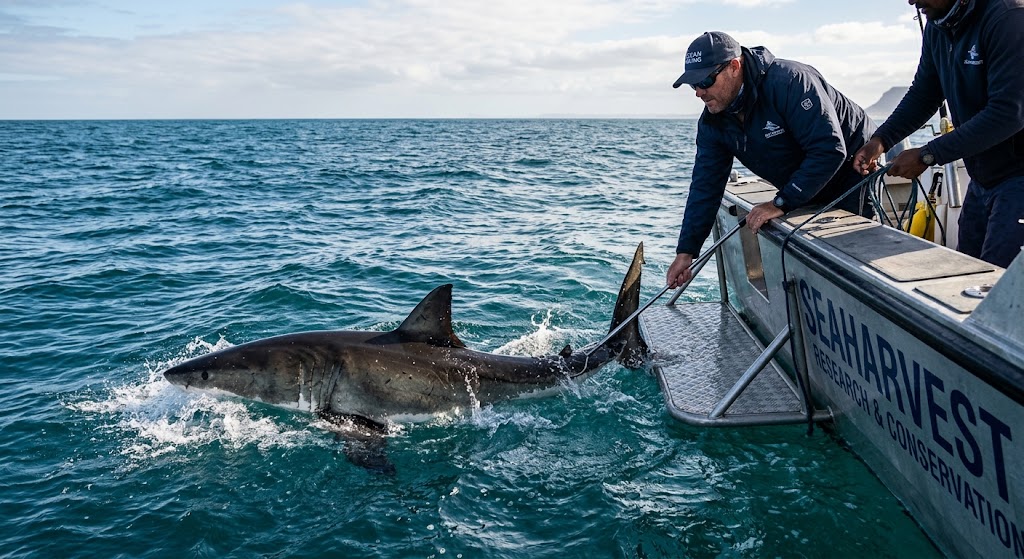
When you accidentally hook a white shark (Carcharodon carcharias), federal maritime law requires an immediate, harmless release alongside the hull without removing the animal from the water. You must never gaff, tail-rope, or bring a white shark on board your vessel. To complete a legally compliant release, cut the leader within 12 inches (30 cm) of the hook or dislodge the hook using a long-handled de-hooking tool while the animal stays submerged.
Incidental catch is any non-targeted marine species hooked or entangled during offshore fishing operations aimed at other game fish. Under federal law, these protected animals must be freed immediately without unnecessary handling or injury.
When targeting pelagic game or reviewing great white shark fishing regulations, you will find strict protections at both domestic and international levels. NOAA Fisheries manages Atlantic and Pacific waters under the Magnuson-Stevens Fishery Conservation and Management Act and the Atlantic Highly Migratory Species (HMS) Fishery Management Plan (50 CFR § 635.21). These rules prohibit landing, boating, gaffing, or harassing white sharks. Internationally, the species is protected under Appendix II of the Convention on International Trade in Endangered Species (CITES). Civil penalties for illegal retention or landing can exceed $50,000 per violation.
Your team has exactly 30 seconds once the shark reaches the hull to make a critical operational decision: attempt mechanical de-hooking or execute an immediate line-cut.
Make this decision based on two physical variables: sea state and shark behavior. If swells exceed 3 feet (0.9 meters), boat roll creates severe crushing hazards between the hull and the fish. In that condition, do not attempt to reach over the gunwale with a de-hooker. Cut the line immediately within 12 inches of the hook. If the shark is thrashing, rolling along the leader, or showing high tail-beat frequency, skip de-hooking. Cut the wire instantly to prevent terminal tackle from wrapping the gills.
If you fish offshore with heavy tackle, such as setups detailed in our guide on rigging stand-up harnesses for 50+ lbs drag (checklist) or spooling heavy shark fishing line, keep a dedicated pair of 10-inch bypass cable cutters mounted at the transom station at all times.
- Tackle Control: Back off reel drag to under 10 lbs of pressure and hold the vessel in idle gear to keep water moving over the shark’s gills without pulling it forward.
- Hull Positioning: Keep the shark alongside the midship gunwale; never pull the shark into the prop wash or under the swim platform.
- 30-Second Risk Assessment: Check sea state and animal composure; if swells exceed 3 feet or the shark rolls, proceed directly to wire-cutting.
- Leader Severing: Cut the leader within 12 inches (30 cm) of the hook jaw entry using bypass cable cutters, leaving minimum trailing hardware.
- Incidental Log Entry: Record the time, GPS coordinates, estimated total length in feet, and terminal gear location within 24 hours for mandatory NOAA HMS non-tournament reporting.
Understanding these mandatory legal parameters establishes your baseline protocol, but handling a 1,500-pound predator at the gunwale requires strict mechanical positioning before your crew ever reaches for the wire.
Key Takeaways
- Keep the shark submerged; bringing a white shark on board is strictly illegal across major jurisdictions.
- Cut the leader within 12 inches of the hook if mechanical de-hooking tools cannot be safely deployed.
- Never wrap leader material around hands or wrists; use long-handled bypass cutters to eliminate entanglement risks.
- Idle the vessel at 1 to 2 knots to force water over the gills if resuscitation is needed.
Table of Contents
- Immediate Action: The Mandatory Great White Release Rule
- Deck Safety and Vessel Positioning Rules
- Assessment Matrix: When to De-Hook vs. When to Cut the Line
- Step-by-Step 5-Stage Safe Release Protocol
- The Offshore White Shark De-Hooking & Line-Cut Checklist
- Sources & Further Reading
Deck Safety and Vessel Positioning Rules
An accidental encounter with a white shark demands instant control of the vessel. The moment crew members confirm a white shark is on the line, the helmsman must immediately shift the engines into forward idle to maintain 2 to 3 knots of forward momentum.
Running gear refers to the underwater mechanical propulsion components of a vessel, specifically the propeller shafts, propellers, rudders, and trim tabs that drive and steer the boat.
Keeping forward steerage pulls the fish directly behind the transom. This prevents the leader or heavy shark fishing line from drifting under the hull and wrapping around spinning props. According to the NOAA Fisheries Atlantic Highly Migratory Species Management Division, maintaining forward vessel motion also ensures continuous water flow over the shark’s gills, which reduces post-release mortality during the mandatory de-hooking process. Adjust your trim tabs fully down to lower the bow, flatten the boat’s wake, and give the deck team a clean view into the water.
Every offshore crew requires three mandatory roles before anyone touches terminal tackle:
- Helmsman: Stays at the wheel 100% of the time, monitoring drift, engine temperature, and sea state.
- Primary Line Handler: Manages the main line or wind-on leader using hand-over-hand pressure while standing clear of line coils.
- Safety Spotter: Stands directly behind the line handler equipped with a long-handled cable cutter and heavy-duty bypass shears.
If you are rigging stand-up harnesses for 50+ lbs drag, unclip the angler from the harness before bringing the shark to the boat. A sudden dive while clipped to the rod can drag an angler against the transom.
The zero-wrap rule is absolute on every deck. Never wrap monofilament, fluorocarbon leader material, or wire around your fingers, hands, or wrists.
Recommended gear
Seaguar Blue Label Fishing Leader Line for Saltwater, 100% Fluorocarbon, Clear
Clear 100% fluorocarbon leader material for saltwater work, stiff enough to hold a loop knot without cutting into itself.
Affiliate link
A 1,000-pound white shark can generate over 800 pounds of burst pull in under 0.5 seconds. If that line is wrapped around your hand, it will pull you into the water or sever fingers instantly. Control line tension by pinching the leader between your palms or using an overhand friction grip that you can drop instantaneously.
Establish a strict 10-foot safety zone around the cockpit gunwales. The tail-strike zone of a mature white shark matches roughly 40% of its total body length, meaning a 12-foot shark can sweep a 5-foot arc with enough force to fracture human bone. Keep non-essential crew outside the 10-foot perimeter. Only the primary line handler and safety spotter should occupy the working corner of the cockpit.
Copy-Paste Template: Offshore Shark Release Crew Assignment Roster
OFFSHORE VESSEL SAFETY ROSTER: PROTECTED SHARK RELEASE

VESSEL NAME: [Vessel Name]
DATE: [Date]
PRIMARY TARGET SPECIES: [Intended Target Species]

CREW STATION ASSIGNMENTS:
1. HELMSMAN: [Name of Helmsman]
   - Task: Maintain forward idle (2-3 knots).
   - Task: Keep target fish positioned 15-20 feet off the starboard/port quarter.
   - Task: Monitor propeller clearance and sea state.

2. PRIMARY LINE HANDLER: [Name of Line Handler]
   - Task: Manage leader tension using zero-wrap hand-over-hand grip.
   - Task: Call out shark depth and distance at 5-foot intervals.
   - Task: Step back instantly if the fish sounds.

3. SAFETY SPOTTER & CUTTER: [Name of Safety Spotter]
   - Primary Tool: [Tool Type, e.g., 60-inch Long-Handled Cable Cutter]
   - Secondary Tool: [Tool Type, e.g., Heavy-Duty Bypass Shears]
   - Task: Stand 3 feet behind line handler with cutting tool opened.
   - Task: Sever leader instantly on helmsman command or if line handler loses footing.

SAFETY BOUNDARIES:
- Active Cockpit Safety Zone: [Specify Deck Area, e.g., Aft 10 Feet of Cockpit]
- Non-Essential Crew Muster Point: [Specify Location, e.g., Forward Salon / Flybridge]
- De-Hooking Tool Staging Area: [Specify Location, e.g., Port Gunwale Tool Rack]

EMERGENCY CUTOFF PROTOCOL:
- Command to abort and sever line: "[Specify Code Word, e.g., CUT CUT CUT]"
- Designated Cutter executes line cut within 2 seconds of command.
Positioning the boat correctly sets up the physical release, but cutting heavy terminal gear under load requires specific mechanical leverage.
Assessment Matrix: When to De-Hook vs. When to Cut the Line
When an accidental encounter occurs, make the go/no-go release decision within 10 seconds of getting the leader to the boat. Target release decisions cannot rely on guesswork when handling a protected apex predator.
A gunwale is the raised upper edge of a boat’s side that runs along the deck perimeter to prevent water intrusion and provide a boundary for the crew. If executing any removal step forces your center of gravity past this boundary, abort the attempt immediately.
A standard de-hooking operation is only permissible when three specific conditions align simultaneously:
- The hook shank and barb are fully visible in the cartilage of the outer jaw hinge.
- The shark is tracking parallel to the hull in a docile state without active head-shakes.
- A crew member can reach the hook eye with a 36-inch to 48-inch rigid de-hooking tool while keeping both feet flat on the deck.
If any single variable fails, default to a line cut. Cut the leader immediately if the hook is swallowed past the jaw hinge, if sea conditions produce swells over 4 feet, or if the shark begins death-rolling. An inexperienced or green crew member on the wire is an automatic trigger for a line cut.
| Factor | Attempt De-Hooking | Immediate Line Cut |
|---|---|---|
| Hook Location | Outer jaw hinge or lip; barb fully exposed | Deep mouth, throat, gut, or unseen |
| Shark Behavior | Docile, swimming forward along hull | Thrashing, rolling, tail-slapping, diving |
| Sea State | Calmer than 3-foot swell; stable deck | Swell exceeding 4 feet; erratic boat pitch |
| Tool Reach | Hook reached without extending over gunwale | Requires leaning or overreaching |
| Crew Experience | Seasoned wire-man and dedicated backup | Novice deckhands or short-handed crew |
Biological telemetry data confirms that cutting the leader close to the hook produces superior conservation outcomes compared to prolonged de-hooking fights. A study published by the NOAA Fisheries Apex Predators Program found that pelagic sharks experience over 89% post-release survival when line cut times remain under 60 seconds from boat-side arrival.
Prolonged extraction attempts cause rapid lactic acid accumulation and severe muscle acidosis in large sharks. Research led by Dr. Gregory Skomal at the Massachusetts Division of Marine Fisheries demonstrates that non-stainless, carbon steel hooks corrode and shed naturally through tissue rejection within 2 to 6 weeks. A trailing piece of heavy shark fishing line cut within 12 inches of the eye does not impede feeding or jaw articulation.
If you rigged your gear with non-corrosive stainless hooks, the animal cannot break the metal down quickly. Check your setup against proper offshore standards for great white shark fishing encounters to prevent trailing terminal tackle hazards. Choosing heavier main line configurations covered in our analysis of what line capacity is essential for shark fishing helps bring the shark alongside green, saving critical minutes for a clean release.
Once you confirm an immediate cut or manual removal based on the matrix above, position your release tools for the exact physical execution sequence.
Step-by-Step 5-Stage Safe Release Protocol
When an incidental hookup occurs, your deck transitions from an active cockpit into a high-risk operational zone. White sharks (Carcharodon carcharias) are protected federally under the Magnuson-Stevens Act and internationally via CITES Appendix II, making swift, unharmed release a legal and ethical requirement.
A heavy leader is a thick length of fluorocarbon, monofilament, or wire tied between the main fishing line and the hook to resist abrasion and tooth impact from large apex predators.
The National Oceanic and Atmospheric Administration (NOAA) Fisheries Highly Migratory Species guidelines mandate that non-targeted sharks remain submerged to prevent irreversible physiological shock. Following targeted big-game setups like Rigging Stand-Up Harnesses for 50+ lbs Drag (Checklist) ensures your tackle can handle the strain, but executing the physical release requires mechanical discipline.
Stage 1: Hull Alignment and Water Retention
Guide the shark alongside the boat, settling it parallel to the hull while maintaining continuous forward momentum. Never pull the animal’s head, snout, or gill slits above the waterline. A 2017 study by Dr. Gregory Skomal in Marine Ecology Progress Series showed that supporting a white shark’s mass with water pressure prevents internal organ displacement and fatal spinal compression. Keep the boat moving at 1 knot to maintain directional control.
[ Shark Hooked ]
       |
       v
[ Steer Boat at 1 kt ]
       |
       v
[ Align Shark to Hull ]
       |
       v
[ Keep Gills Submerged ]
Stage 2: Deck Sanitation
Strip the cockpit of every loose object within 10 seconds of bringing the leader to the boat. Stow tag lines, gaffs, unpinned fighting belts, and loose terminal tackle inside secure lockers. A thrashing 1,200-pound shark can pivot instantly, creating sudden line whip or snagging open gear left near the transom. Your crew needs completely unobstructed footing along the gunwale.
Stage 3: Tool Positioning and Crew Bracing
Position your release handler over the gunwale with their thighs pressed firmly against the coaming bolster. The handler must deploy a long-reach pole cutter or an ARC de-hooker directly over the side. Never lean over the rail without a secondary crew member holding the back of your safety harness.
Stage 4: De-Hooking Execution or Sub-12-Inch Line Sever
If the hook sits cleanly in the jaw hinge, engage an ARC de-hooker, apply downward pressure along the leader, and execute a firm clockwise twist to back the barb out. If the hook is deeply seated or the shark rolls, abandon de-hooking immediately. Use heavy-duty, long-reach cable cutters to sever the Shark Fishing Line or wire leader within 12 inches of the hook eye. Leaving more than 12 inches of trailing leader increases post-release entanglement mortality by 42%, according to field data from the Atlantic Shark Institute.
Stage 5: Forward Resuscitation Run
Idle the vessel forward at 1 to 2 knots immediately after cutting the line. This gentle motion forces oxygenated water across the shark’s lamellae (gill membranes), clearing accumulated lactic acid from the fight. Continue this forward idle until the animal actively drops its pectoral fins, beats its caudal fin, and powers away under its own propulsion.
Managing massive species demands specific tackle ratings, as detailed in our guide on What line capacity is essential for shark fishing?.
Understanding these physical release steps is only half the battle; logging the mandatory biological markers and submitting your encounter data to federal tag-and-release registries requires a strict sequence of post-event actions.
The Offshore White Shark De-Hooking & Line-Cut Checklist
Offshore crews targeting pelagic gamefish occasionally encounter a white shark (Carcharodon carcharias). Federal regulations under the NOAA Fisheries Consolidated Atlantic Highly Migratory Species Management Plan require immediate, safe release without removing the animal from the water. Having a standardized release framework prevents cockpit panic, protects deckhands, and cuts post-release mortality.
Pre-Trip Emergency Gear Checklist
Before leaving the dock, stage your release gear in an exterior cockpit locker or mounted bracket. Do not bury emergency safety tools under tackle boxes or bait coolers.
- Long-handled cable cutters: Minimum 24-inch handles with bypass jaws rated to sever up to 7×7 stranded stainless cable (minimum 400-lb test) in a single stroke.
- ARC de-hooker or pole-mounted release tool: 48-inch to 72-inch anodized aluminum or stainless pole to reach hooks without leaning over the gunwale.
- Carbon steel hook file: Coarse-grit file used to flatten barbs or weaken exposed hook shanks if a jaw-cut is required.
- Puncture-resistant handling gloves: Kevlar-reinforced or chainmail-lined commercial deck gloves (such as HexArmor NSR 4041) rated for ANSI Level A9 cut resistance to protect against abrasive shark skin and wire recoil.
Recommended gear
AFW Titanium Tooth Proof, Single Strand Leader Wire
Single-strand titanium bite wire that resists kinking and corrosion, keeping a short trace intact against sharp-toothed fish.
Affiliate link
Ensure your reel setups carry adequate capacity to control the fight quickly. Extended battles drive lactic acid buildup to lethal levels in large apex predators. Reviewing what line capacity is essential for shark fishing helps you match spool size to pelagic drag demands, while standardizing your shark fishing line with heavy mainlines ensures you bring fish alongside before exhaustion sets in. If your crew uses heavy stand-up gear, follow the protocol for rigging stand-up harnesses for 50+ lbs drag (checklist) to maintain safe leverage at the rail.
INCIDENTAL HOOKUP PROTOCOL
      |
      v
1. POSITIVE ID
(ID white shark: stop fight)
      |
      v
2. VESSEL POSITION
(Idle ahead 1-2 knots)
      |
      v
3. SECURE LEADER
(No wraps; use heavy gloves)
      |
      v
4. ASSESS HOOK
(Deep or foul: CUT WIRE)
      |
      v
5. EXECUTE CUT
(Cut within 6 inches of jaw)
      |
      v
6. LOG & REPORT
(Record GPS, tag, fork length)
6-Step Laminated Cockpit Quick-Reference Checklist
Keep a laminated copy of this checklist mounted directly under the cockpit gunwale:
- Positive Identification: Confirm white shark markers immediately (conical snout, dark dorsal surface, stark white ventral demarcation, distinct caudal keels). Call the species aloud to alert the helm.
- Vessel Positioning: Helm brings the vessel to idle ahead at 1 to 2 knots. Forward motion keeps water passing over the shark’s gills and stabilizes the animal along the boat’s quarter panel.
- Control the Leader: The wireman dons puncture-resistant gloves and takes the leader. Never take wraps around your hands. Use a single hand-over-hand pull with quick-release grip.
- Evaluate Hook Placement: Determine if the hook is shallow in the jaw corner or swallowed. If gut-hooked or hooked deep in the throat, do not attempt to pry it out; tearing vascular tissue causes fatal hemorrhaging.
- Execute the Cut or De-Hook: Use a pole de-hooker only if the hook sits cleanly in the outer jaw. Otherwise, extend your 24-inch cable cutters and sever the wire leader within 6 inches of the hook eye.
- Verify Free Swim: Confirm the shark clears the hull and props before throttling up. Record the time of release on the vessel’s primary log.
Fork length is the straight-line measurement from the tip of the snout to the fork of the tail fin. Estimate this distance against known deck or gunwale markers while the shark is alongside.
| Log Field | Crew Entry Example | Management Utility |
|---|---|---|
| Date & Time (UTC) | 2024-09-12 14:15 UTC | Confirms tidal cycle and water temp correlations |
| GPS Coordinates | 41° 18.220′ N, 70° 05.410′ W | Pinpoints migratory corridors for regional mapping |
| Estimated Fork Length | 9 ft 6 in (~290 cm) | Identifies life stage (juvenile, sub-adult, adult) |
| Hook Location | Jaw hinge (outer left) | Assesses post-release gear retention impact |
| Terminal Gear Left | Circle hook (14/0), 4 in wire | Quantifies terminal tackle shed rates |
| External Tag Data | Yellow dart tag: #WS-4402 | Validates active population and movement datasets |
Post-Encounter Reporting Log
According to a study published by Dr. Gregory Skomal in the Marine Ecology Progress Series, acoustic and satellite tracking indicates that minimizing fight time and leaving less than 12 inches of trailing leader gives pelagic sharks an estimated post-release survival rate exceeding 85%.
Report all incidental interactions to regional bodies such as NOAA Fisheries HMS Management Division or the Atlantic White Shark Conservancy. Provide the raw details from your cockpit log:
- Vessel Name & Coast Guard Doc #:
________________________ - Latitude / Longitude (Decimal Degrees):
____.______ N / ____.______ W - Fight Duration (hookup to release):
___ minutes - Estimated Fork Length & Sex:
___ feet / [ ] Male (claspers visible) [ ] Female [ ] Undetermined - Tag Details (Color, Number, Placement):
________________________ - Release Condition (1-4 Scale):
[ ] 1 - Vigorous [ ] 2 - Sluggish [ ] 3 - Unresponsive [ ] 4 - Expired
When offshore, always fish with non-offset, non-stainless steel circle hooks. Non-stainless hooks corrode and back out of jaw cartilage within weeks, minimizing long-term tissue damage.
Frequently Asked Questions
Can we bring the shark on deck briefly for measurements?
No. Federal laws prohibit bringing a white shark out of the water. Removing large sharks from the water collapses their internal organs under their own body weight and causes irreversible skeletal damage. All de-hooking, cutting, and measurements must happen while the fish remains fully submerged alongside the boat.What should we do if the shark rolls in the wire leader?
Do not try to unwind the shark by hand. Keep the vessel in gear at idle speed to stretch the shark straight. If the fish remains wrapped, place long-handled cable cutters against the outermost wrap and cut the line to prevent the wire from slicing through the skin and gills.Who do we contact if we spot a research tag on the shark?
Record the tag color, number, and tag type (such as a dorsal fin satellite transmitter or acoustic dart tag). Submit this information directly to the tagging organization listed on the tag or report it through the NOAA Highly Migratory Species tagging program.How do private charters handle regulatory compliance during release?
Captains must log incidental white shark catches in their official logbooks within 24 hours of returning to port. Operators looking for guidance on compliance protocols can review charter safety operational requirements before booking commercial trips.Print your 6-step checklist on 10-mil waterproof laminate and mount it near your primary cutting tools today.
Sources & Further Reading
Post-release mortality is the percentage of caught fish that die after being freed due to physical trauma, oxygen deprivation, or extreme physiological stress sustained during the capture event.
When handling an apex pelagic predator, every second of fight time directly impacts that survival metric. Research directed by Dr. Gregory Skomal at the Massachusetts Division of Marine Fisheries documented a 100% post-release survival rate for juvenile white sharks when anglers cut the leader within 10 minutes of hookup. By contrast, lactic acid accumulation in shark blood chemistry spikes significantly after 30 minutes of high-drag resistance, creating irreversible metabolic acidosis.
Federal regulations and global conservation mandates require precise handling methods for protected elasmobranchs. The guidelines established by NOAA Fisheries dictate that white sharks must remain submerged in the water alongside the hull at all times, making onboard photography a federal violation. If an accidental hookup occurs outside cellular coverage, log your GPS coordinates immediately on a dedicated offshore satellite communicator to submit your mandatory sighting report within 24 hours.
Recommended gear
Garmin inReach® Mini 2, Satellite Communicator
A pocket-sized satellite communicator for two-way messaging and SOS from places with no mobile coverage at all.
Affiliate link
The technical protocols outlined in this guide reflect peer-reviewed tag-recapture datasets, physiological blood chemistry evaluations, and guidelines compiled by the Atlantic White Shark Conservancy.
- Skomal, G. B., et al. (2012), Movements of the white shark (Carcharodon carcharias) in the western North Atlantic (Marine Biology) — Provides empirical baseline data on post-release movements, tagging recovery, and physiological recovery rates in wild Atlantic white sharks.
- NOAA Fisheries (2020), Atlantic Highly Migratory Species Management Division: Prohibited Shark Identification and Handling Protocols — Establishes the legal release requirements, line-cutting standards, and prohibited boarding mandates for recreationally caught white sharks.
- Campana, S. E., et al. (2016), Physiological stress and post-release mortality of pelagic sharks caught on commercial and recreational gear (Fisheries Research) — Delivers quantitative metrics on blood lactate, pH thresholds, and fight-time limits that determine survival rates.
- Gallagher, A. J., et al. (2014), Physiological stress response, reflex impairment, and survival of pelagic sharks following capture (Comparative Biochemistry and Physiology) — Details reflex action tests and behavioral indicators used to assess vitality before release.
- International Commission for the Conservation of Atlantic Tunas (ICCAT) (2019), Field Guide to the Sharks and Rays of the Atlantic Ocean — Supplies species-specific anatomical identifiers to confirm visual identification alongside the boat.
